Follow Us on Google

From Fred Ezeh, Abuja
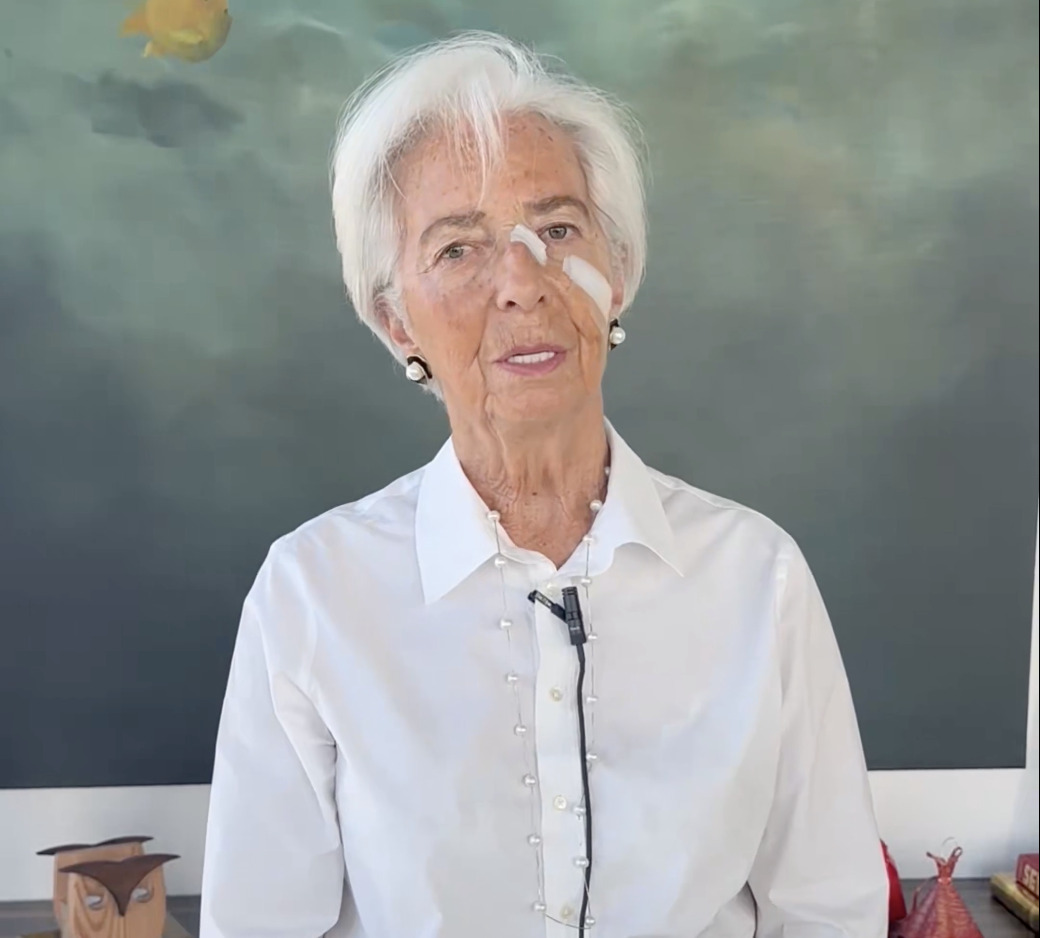
European Central Bank (ECB) President Christine Lagarde has announced plans to step down from her position on 7 February 2027, saying she wants the freedom to express her views and engage in issues beyond monetary policy.
Lagarde, who announced her decision on Thursday, 29 October, said the neutrality required of central bank officials had constrained her ability to speak publicly on wider global issues, including matters concerning principles she considers important.
“I will be leaving the ECB in February 2027 because I want to have the freedom of speech, the freedom of expression, and the freedom to engage on matters that are not monetary policy matters,” she said in a post on her verified X account.
She explained that the decision would allow her to speak more openly about developments around the world without the restrictions associated with her position as head of the eurozone’s central bank.
According to Lagarde, central bank leaders are expected to maintain neutrality and concentrate their public interventions on issues directly related to their institutions’ mandates.
“As you all know, as President of the European Central Bank, my colleagues on the Executive Board and on the Governing Council are under pretty much the same constraints. We have an obligation of neutrality,” she said.
She added that the ECB’s leadership was guided by a specific mandate and was expected to avoid public interventions outside that remit. “We are driven by one mandate. And we don’t get out of that mandate because that’s the price we pay for being independent,” she said.
Lagarde, however, suggested that developments in different parts of the world had strengthened her desire to contribute more directly to public discussions.
“At this time, in relation to many corners of the world, not just European corners, not just Europe, I think that my voice can help, my action can help in relation to principles that are dear to my heart,” she said.
Explaining her position further, she said she was increasingly uncomfortable with remaining neutral amid what she described as the damage being done to truth through misrepresentation. “I don’t think that I can remain neutral. I don’t think that I can be comfortable in that neutrality at the present time,” she said.
Lagarde noted that her more than two decades of experience in international economic and financial affairs had given her perspectives that she believed should be shared beyond the confines of her current office.
She previously served as Managing Director of the International Monetary Fund (IMF) before becoming ECB president in November 2019.
Other News
The ECB confirmed that Lagarde had informed the Governing Council and European Council President António Costa of her decision to step down on 7 February 2027.
Her departure will come approximately eight months before the end of her tenure, which was scheduled to expire in October 2027.
Lagarde said the timing was deliberate, adding that she wanted to use the remaining period of her professional life to engage in discussions that her current responsibilities would not allow her to pursue freely.
She did not announce a specific role or position that she intended to take up after leaving the bank.
The ECB said her successor would be appointed by the European Council through the established nomination process.
Lagarde’s departure comes at a significant time for the eurozone economy, as policymakers continue to monitor inflation, energy prices, economic growth and borrowing costs.
During her tenure, the ECB navigated major economic challenges, including the aftermath of the COVID-19 pandemic, rising inflation and the subsequent tightening of monetary policy.
The bank’s leadership transition is expected to attract considerable attention from European political leaders and financial markets, given the importance of its decisions to the eurozone economy.
The ECB is responsible for maintaining price stability across the euro area, with a medium-term inflation target of 2 per cent. Its monetary policy decisions influence interest rates, borrowing costs, investment and economic activity across member countries.
Lagarde has maintained that the institution remains strong and capable of ensuring continuity despite her early departure.
The ECB said her announcement also placed renewed focus on the balance between the independence of central banks, the neutrality expected of their leadership and the ability of senior officials to participate in wider public debates.