Follow Us on Google
From Noah Ebije, Kaduna
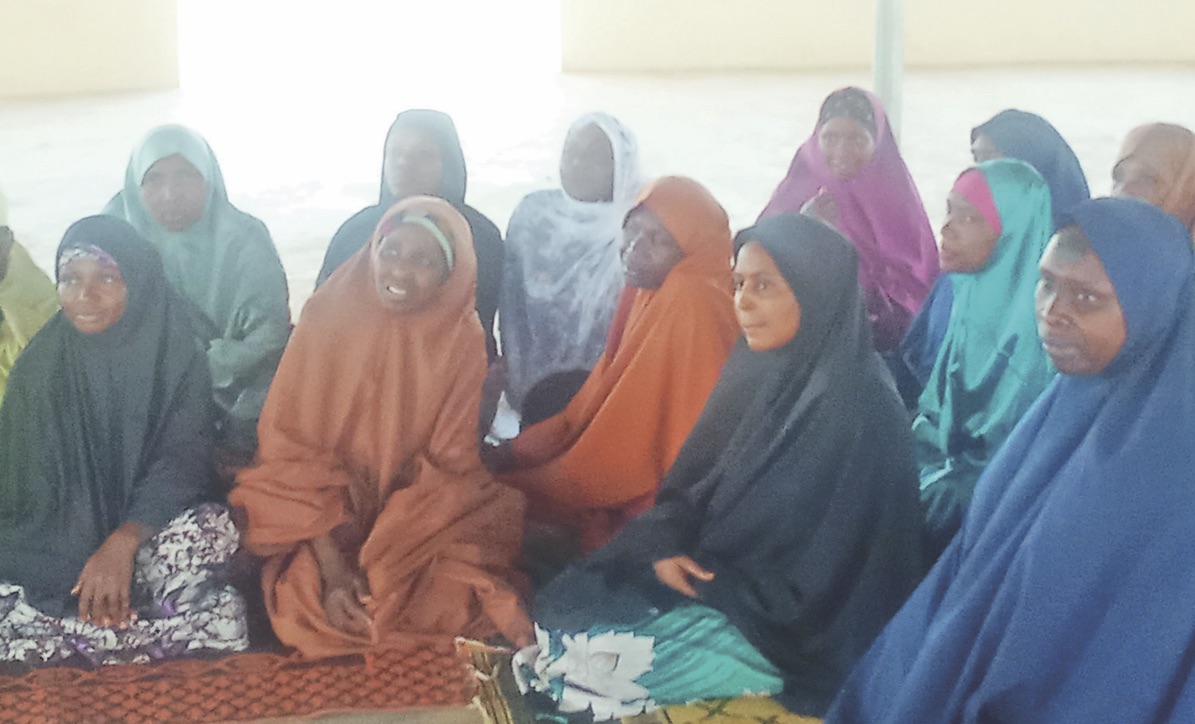
In the quiet outskirts of Rigachikun in Kaduna City, a once unoccupied estate is steadily coming to life. Laughter now echoes through its streets, as women, once displaced by grief and hardship, some years after losing their respective husbands, are beginning socio-economic life again.
However, the journey to this renewal was anything but smooth.
When 100 housing units were commissioned in late November 2025 for widows under the Family Homes Initiative, hope was high. Dignitaries, including Governor Uba Sani, ministers, and development partners gathered to mark what was widely seen as a bold step toward social protection.
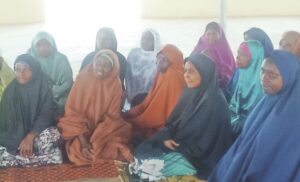
Yet, weeks after the ceremony, the estate stood eerily quiet.
“We had some gaps, some glitches,” recalls the facility manager, Dr. Mustapha Umar Kumshe. “People did not occupy the estate on time due to fear; fear of insecurity and concerns about the access road.”
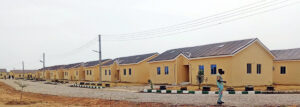
Despite the fanfare that greeted the commissioning, misinformation quickly spread among beneficiaries. Stories of insecurity and isolation discouraged many from moving in.
“They were afraid,” Dr. Kumshe explains. “There was this narrative that there is no security here. That was not true.”
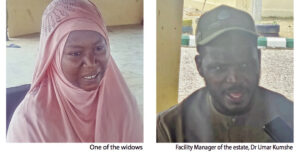
Determined to reverse the trend, the management took an unusual step: they moved in themselves.
“We started contacting each person on the list,” he says. “We assured them there is no problem here. We have over 20 security personnel, armed vigilantes and civil defence officers. There is no cause for alarm.”
At first, only a handful of widows, just four of them, dared to settle in, living for months in near isolation but under tight security.
“They stayed here with us, and we gave them confidence,” he adds. “Gradually, others began to respond.”
But as more investigations unfolded, a more troubling issue surfaced, one that went beyond fear.
“We discovered that many beneficiaries didn’t even have their keys,” Dr. Kumshe reveals. “Their association executives had collected them.”
What initially seemed like reluctance turned out, in some cases, to be exclusion.
“We went to their homes in Zaria,” he recounts. “They showed us the conditions they were living in, houses without windows, without doors, leaking roofs. They told us, ‘We want to move, but we don’t have our keys.’”
The revelation prompted urgent action.
“We had to replace all the keys. We changed everything and reissued documents,” he says.
The impact was immediate. Today, more than 65 homes are occupied, and the number continues to grow.
Beyond providing roofs over their heads, the estate offers what many residents describe as a complete transformation of their living conditions.
Each home is equipped with solar power, water supply, and basic furnishings; features that Dr. Kumshe insists meet global standards.
“Anywhere in the world, the basics are water, electricity, and access roads, and we have all of that here,” he says.
Other News
The estate boasts four boreholes, including solar-powered systems, and a dedicated electricity transformer.
“Each house has running water, lighting, and even solar-powered fans,” he explains.
Outside, over 450 fruit-bearing trees dot the landscape, offering both shade and potential income.
For many widows, the estate represents more than physical comfort, it is a turning point.
Hajiya Amina Alhassan, a mother of four, describes the shift: “I stayed in one room with my children before. Now we have two rooms with tiles, light, and water. I didn’t believe it until I moved in.”
Others speak of renewed dignity and hope. “Our joy and happiness have no bounds,” says Hajiya Fasiya Muhammad, who now teaches Islamic studies within the estate.
For Hajiya Fadila Tahir, the change has been deeply personal: “I feel good with my coming here. I even remarried after moving in.”
Understanding that housing alone is not enough, the programme has invested heavily in education and skills development.
“We have over 150 children here, most of them orphans,” Dr. Kumshe says. “We provide their books, materials, and even pay their teachers.”
Parents who once struggled to send their children to school now find those barriers removed.
“Some of them couldn’t afford school fees before,” he notes. “We took that burden off them.”
Women are also being trained in practical skills; from soap-making to tailoring and agriculture.
“They are now producing goods and selling them,” he adds. “Some even transport their products outside the estate.”
Healthcare, often a major concern in rural settlements, has also been addressed creatively.
“We have a pharmacy here and trained nurses,” Dr. Kumshe explains. “Interestingly, some of the beneficiaries themselves are registered nurses.”
This has created a self-sustaining system of basic healthcare within the estate.
“They can handle injections, drips, even deliveries,” he says. “Only serious cases are referred’
Despite the progress, some beneficiaries are yet to move in, often due to concerns about schooling or relocation.
Dr. Kumshe, however, remains persistent.
“I keep asking them: what is wrong with you? Government has given you a free two-bedroom house—free of charge,” he says.
He emphasises that the buildings themselves are innovative, designed for comfort in all weather conditions.
“When it’s hot outside, it’s cool inside. When it’s cold, it’s warm,” he explains.
The initiative traces back to the vision of Dr Umma Sani, whose own experiences of hardship inspired the project.
“The trauma of homelessness I faced growing up pushed me to do this,” she has said.
Through partnerships with government agencies and institutions, that vision materialised into 100 homes, and counting lives transformed.
Today, the estate stands as a testament to resilience, not just of infrastructure, but of human spirit.
From fear and misinformation to community and empowerment, the story of Family Homes Estate Adashe is still unfolding.
And as more widows arrive, unlocking doors that were once out of reach, a new chapter is being written; one of dignity, stability, and hope.