Follow Us on Google

From Ndubuisi Orji, Abuja
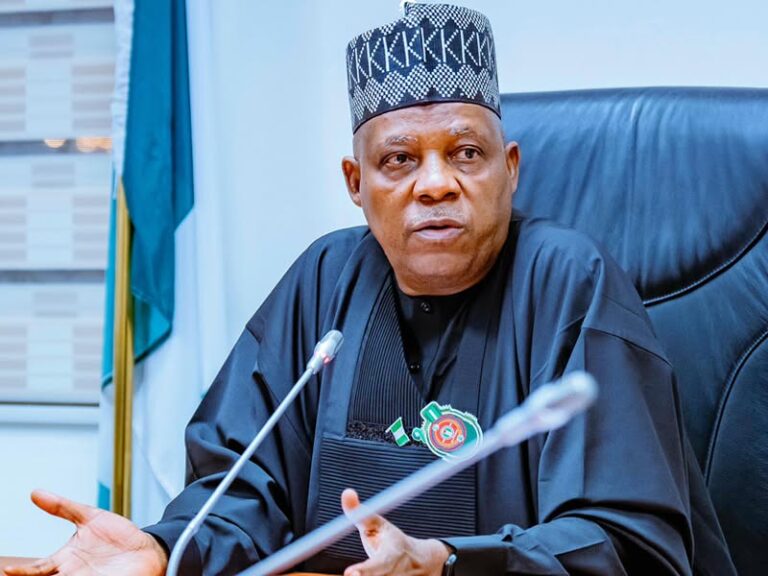
The Director General, National Institute for Legislative and Democratic Studies, Prof. Abubakar Sulaiman, has said that insecurity poses a grave threat to national development, democratic stability, and citizens’ confidence in governance.
Sulaiman, who stated this, in his remarks, at a public lecture titled “Federalism and the Crisis of Security in Nigeria,” organised by the Institute, noted that security remains the foundation upon which sustainable development, economic progress, and democratic governance are built.
The NILDS DG argued that when security is compromised, the consequences extend beyond immediate threats to lives and property, and undermines institutional effectiveness, weaken democratic structures, and erode public trust in government.
He noted that the persistence of insecurity across Nigeria has intensified concerns about the effectiveness of existing governance and security arrangements, stressing the need for informed national dialogue and institutional reforms.
Other News
According to him, addressing Nigeria’s security challenges requires not only operational responses, but also deeper reflection on the country’s federal structure and the role of governance in ensuring safety and stability.
The speaker, Professor James Nda Jacob, in his lecture, identified weak institutional accountability as a major challenge to effective security governance in Nigeria.
Jacob explained that subnational governments often lack the constitutional autonomy to respond decisively to security threats without federal approval, stating that this slows interventions.
According to him, over-centralisation of security architecture, stressing that it delays operational responses, undermines local intelligence gathering, and weakens collaboration between communities and security agencies.
Besides, he highlighted Nigeria’s complex ethnic, religious, and regional dynamics as challenges, noting that these divisions often generate grievances which can escalate into violent conflicts if not properly managed.