Follow Us on Google

From Isaac Anumihe, Abuja and Chinwendu Obienyi
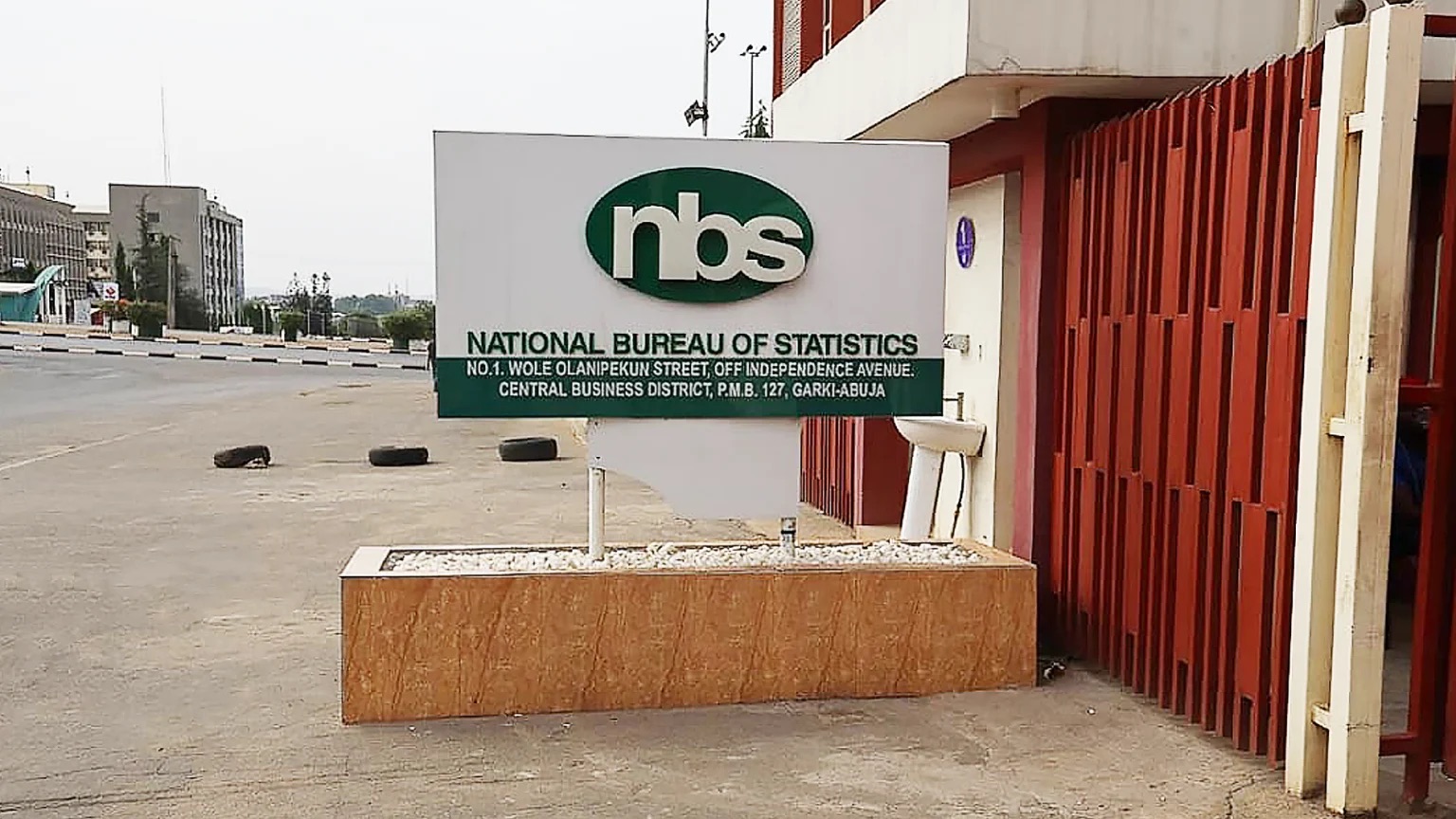
Nigeria’s headline inflation slowed for the fifth consecutive month in October, easing to 14.06 per cent year-on-year (y/y) from 14.63 per cent in September, according to the latest consumer price data released by the National Bureau of Statistics (NBS) on Monday.
However, the improvement offers only limited comfort to households as prices rose faster on a monthly basis, while food, energy and transport costs continued to weigh on consumers.
The NBS figures show that headline inflation declined by 57 basis points y/y in October. However, the consumer price index rose by 0.43 per cent month-on-month (m/m) up from 0.06 per cent in September, an acceleration of 38 basis points that suggests underlying price momentum strengthened during the month.
Food inflation, the largest driver of Nigeria’s inflation basket, moderated to 19.13 per cent y/y in October from 19.59 per cent in September. Yet the monthly food index fell by only 0.75 per cent, compared with a 1.55 per cent decline in September, indicating that the harvest-season relief in food prices is losing pace.
The NBS attributed the slower food-price decline to higher prices for several staple and household items, including 75cl vegetable oil, 125g Titus sardines, prepacked green peas, frozen mackerel, croakers and local rice. Others are, fresh catfish, beef tripes and 75cl palm oil. Millet flour sold loose also recorded price increases.
For many Nigerian households, the data will reinforce the perception that the cost-of-living crisis remains intact. Although annual food inflation is easing, food prices are still almost 20 per cent higher than a year earlier, while recurring increases in cooking oil, fish, rice and palm oil continue to strain household budgets.
Core inflation, which excludes volatile farm produce and energy, fell sharply by 217 basis points to 10.78 per cent y/y in October, from 12.95 per cent in September. On a m/m basis, the core index declined by 0.53 per cent, reversing September’s 1.11 percent increase.
The sharp moderation in core inflation is likely to be welcomed by policymakers, particular the Monetary Molicy Committee (MPC), as it suggests that some non-food, non-energy price pressures eased during the month.
It also provides stronger evidence that the disinflation trend is beginning to extend beyond food, which has been the principal driver of Nigeria’s recent inflation dynamics.
Other News
Still, the improvement in core prices may not fully reflect the pressure households face from transport and energy. Fuel prices rose in October, with the average premium motor spirit (PMS) pump price increasing 1.3 per cent to N1,360 per litre, according to United Capital Research.
Higher crude oil prices also added to cost pressures across production, logistics and distribution chains.
Energy and transport costs typically feed into the prices of goods and services with a lag. That means the recent rise in fuel prices could continue to exert upward pressure on inflation in the coming months, even if food supply conditions remain favourable.
The October print came in above forecasts from different research and investment firms. Coronation Merchant Bank had projected headline inflation to slow to 13.59 per cent y/y with m/m inflation expected to moderate to 0.02 per cent. United Capital Research had also projected a decline to 14.01 per cent y/y.
The stronger-than-expected monthly increase suggests that analysts may have underestimated the persistence of food-price increases and the pass-through effect of higher energy costs. It also raises questions about the pace at which inflation can return to single digits.
Furthermore, the Central Bank of Nigeria (CBN)’s MPC is scheduled to meet on November 23 and 24, with the October inflation data likely to feature prominently in its policy deliberations.
A continued decline in annual inflation could strengthen the case for a less restrictive monetary stance, but the acceleration in monthly price growth may make policymakers cautious about cutting interest rates too quickly.
Analysts say the key issue is whether the current disinflation can be sustained. Food prices remain the most important variable, but exchange-rate stability, fuel costs, transport fares and supply-chain disruptions will determine whether the gains of the past five months can be preserved.
For now, the data point to a mixed picture as annual inflation is clearly declining, but the pace of monthly price increases has picked up. That leaves households facing a slower rise in prices rather than an outright fall in the cost of living.