Follow Us on Google
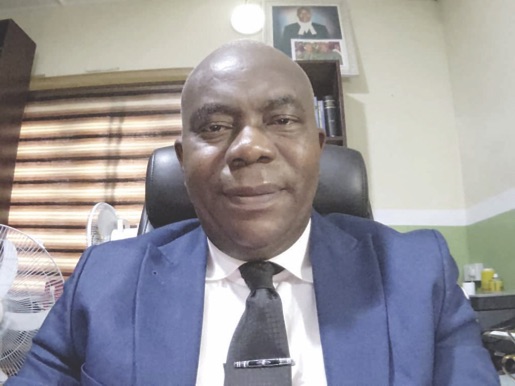
By Christine Onwuachumba
With barely a month to the September 21st Edo State Governorship election, Tony Dania, a popular human rights activist and legal practitioner, has called on the Independent National Electoral Commission (INEC) to implement the Option A4 system of voting to ensure a credible, transparent, free, and fair voting process during the polls.
The Option A4 electoral system, also referred to as the open ballot system, is a method of voting whereby voters openly queue behind the picture of their prefered candidates in an election. This system was introduced by Prof Humphrey Nwosu under the regime of former military president, Ibrahim Babangida. This method of voting, when used in the 1993 election, produced the fairest and freest election in Nigeria’s history.
In this interview, Dania, a maritime expert and litigation practitioner, argued that a return to Option A4 would save Nigeria the huge budget allotted to INEC to conduct elections. He also bared his mind on several national issues.
In a few weeks, your state – Edo, would be heading to the polls to elect a new governor who would succeed the outgoing Godwin Obaseki. As a community leader, how ready are you and the electorate for the election?
For this Edo State election, I will support any candidate I feel is best for my state. And I might decide to participate in party activities just because of the candidate I support. For instance, when ex-President Buhari contested in 2015, like many Nigerians, we all thought it was the messiah, and we supported him. For me, I did not only support him, but I also used my own money to campaign and mobilise votes for him. Nobody gave me anything.
Godwin Obaseki was another politician who enjoyed that kind of support when he contested for the Edo governorship election in 2016. Senator Adams Oshiomhole, the outgoing governor at that time, supported him to become governor. During the campaign, Oshiomhole told Edo people that Obaseki’s opponent, Pastor Ize Iyamu of the Peoples Democratic Party (PDP), was the devil and that we shouldn’t vote for him.
But in the 2020 election, after Oshiomhole fell out with Obaseki; he came back again to tell us that the same Pastor Iyamu, is now a saint and a better option than Obaseki, whom he had sold to us.
It was at that point that Edo people said ‘No! you don’t control us and then went ahead to vote for Obaseki for the second term. At that election, I didn’t only vote for Obaseki, I also campaigned for him at my expense.
But I am highly disappointed in his administration. I don’t see what he has done for Edo State or any sort of legacy he wants to leave. He seemed to be interested in fighting political opponents. He’s not using maturity at all.
Look at the disturbing cases of insecurity in Edo. Do you think the governor can remove himself from the blame? Who is the chief security officer of the state? Last month, gunmen attacked the convoy of the All Progressives Congress (APC) governorship candidate, Senator Monday Okpebholo, and the reinstated deputy governor, Phillip Shaibu, in broad daylight inside the state capital near the airport.
No excuse would absolve the state governor. I’m not accusing him but all I am saying is that he is the chief security officer of the state, and he should be held accountable.
I don’t support Philip Shuaibu or even the APC candidate for the state. In due time, I will announce the candidate that I support.
How much belief do you have in INEC’s preparedness to conduct a credible gubernatorial election?
I am not very optimistic about INEC’s preparedness. This is because the electoral body, plus other powerful politicians, will come up with laws or regulations for election, but will also devise schemes to negatively exploit the electoral system to meet their private desires.
The best election, the most transparent elections that have never been beaten in the history of Nigeria is the 1993 election. That is when Professor Humphrey Nwosu introduced the open ballot. That system was the cheapest, and the most transparent we’ve ever heard. And I’m among the few activists advocating that Nigeria should go back to that electoral system.
What would you say to people who say the Open ballot voting system is no longer in vogue?
We should introduce things that other people in other parts of the world can learn from. Countries are coming to Nigeria for us to teach them how we established successful cables and drug factories. Some nations are asking about our National Youth Service Corps (NYSC); they like the concept and would want to introduce it in their country.
So, we can make them learn from us that Nigeria can have a voting system that does not cost all the billions budgeted for the election umpires. With the open ballot system of voting, the results at the polls will not be in doubt because you are getting it declared immediately before every electorate. So, there will be no room for results manipulation, glitches, or any other negative exploitation of technology.
Let’s ignore critics who say that we are primitive, and focus on achieving a good purpose and credibility at our elections. If we remain dedicated to an open ballot system, other countries could borrow a leaf from us and start doing it too.
We have used the open ballot system in this country before, in 1992, and to date, no election has surpassed the credibility and transparency we witnessed at that time. I get worried any time I look at these so-called modern ways of voting, and how much we spend on them. Do you know how many billions Jonathan approved for INEC in 2015? It was 90 billion first, then another 100 billion, then another 70 billion. These monies should have been deployed to vital development projects, we wouldn’t need to spend that much on elections. Introducing an open ballot voting system will bring sanity to our electioneering process.
Since the announcement of the removal of subsidy, many Nigerians became excited about when the Dangote refinery would begin operation. As a maritime lawyer, would you say this high anticipation is valid?
Yes, it is. First, I commend the president for the removal of the subsidy. The government gives subsidies to reduce the cost of landing and distribution of petroleum products when imported. But now we have got the biggest refinery operated by a private individual in Nigeria, and Africa.
That refinery has plenty of economic benefits for our country. One, transactions between Dangote and NNPCL would be done locally, which would reduce the pressure on Naira and make it appreciate in value. I’m happy the Federal Government has recognised this now and asked Dangote to pay for crude in Naira.
Two, Dangote would enhance the power supply in communities around there. The company generates about 30 megawatts of electricity and it cannot consume it alone because the refinery would need about 5 megawatts to operate. So, the rest of the power could be channelled to communities around there.
It would also create jobs in shipping/ tanker vessels. Crude oils extracted from refineries in Port Harcourt, Warri and Bonny terminals would be shipped to the Dangote refinery, which would create jobs for local vessels. This is an area the Federal Government is supposed to exploit because before we know it, foreign vessels will come in, exploit the cabotage law, and they will be granted a license to operate their ship.
Workers at these shipping companies would also need food when they are at sea. So, it takes someone to create value by supplying food to these shipping crew. These are jobs small businesses can get engaged in.