Follow Us on Google
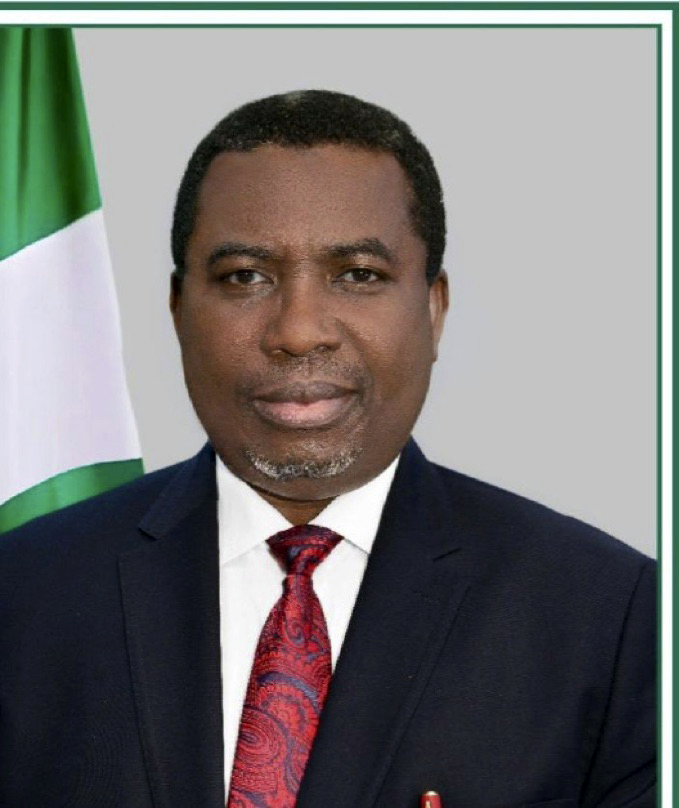
The National Chairman of the Independent National Electoral Commission (INEC), Prof Joash Amupitan, has warned political parties against excluding women during their primaries, stressing that any primary conducted without adequate representation of women would be viewed as failing the commission’s regulatory test. Amupitan who made the declaration at the Commission’s 2026 International Women’s Day celebration held at the INEC Headquarters in Abuja emphasised that symbolic concessions to women are no longer sufficient under the Electoral Act 2026 and the Commission’s new Regulations and Guidelines.
The INEC chairman said: “To the political parties, the commission, which is your regulator and a custodian of our democratic integrity, believes it is no longer enough to offer free nomination forms to women while maintaining glass ceilings in your inner caucuses. A primary that systematically excludes women is a primary that fails the test of our new regulatory standards. There must be internal democracy that caters to women, too.” He is also pointed out that democratic credibility is strengthened when all segments of society are given a fair opportunity to participate. Amupitan further expressed concern over the rising trend of gender-based disinformation and digital harassment targeted at female aspirants, warning that the electoral space must not be weaponised against women.
The intervention by the INEC chairman is commendable and timely. In the revised timetable for the 2027 polls by INEC, the Presidential and National Assembly elections are fixed for January 16, 2027, while Governorship and State Houses of Assembly elections are scheduled for February 6, 2027. The timetable further directs that conduct of party primaries, including resolution of disputes arising from primaries, will commence on April 23, 2026 and end on May 30, 2026. The electoral body stressed that political parties must conduct their primaries latest May 30, 2026 to enable them democratically nominate candidates for the election as required by Section 84 of the Electoral Act, 2026.
Going by past experiences, female aspirants have little chances in the contest, as their male counterparts have consistently dominated the field and left them in the margins. Several factors, ranging from finance, cultural inhibitions, violent electoral culture in some instances, work against them. This is even as the females constitute huge percentage of voters in the country. Statistics indicate that in 2023 general elections, approximately 44.4 million women were registered to vote, representing 47.51% of the total 93.47 million registered voters. The figure showed an increase from the 39.5 million women registered in 2019.
Other News
In late 2025 Continuous Voter Registration (CVR) exercise, women accounted for 55.28% of newly registered voters. Despite their impressive turn-out in voter registration, women remain significantly underrepresented in electoral candidacies, representing roughly 10% in 2023 elective positions with less than 5% seats in the National Assembly. The situation is not different at the state levels. This runs against the principle of affirmative action which recommends 35% quota for women in appointive and elective positions.
In comparison, some countries outside the western democracy, have achieved gender parity or enhanced female representation in their national parliaments. Rwanda has a commendable record of approximately 61%–64% of parliamentary seats held by women. Cuba posts 55%–57% female representation in its national parliament. In Nicaragua, women hold 53.9%–55% of parliamentary seats. Bolivia achieved over 50% representation in 2025. Andorra attained parity in 2025, with 50% women in parliament, a significant jump from just 3.6% in 1995. Mexico has equally achieved parity in both chambers of parliament.
Therefore, Nigeria should borrow a leaf from these countries and accord women representative rights. The beauty of democracy is inclusivity and participation by all segments of the populace. Democracy is at risk when women are excluded from governance and political participation. It is good that INEC has mandated the political parties to give the women a sense of belonging in their primaries. However, the declaration should go beyond mere verbal expression and be given practical effect. Appropriate sanctions should be meted to political parties that fail to obey the directive.
We urge the political parties to rise beyond seeing female members as numbers needed for voting purposes but as equal partners in the development of the country. Women should equally assert themselves in the political process. Rather than allowing themselves to be pitied and seen as expendable components in the power equation, they should organise themselves as a critical mass of population to be reckoned with. With their electoral size, they can determine what happens in their respective parties and politics of the country. All they need is to organise themselves into a formidable front to be engaged rather than sympathized with.