Follow Us on Google
By Merit Ibe, [email protected]
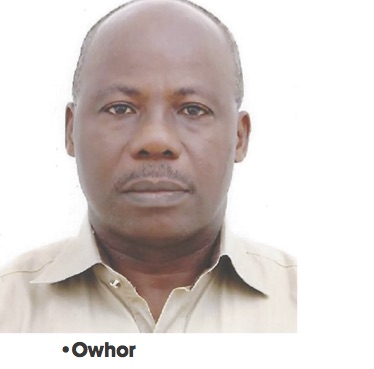
Dr Nathan Owhor, a Development Economist in this interview with Daily Sun pin points the place of security in development and the industrial sector to drive development.
Excerpts:
Industrial sector
The prosperity of any domestic economy depends largely on its industrial capacity. But the industrial sector cannot grow and bring about the expected development without security.
The overwhelming influence of security to the growth of the industrial sector for sustainable development therefore cannot be over emphasized. Clearly, it is instructive that the call for police reform should be a major priority of the present administration.
State police
In any case, the issue of state police as a reform agenda has been severally canvassed and opinions have varied on its implications for security and development. The only low point on all discussions around state police has remained the apparent fear of abuse by the state chief executives. But this fear, I strongly believe is misplaced as even the current police structure is constantly abused by the political and economic elites. In fact, anybody in Nigeria, even non-Nigerians with cash to spend has used the Nigerian Police as a tool of oppression. The ordinary citizens have been brutally assaulted by those who can illegally procure the services of the Police. So, nobody should assault our sensibilities and raise the issue of abuse as the reason to discredit the call to reform the Nigerian Police.
In any case, I want to shift the conversation from state Police to Regional Police.
Regional police
The current six geo-political zones which could best be described as Regions simply put were designed to address the fear of the minorities in the three earlier dominant traditional regions in Nigeria. So, a six regional police structure is consistent with the six geo-political zones. This foundation is necessary to put this discussion in contest and to justify the new conversation which will apparently help in reforming the Nigerian Police.
The regional police structure is far better than the current unitary structure in a federation in several ways. Principally, the states in each region will contribute men and materials to the regional police with a Regional Police Council as the highest decision-making body. Again, no one state chief executive will have unbearable influence or control over the regional police because the command structure is flat and the response time to any issue of abuse is collective and short. More so, the mechanisms for checks and balances are divested such that influence and undue patronage will not fester and create a cult of untouchables. The current men and women in service who will be redeployed to their regions will be retrained and assessed and those with evidence of bad conduct eased out. There will be easy monitoring and evaluation such that only competence is rewarded and the rest uniformed men and women are put on their toes regularly.
Security
On the issue of security, it is evident that the current security challenge in Nigeria is regional. Each region is dealing with a unique type of criminal gang. Since the police is the face of internal security in any democratic society it is important that a regional approach to the policing system is evolved. For once, the approach will present a sense of regional commitment to dealing with a regional security challenge. This sense of regional identity has a way of stimulating the desired inner strength, motivation to tackling a common regional problem. The current situation where strangers are largely deployed to deal with internal regional criminal elements amounts to putting a square peg in a round hole.
It is evident that dealing with these gang of criminal elements is unduly prolonged because most officers and men have no emotional attachment to the areas of conflict. What you find most times are therefore officers and men whose approach to the fight is commercial. The more the conflict is prolonged, the more the allowances and other illicit criminal gains which have become major attractions. The restoration of peace which ought to be the prime source of motivation has taken flight and the abuse of the innocent locals and lawlessness have become common place features in all theaters of regional conflict.
Closely associated with the security challenge is the absence of peace and development with its attendant poverty, hunger and unemployment. To avert this apparent and protracted national shame, the need for regional police has become apparent. The restoration of peace through the regional police structure will speedily reduce poverty and hunger as the rural folks will return to their farm lands. Nigerians are not beggars and have no business staying in camps and waiting to be fed. The restoration of peace will also stimulate economic activities with several layers of opportunities for national development.
Textile industry
The regional police for example will have a direct impact on the textile industry, a key sector for national development. With a deliberate policy for all uniformed agencies to buy their garment materials and accessories locally, the police component will have six different colours of uniforms across the six regional formations. An average of three sets of uniform per personnel in a year will revive at least five textile industries. These textile industries will create several employment opportunities and the value chain has the capacity to create several other layers of employment.
The new conversation towards police reform for the new government should therefore focus on a regional police structure. The relationship between regional police, security and development is obviously cordial. The bureaucracy will deliberately be flat for effective supervision. The overall outcome will be regional identity and ownership, loyalty and regional sentiment. The result this kind of regional commitment and mentality will engender will give the police in Nigeria a new image.