Follow Us on Google

From Juliana Taiwo-Obalonye, Abuja
The Civil Society Legislative Advocacy Centre (CISLAC) has emphasised that taxation continues to be the most practical and trustworthy fiscal policy tool for raising revenue for development funding that is sustainable.
It, however, pointed out that in the Nigerian case, it seems to be beset with difficulties, such as abuses glaring for all to see. It advised that to make sure tax incentives are utilised for the goals for which they were designed, the governance of tax expenditures needs to be changed.
It added that to enhance its tax structure and raise more money for development projects, the government should collaborate with international organisations like the Organisation for Economic Cooperation and Development (OECD) and the International Monetary Fund (IMF).
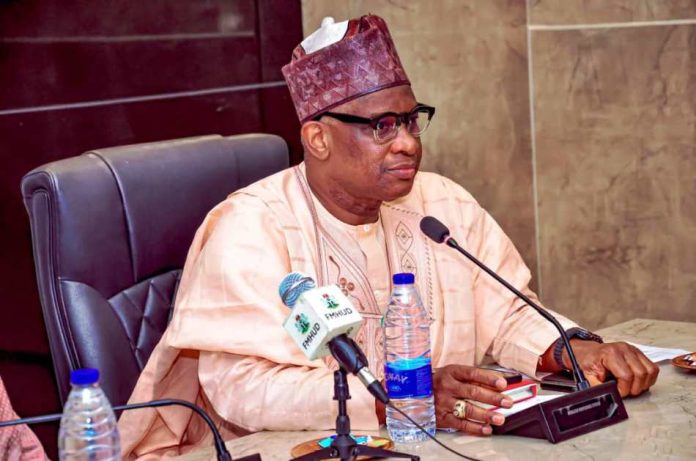
Executive Director of CISLAC, Auwal Ibrahim Musa (Rafsanjani), stated this at the opening of a two-day workshop on “Reforming Tax Expenditure Governance in Nigeria,” in Abuja.
The workshop was organised in collaboration with CISLAC and International Budget Partnership.
Rafsanjani quoted the Global Tax Expenditure Database 2020 report, as saying Nigeria had a Tax Expenditure of N5.84 trillion (3.8 per cent of its GDP) which was just over 50 per cent of its 2020 budget.
In a similar manner, the Federal Government noted that the Tax Expenditures in 2021 amounted to N6.68 trillion, approximately four per cent of the GDP. These figures indicate that the government is losing a significant amount of revenue that could have been used for development projects.
“According to the Global Tax Expenditure Database 2020 report, Nigeria had a tax expenditure of N5.84 trillion (3.8 per cent of its GDP) which was just over 50 per cent of its 2020 budget.
“In a similar manner, the Federal Government noted that the tax expenditures in 2021 amounted to N6.68 trillion, approximately four per cent of the GDP.
“Reports of indiscriminate waivers and concessionary approvals have all contributed to questioning the bearing and economic sustainability of this initiative of the government.
“The law regulating the granting of incentives places enormous discretionary powers to the executive arm of government.
“The governance of the incentive regime is also at best opaque and lacks the scrutiny necessary to guarantee transparency and accountability in the process leading to a situation where the supposed benefits are not optimised,” he said.
Rafsanjani said the Federal Government has kickstarted its agenda with the inauguration of the presidential committee on Fiscal Policy and Tax Reforms.
He said the 10th National Assembly has reportedly launched over 50 probes into the alleged mismanagement of funds and other infractions by agencies of government.
“This includes the recent House probe into the N14 trillion revenue loss to tax incentives, waiver abuses by public institutions and companies benefitting from such incentives on July 13, 2023.
“While we commend these efforts, they are yet to yield any significant prosecutorial actions or outcomes as the National Assembly lacks the constitutional power to prosecute erring officials.
“The constitutional provisions that make the implementation of the resolutions and recommendations made by parliament non-binding on the government, leaves it at their discretion to implement such recommendations.
“Our intervention is premised on the above, with the aim of complementing efforts towards improving the understanding and capacity of members of relevant legislative committees on the concept of tax expenditure governance in Nigeria, gaps in its implementation and its implications for revenue mobilisation, debt management and citizens’ welfare,” he said.
CISLAC boss said it partnered the National Institute for Legislative and Democratic Studies (NILDS) to seek reform of tax expenditure governance. The partnership, he explained, aims to address the challenges of transparency, accountability, and legislative oversight to ensure tax incentives are used to achieve their intended purposes. By doing so, they hope to promote business growth, encourage job creation, and reduce the burden that tax producers place on consumers by transferring.
The International Monetary Fund (IMF) had emphasised that tax capacity is required if the state is to fulfil its role in sustainable and inclusive growth. Taxation is necessary for the provision of public goods and services, redistribution of income and wealth, and macro-economic stability. The IMF has also provided tax policy advice to many developing countries, including Nigeria, to help them improve their tax systems.
Also, the OECD had recently struck a ground-breaking tax deal for the digital age, which ensures the international tax system is fit for purpose in a digitalised and globalised world economy. This agreement is far-reaching and will help to address some of the challenges faced by developing countries in mobilising revenue through taxation.
Director General of the National Institute for Legislative and Democratic Studies (NILDS), Abubakar Sulaiman, in his remarks said fairness, justice, and equity should be prioritised in tax management in the country.
He regretted that in spite of abundant opportunities, Nigeria has been confronted with a revenue challenge amidst a rising debt profile.
The director general said all sectors of the economy require increased government funding to address lingering challenges.
Sulaiman stressed that in the midst of these challenges, tax expenditures offer an opportunity to fund national development.
“While big firms receive tax waivers to continue operations, poor people continue to pay higher prices for goods and services.
“Furthermore, it appears that over the years, tax policy has been aimed at taxing the poor rather than the rich, hence, finding a fair balance is crucial,” he said.
Chairman, House Committee on Aid, Loans and Debt Management, Lanre Okanola, on his part said strengthening the legislature’s role in tax expenditure governance is crucial.
He argued the legislature should be required to review and reauthorise tax incentives at predetermined intervals.
He contended that prior to the implementation or expansion of tax incentives, impact analyses should be carried out.
In order for tax authorities, legislators, and administrators to efficiently comprehend, monitor, and assess tax expenditure, Okanola advised investing in developing their ability.
He also said public participation in tax expenditure was critical as the public can play a vital role in scrutinising incentives and their impact
“The management of tax expenditure is a critical aspect of fiscal governance in Nigeria.
“By addressing the challenges of transparency, accountability and legislative oversight, we can ensure tax incentives are used to achieve their intended objectives.
“Strengthening legislative pathways for reforming tax expenditure governance is not only essential for preserving government revenues but also for promoting equitable and sustainable economic development in Nigeria,” he said.