Follow Us on Google
-
How twin babies survived acute malnutrition after mum’s death
-
1 million children risk severe malnutrition in N’East this year -UNICEF
-
Insurgents displacement, poor food fuelling cases in Borno, Yobe – Official
From Timothy Olanrewaju, Maiduguri
The birth of baby Hassana and her twin brother, Hussein (other names withheld), at a public hospital in Damaturu, Yobe State, brought joy to the family as well as community members who heard the news. This was so because the twins were the first precious gifts to the family.
Sadly, their excitement was cut short as the news of the death of the twins’ mother, Mariam Hassan, filtered in hours after delivery. Her death, reportedly caused by health complications, elicited pity for the innocent babies and caused sorrow for the family.
The twins have been denied breast milk from their mother and maternal care. They are now left in the care of their grandmother, 52-year-old Hajja Zara Goni.
The only food Zara Goni had for Hassana and Hussein, were porridges and cereal which she prepared and diligently served them.
“It is not easy feeding the babies and taking care of them,” Zara confessed to Saturday Sun. “Alhamudullah! (Praise be to Allah). We never thought they would survive,” she added.
She spoke in Kanuri language through an interpreter at the centre. She recounted her experience on how she fed the babies for nine months, hoping to see them grow bigger but in contrast, they turned thinner and skinning each day. The Yobe State task force committee on malnutrition discovered the twin’s predicament during a routine check, and directed their caregiver to the treatment facility.
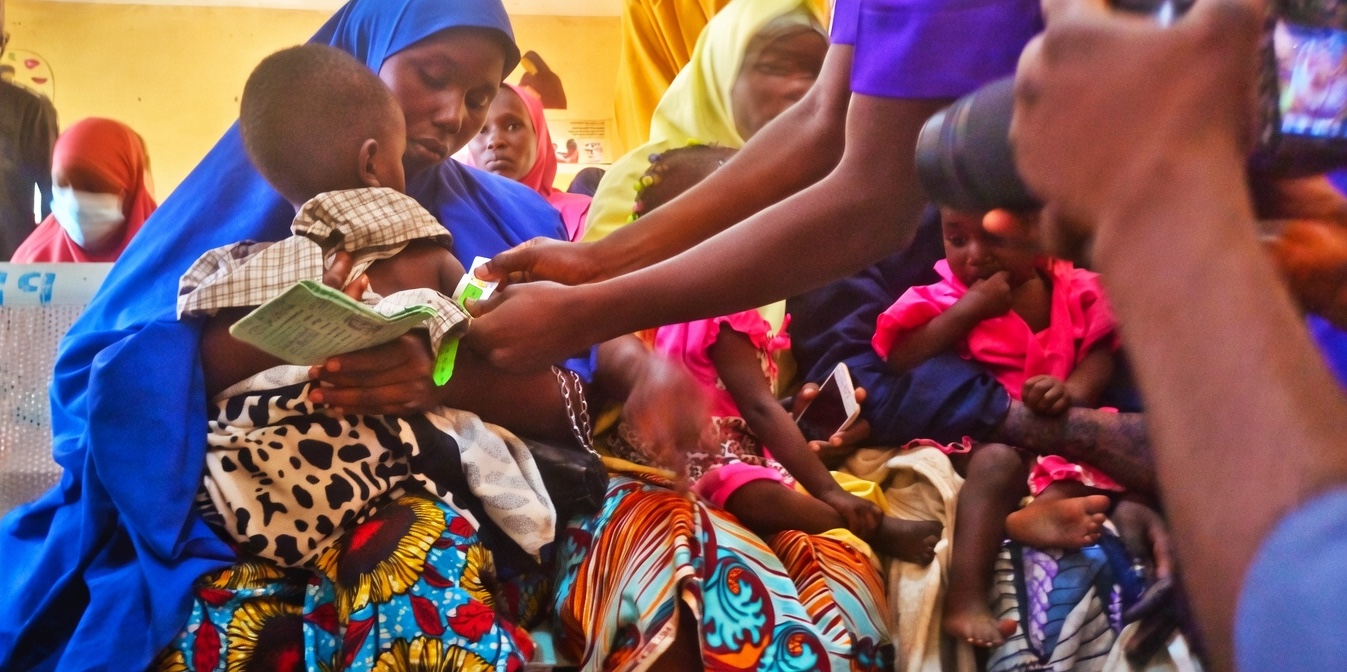
“I didn’t know what was happening to them. I just left everything to God,” she disclosed as she placed the babies on her hands at the Mairi Primary Health Care Centre (PHCC) Damaturu where children hit by malnutrition are treated.
According to medical experts, malnutrition is lack, inbalance or deficiency in nutrients intake. They said this situation affects child’s growth and put the child’s health at great risk. Malnutrition is real in Borno, Adanawa and Yobe known in humanitarian circle as the BAY states. These are states critically affected by insurgency and massive displacement.
Dozens of acutely malnourished children are brought to Mairi and Gwange Primary Health Care Centre almost daily for screening and care. Health workers at the centres revealed that most of the severely acute malnutrition cases have undermining conditions which require intensive treatment, care and follow up.
United Nations Children’s Fund (UNICEF) Nutrition Manager, Mr Joseph Senesie disclosed that nearly a million children are likely to be affected by severe acute malnutrition in Borno, Adamawa and Yobe States this year.
“We are projecting about 900, 000 children to have severe acute malnutrition in three BAY states in northeast Nigeria for year 2026. This is so due to increase in recent incident of attacks by armed groups,” he explained.
He said UNICEF leads a cluster of agencies in strong collaboration to tackle malnutrition and save children’s lives. He noted that feeding among low income population fuels malnutrition in the area. He noted that children have greater nutritional needs than adult, stressing that lack nutritional foods makes children to be more at risk.
One of such cases is 23-year-old Mariam Mohammad, a mother of two. Mariam said she could not breastfeed her nine month old baby because her mammary failed to produce milk. Medical workers attributed this to her poor state, aside other possible health reasons.
“I was eating but my breast wasn’t producing enough milk to feed the baby. So the baby started getting skinny,” she told Saturday Sun at the clinic. It was her fifth routine check at the centre.
Also Amina Shettima, 23, who sat on same row at the clinic, spoke on similar experience. Curiously, they are both of same community in Damaturu.
Saturday Sun observed that the malnourished children are placed on a special nutrient support called Ready-to-Use Therapeutic Food (RUTF).
Yobe State Primary Health Care Nutrition Officer, Hajiya Hadiza Maina explained that RUTF is an energy-dense peanut paste for the treatment of severe acute malnutrition in children ages six to 59 months. She explained that the food helps in rapid weight gain, boost child nutrition and energy within short period of intake.
“Yobe has a total of 3,264 cartoons of the RUTF procured through the Child Nutrition Fund of $100,000 USD with UNICEF also contributing same amount,” she told the reporter.
She also explained that Community Health Volunteers in the state were trained to conduct house-to-house-searches, identify probable malnutrition cases and direct mothers to any of the 306 Out-Patient Therapeutic Programme (OTP) facilities in the state where the children will be screened for moderate or severe acute condition.
Saturday Sun sought to know why malnutrition is on the increase in Borno and Yobe states years after malnourished children were first discovered at Bama, Borno’s second largest town after it was severally attacked by insurgents between 2014 and 2017.
Executive Secretary, Yobe State Primary Health Care Development Board, Dr Babagana Machina equality blamed renewed insurgents’ attacks that disconnected people from farming and their other means of livelihood. He said malnutrition is caused by multi-dimensional factors, including displacement. He discussed that Machina, Nguru and few other local governments in the northern and central part of Yobe have higher cases of malnutrition.
He however said the state government and UNICEF partnership was helping in the reduction of cases this year.