Follow Us on Google

From James Ojo, Abuja
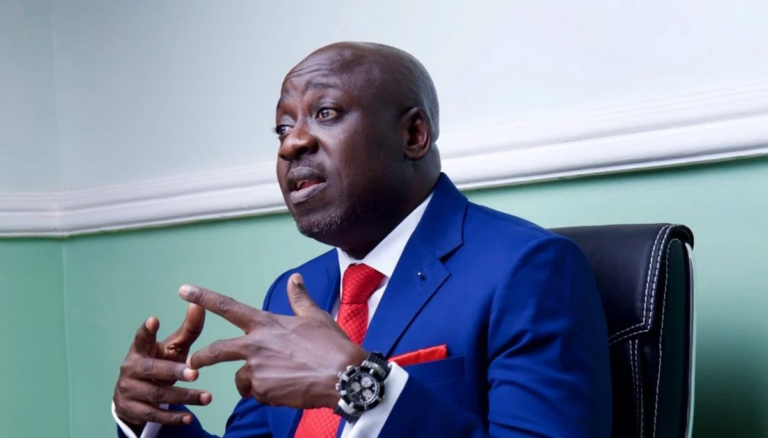
Before his appointment as pioneer Provost of the Anti-Corruption Academy of Nigeria (ACAN), the training and capacity building arm of the Independent Corrupt Practices and other Related Offences Commission (ICPC), Professor Sola Akinrinade had served as the Vice Chancellor of Osun State University, as well as a Visiting Professor to the Nigeria Universities Commission (NUC).
Professor Akinrinade shared his visions for the academy and other issues on corruption.
We hear that the take off of the academy was delayed due to paucity of fund, how has the funding been? Has there been any improvement?
It is true that the academy as conceptualized had some challanges at the beginning, which is not strange, but gradually, the issue of funding is receiving prompt attention, the infrastructure on ground attests to the fact that funding of the academy had been enjoying top priority of the chairman of the commission. The chairman of the commission sees the Academy as an investment in the future of the country, a centre of excellence in anti-corruption research, knowledge dissemination, training and capacity building and it is structured to become a specialized institution expected to become the hub in the African region. The truth is that the establishment of the Academy has raised the stakes in the fight against corruption in the country.
What has been the impact of the Academy in the new drive to combat the scourge of corruption in the country by the Buhari administration?
The war against corruption has various angles to it, and for us in the Academy, in strict adherence to our mandate, the most critical point is prevention. How do you prevent the acts from being perpetrated? How do you create vast environment that people see development as a challenge to be embraced and corruption to be shunned and seeing corruption as a drawback from our development potential as a nation. If you look at it in the context of prevention, education, capacity building, that is where we come in as an academy. The Anti-corruption academy of Nigeria has continued to train the staff, build the capacity of the staff from the ICPC for them to do their work.
As time went on, an expansion of the scope became obvious, particularly in the post 1999 agenda in the country where the war against corruption had a more visible process with the EFCC, ICPC and others. In 2014, when the academy did an expansion of the training school, things began to change on the need to engage beyond one’s own internal facts, we need to engage the public to be able to develop that capacity to understand core corruption processes in agencies to fight corruption on their own without at all times having to go to the anti-corruption body.
Have you designed a feedback mechanism in furtherance of achieving the mandate of the Academy?
That is the root of the work, to actually look at what impact you are making and to get feedback. There are two levels, one is the feedback we try to get during the course of each training and we have our questionnaire for participants on their expectations and after the training, what else would they like to see from future trainers. Beyond that, is the feedback upon their return to their offices which is more important. We are more concerned with how they are implementing what they have learnt, and that is where we are now.
Such methodology had to be in place, but what we are doing now is to try to measure what we have done. But the best measurement is done by the participants, the beneficiaries of our training programmes. Over the last two years, we have worked with MDA’s, private sectors, National Broadcasting Commission, chief executives and various categories of individuals from organizations to be able to address issues relating to corruption and war against corruption. The organization of integrity management and the anti-corruption leadership academy have participants from the private sector for a senior executive course, participants from several petroleum companies, MTN, Access Bank and other private sectors.
How is the Academy addressing technology induced corruption?
It is a worrisome development and the Academy is not oblivious of the dangers inherent in adapting technology to commit crimes. We are equally looking at technologies in criminalities. Crime is constantly on the move; the dynamics of crime changes and technology must respond to it. Take for instance financial crimes, the more the anti-corruption agencies devise means of tackling them, the more the criminals also look for how to bypass or overcome any methods put in place as a check. As an Academy, we are trying to address those issues; we are also trying to build capacity of agencies to be able to respond to those kinds of crimes. We have received support from agencies to build up our infrastructure for training; we have attitude based training, which is going to be the major thing for us this year, virtual learning capacity has been enhanced greatly with all gratitude to UNDP that supported our infrastructure and UNODC which is supporting us with equipments.
We have to be mindful of the fact that if we are going to address contemporary challenges, it must come with contemporary tools. Particularly the professionals in corruption agencies, they need to be equipped with contemporary knowledge and skill to be able to address contemporary challenges. We are beneficiaries of the support from UN agencies, supporting us in most aspects.
What are the experiences you have garnered so far, as the pioneer Provost and having pioneered a State -owned University as Vice chancellor?
Remember that I don’t work alone, I work with the board of the ICPC, I work with the management of the ICPC and I work with the leadership of the academy itself, so it is not about me in the larger structure. The Academy is a new academic institution to drive knowledge building in anti-corruption. Of course, there are challenges, we need to get more facilities and equipment, money is never enough, if you give me the total budget of Nigeria, I can use it very well, I can assure you of that, if you give me 10billion today, there are things I can always do with it to build facilities and infrastructure to build people, courses and programmes, to bring in people for training including youths. There is always something to do.
Money is always a major constraint, nobody can do much about, as for personnel, we are working a new tenure, most of the people we are working with, we are building ourselves simultaneously, developing ourselves to develop others. Indeed working in the public service level has been a learning experience for me; I was part of the ICPC NUC team.
There are challenges ruling university system, but the more striking aspect for me is what we stand to promote in the university situations. When we brought in other tertiary institutions to come for transparency in the tertiary education system, they all agreed to that, it is bad to find out that corruption is in education. It is a cycle that continues and impacts on us negatively, so corruption in the tertiary system generally is very dangerous because the student we are producing are the future of this country.