Follow Us on Google

•30-year-old irrigation project boosts yields, as farmers plant three times yearly yearly
From Olanrewaju Lawal, Birnin Kebbi
Rice farmers in the upper River Niger Basin in Kebbi State are counting their blessings. They are wondering what life could have been without the great river.
This was not exactly the scenario about 30 years ago. Not until Gen. Ibrahim Babangida’s regime empowered farmers in the area by initiating a now profiting irrigation project, which is boosting yields. This is now providing life-changing opportunities for residents of Tuga in Bagudo Local Government Area of the state.
Tuga village, it was learnt, is divided into two parts by the River Niger. Its settlers are mainly Fulani, who engage in fishing, rice farming and cattle rearing. The community is also patronised by foreigners and smugglers, ferrying cars into Nigeria from Benin Republic.
Now, a 30-year-old aerodrome constructed by Julius Berger in the course of doing a bridge in the area and the River Niger are adding real value to the lives of the locals.
“The river you are seeing is assisting us to plant rice three seasons in a year; we are surviving on the proceeds we make,” said a community leader, Mallam Ahmed Suleiman.
“As for the aerodrome, private jets started landing here 30 years ago when Julius Berger was constructing the bridge. The runway was constructed so that their jets, bringing their equipment from Abuja airport could land in our village instead of transport them by road.
“After they left many years ago, the runway is still functional. Government planes coming to spray our rice farm land and take off from here.”
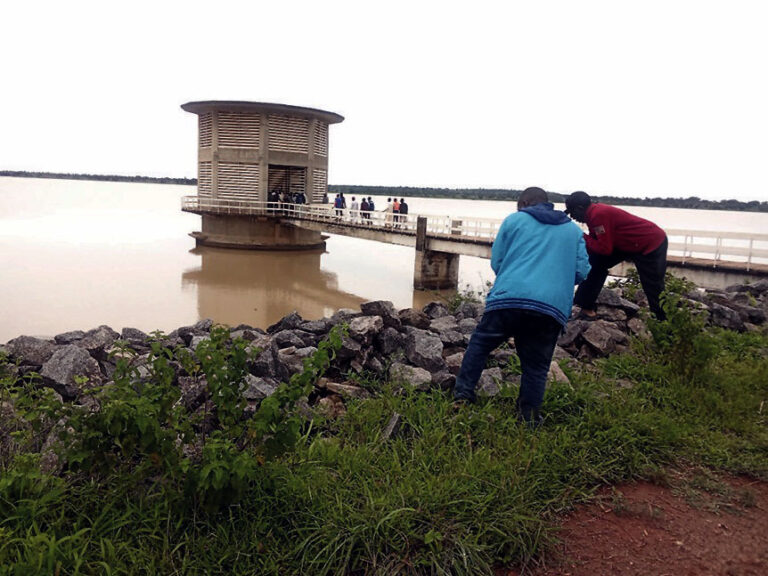
Daily Sun was told that the River Niger valley in Kebbi State is estimated to be about 12,600 square kilometres. About 250 farmers under the Water Users Associations were reportedly engaged in rice cultivation on it in a large scale. They rely on the River Niger as their water source.
Recently, an agric firm, Labana Rice Mills was said to have started rice cultivation in the community, providing both casual and permanent jobs to the Tuga residents. The farmers are happy with the federal government for its support. A few years ago, government constructed a flood protection dyke. This helps to save rice farms from flooding.
Malam Nasiru Mudi, Manager, Sokoto – Rima River Basin Development Authority, whose agency is in charge of River Niger Valley Irrigation Project from Kamba to Yelwa disclosed that the flood plain of the valley was a blessing to farmers because of its reliable water source. He said it was rightly so because the state government was also making effort to encourage irrigation farming.
“About three kilometres away is the River Niger. Kebbi State has over 500,000 hectares of FADAMA land here. River Niger is our reliable water source. It is a very large area. I’m sure it is enough to feed the whole nation.
“We have water at the River Niger and we have pumps there to lift the water from the river to the farms. A medium pump delivers 400 cubic litres of water per hour. Currently, we have four of the pumps at the valley deployed by Labana Farms. Over 10,000 hectares along the valley was irrigated this year. By next year, we will do more than 20,000 hectares.”
Also speaking on the usefulness of the valley to the farmers, Alhaji Umar Dodo Aliero, the Project Coordinator, Labana Farms, said the valley was the best water source they needed to boost rice production in the area.
“Without it, this area cannot be arable considering the volume of water that we need to grow our rice.
“Each machine here pumps over 580 litres of water per second. If you multiply that by one hour, you will realise that, that is a lot of water.”
“With the water from the River Niger available here, it is expected that farmers will harvest nothing less than 198,600 bags of rice during this year.
“We have developed our own variety of rice here aside the Faro 44 specie that takes about 120 days between transplanting and harvesting. We now have two types of rice seeds that we are planting here: the Goria, which takes about 90 days to mature and the Jemila, a long-grain rice that is also ready for harvesting in 90 days compare to others that are ready for harvesting in 120 days.”
Another farmer, Alhaji Kabiru Bagudo, affirmed that the Niger valley was a blessing to farmers in the state.
He said: “As you can see, the river is a blessing to those of us farming in this area. It is the only reliable water source; it goes a long way in making irrigation farming and fishing possible for many people here.
“We have over 250 farmers currently benefitting from the Niger valley irrigation project under the umbrella of Water Users Association. Many of us are rice farmers; we converged here because of the importance of the River Niger flood plain. I think the presence of Labana Farms has also helped us to boost our farming activities. It opens the way for many of us; we are tapping from the valley and recording bumper harvest.”
General Manager, Labana Farms, Alhaji Abdullahi Zuru, told the correspondent: “President, Muhammadu Buhari was in Kebbi State sometime ago to launch the Anchor Borrowers Programme on rice and wheat cultivation. The idea was to make Nigeria self-sufficient in food production particularly rice.
“According to records, the country needs 6.5 million tons of rice to feed her citizens. This is a huge task which might not be achieved immediately with the way things were going. But with the potentials of the Niger valley, the goals of the Anchor Borrowers scheme will be achieved soon.
“We have farmers who are willing, committed and determined to produce rice. All they need is support and assistance, which they are getting now. The number of farmers that are into irrigation farming here has tripled because of the revolution that is going on here at the Niger valley. This is further boosted by the agricultural programme of the federal government. We believe that what is going on here at the moment will provide enough paddy rice for ingenious Nigerian millers.”
Zuru informed that Labana Farms, which was established few months ago, currently had 5,500 farmers in its out-growers scheme.”
According to him, “we assist them with water pumps, seeds and fertilizers. At the end of the day, they will produce and directly bring their produce to our company for sale. Under the Anchor Borrowers programme, we also have about 5,000 farmers allocated to us by the Central Bank of Nigeria to produce rice and sell to us.
“On our own, we have 2,250 farmers who we are assisting apart from the out-growers.”
The surveyor who designed the surface demarcation of the area, Malam Auwalu Garba Abubakar, said the entire farm area was about 186,000 hectares of the flood plain. And this is being effectively utilised by farmers.
“We plan to create roads between the canals that supply water to the farm for easy conveyance of fertilisers and movement of machines like the trans-planters and combined harvesters during planting and harvesting periods. The survey will also enable us to know the low and high areas in the farms so that when we release water it can flow to all parts of the farms.”
A farmer, Yesufu Umar from Tuga village commended former military head of state, Gen. Babangida for initiating the project 30 years ago, stressing that the initiative had become a huge blessing today.
“We have been benefiting from his action in the past 30 years now. If he had not done it, perhaps, the community, local government and the state government would be suffering today.”