Follow Us on Google
By Damiete Braide
In the heart of Nigeria, where vibrant culture intertwines with the written word, a group of writers held a Zoom conference last Sunday to condemn the recent explosion that shook the city. With pens as their swords and words as their shields, they united in a symphony of voices against the devastation.
Mr. Folu Agoi, President of the Nigerian Centre of PEN International, in his address of welcome, said the Zoom conference was dedicated to the commemoration of victims of the Ibadan explosion.
“The reading is a special one, because of the situation of things in Nigeria especially with regards to insecurity. On January 16, there was an explosion in Ibadan and in a middle-class estate where one wouldn’t expect that explosive would have been kept.
“We are here to draw attention to this reality of our existence in this country, a situation where you would just wake up to hear about massive destruction of lives and properties despite the assurances of security agents. We are sympathetic to the plight of humanity. Ibadan has played a lot in the lives of many intellectuals. Literature is a symbol of global culture,” he remarked.
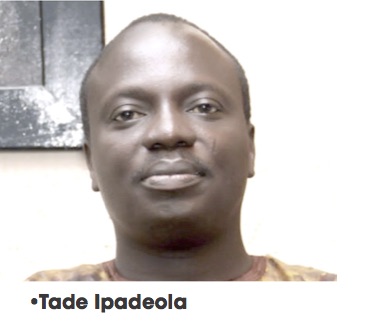
Tade Ipadeola, a lawyer and author, recalled, “I was in Ibadan when the incident happened. My house is 7km away from the centre of the blast. Everybody living in Apata felt the shockwave. Every house located 600m from the epicentre was literally flattened.”
“This is not a small thing and in trying to put a scale to it, I went back to what Harry Garuba, a Nigerian poet, put down twenty-two years ago during the explosion at the military Cantonment at Ikeja, Lagos, and what I can see is an immediate correlation with the disregard for the numbers that are involved. We are not talking about a number of books or livestock but several lives that were lost.” He read a poem entitled “Unnumbered” by Harry Garuba.
Korede Yishua, a journalist and writer based in the United States of America, added what happened in Ibadan still led to failure in intelligence gathering. “I find it difficult that all the security agencies did not know that someone stored that kind of explosives in a residential area, and it took great damage that we witnessed for the information to start coming out. This is a message for those in authority that this kind of thing should never happen again. Explosives should be stored in military facilities and not in residential areas.” He went on to read a poem entitled “Explosives Don’t Discriminate.”
Lola Ogunrinde, a novelist, said the explosion inspired her to write the poem, “Einstein and Oppenheimer.” Shevakdon said: “Ibadan is a place for arts and culture. It is a place where memoirs ring a bell to us. For me, what literature does is bring out memoirs. Literature is also used to remind our leaders that they should be quoted appropriately right over this matter. People who are guilty of the explosion should be brought to book.”
In the same vein, Akeem Lasisi, a poet and journalist, said: “It is a pity that it is a tragic incident that brings us together this year. When I first heard about the explosion and the confusion, problems and tragedies that followed, what first came to my mind was the killing of the Chief Justice of the Federation, Chief Bola Ige, because it happened in his Bodija home. Both are terrible experiences, and they somehow are connected.” He read a poem, “Bodija: As We Bury Our Unwilling Dead.”
For Omolara Woods, the explosion in Ibadan shocked her greatly, “and it will be wonderful to see how poetry speaks to it and how we can be comforted.” In conclusion, it was agreed by all that there will be a need for scientific evaluation of this incident so that the actual truth would come to light.