Follow Us on Google
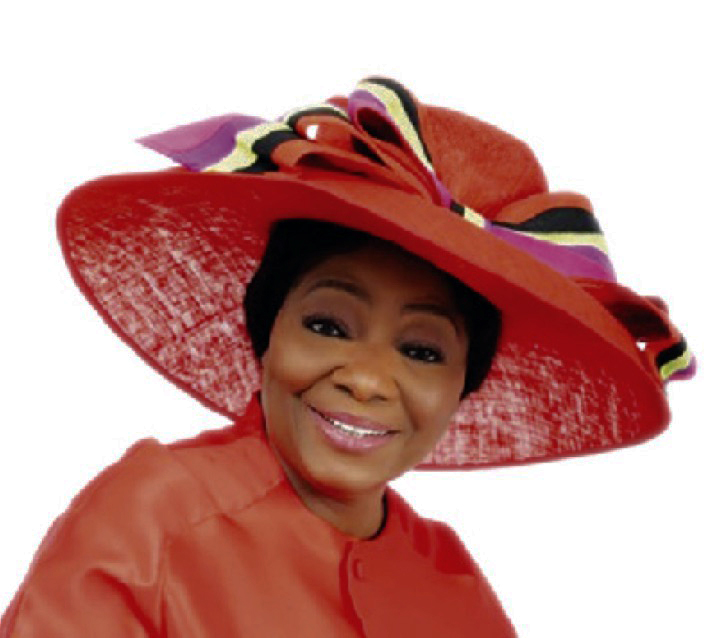
From Adewale Sanyaolu, Houston
What began as a simple holiday trip to the United States in 1997 became the foundation of one of the most prominent Nigerian churches in the State of Texas.
For Pastor Modupe Sanusi, the Senior Pastor, Redeemed Christian Church of God (RCCG) Restoration Chapel, Houston,Texas, and fondly called Mummy Pastor, and her late husband, Pastor Kamal Babatunde Sanusi, the journey was never part of their original plan.
Both, who were successful bankers in Nigeria, arrived in America for a church conference with every intention of returning home. But according to the woman, a divine instruction changed everything: “You are not going back. I have need of you here,” she recalled hearing the call.
Nearly three decades later, that moment of obedience has blossomed into RCCG Restoration Chapel, Houston, a thriving ministry that grew from a small living-room fellowship into a multi-building church complex impacting lives across generations through worship, community outreach, youth development, and social support initiatives.
In this interview, Pastor Sanusi shares the story of growing a modest church of 25 members into a congregation of about 1,500 members and still growing.
The church, according to findings, is the largest RCCG parish in Houston and by extension in the State of Texas.
How did you come into the United States?
My husband, Pastor Kamal Babatunde Sanusi, and I were both bankers in Nigeria before we came to the United States in 1997. He worked with Nigerian Merchant Bank, while I worked with Afribank Nigeria Limited. Before relocating, my late husband was already an Area Pastor in Nigeria at RCCG Surulere Main Parish in Ojuri, Aguda, Lagos. We originally came to America for a church conference in Indiana and planned to return to Nigeria afterwards. But while we were here on holiday, God spoke clearly to my husband that we should not return to Nigeria. The message was, “I have need of you here.”
At the time, my husband had already started his own accounting firm after his bank folded up, and the business was doing very well. Financially, we were comfortable in Nigeria, so relocating permanently to America was never part of our plans.
Getting the visa itself was miraculous. Everyone who attended the embassy interview with the same conference invitation letter was denied except us. Initially, our visas were also rejected, but the Holy Spirit led me to question the reason for the denial. After I spoke with the interviewer, she cancelled the rejection immediately and approved our visas on the spot. Looking back now, we know it was God’s plan.
How difficult was the decision to remain in America?
It was extremely difficult for me emotionally. We had a comfortable life in Nigeria, good jobs, financial stability, our own home, cars, and ministry work. Suddenly, we were being told to stay in America with practically nothing.
We were living in my husband’s brother’s house, sharing a room. We had no car, no Social Security number, no green card, and no clear future. I remember crying and asking God why we had to start all over again. But after seeking God in prayer, He confirmed the instruction to me as well. Eventually, I accepted that this was God’s direction for our lives.
How did RCCG Restoration Chapel begin?
The church started as a fellowship in September 1997 in someone’s home. Later, the fellowship moved into a very small rented space at a strip mall. The sanctuary was tiny, the pastor and secretary shared one office, and all the children used one small room regardless of age. At that time, the church membership was about 20 to 25 people.
Even in those humble beginnings, my husband had a strong vision. God told him, “I want you to build for me.” Many people, including some ministers, doubted the vision. They told him, “This is not Nigeria. Things do not work like that here.” But he remained focused on what God told him.
When did the church acquire its permanent site?
Around 1999, God helped the church acquire the land where the church stands today. Another body was interested in the same property, but through God’s favour and careful financial management, the church was able to secure a bank loan and purchase the land. The first structure built was only the downstairs sanctuary because there was not enough money to complete the upper level. Later, the upstairs section was added. The building was completed and dedicated around the year 2000.
Other News
It was later discovered that this became the first Nigerian church in Houston and possibly in Texas to purchase land and build its own worship centre. At the time, we did not realise we were making history; we were simply following God’s instruction.
How did the church continue to expand?
As membership grew rapidly, the sanctuary became too small. Attendance increased from about 20 members to roughly 200 people within a short period. People even had to watch services on television screens outside because there was not enough seating space.
About three years later, the church built a larger sanctuary that seats about 1,500 people. After that, additional office spaces and children’s classrooms were constructed because the church had outgrown the earlier facilities.
Later, another major building was added. It houses the children’s ministry on one side and the Enoch Events Centre on the other side. The events centre seats between 450 and 500 people and is used for conferences, weddings, and community programmes. The centre later won an award as the best event centre of the year.
How did you become the senior pastor here?
On May 4 2022, tragedy struck and shook the very foundation of my life. A part of me was gone. That day remains the darkest moment of my life. The cold hands of death snatched my husband away, leaving me to care for two young children aged eight and seven respectively. Before the birth of those children in 2013 and 2014 in the United States, my husband and I had waited upon the Lord for about 33 years before I was blessed with the fruit of the womb at the age of 60.
My husband was 68 years old at the time of his passing after a brief illness. As the Senior Pastor of the church, with me serving as his assistant, the mantle of leadership naturally fell upon me as his deputy. Since 2022, I have led the church, and I must say the Lord has continued to strengthen and sustain me.
What has been the greatest challenge in managing a church of this size?
The greatest challenge is people management. Leading people requires wisdom, humility, patience, compassion, and the help of God. Pastoring in America is very different from pastoring in Nigeria. In Nigeria, people tend to submit more easily to authority. Here, people ask questions and want explanations for decisions. People also expect their pastor to be more than just a preacher. You must be a father, mother, counsellor, mentor, and friend. Many immigrants are lonely and searching for emotional support, so ministry here demands much more personal involvement. Without God’s help, it would be impossible to do this successfully.
How has the church impacted the Houston community?
The church has focused heavily on raising children with strong Christian values and moral discipline. That vision led to the establishment of a school known as Redeemer’s Christian Academy, although it was later discontinued due to operational challenges. The church also runs welfare and feeding programmes. Food is distributed regularly to needy people and the homeless in downtown Houston.
In addition, the church works with local police authorities through regular community meetings aimed at discussing crime prevention and community development. Our outreach programmes are largely concentrated in Houston. As you know, Houston is a very large city. Although we support activities at the headquarters in Nigeria, as a church we do not operate outreach programmes in Nigeria in the same way we do here in Houston.
What role have church members played in the church’s growth?
The members have been extremely faithful and supportive. The church survives mainly on tithes and offerings from committed members. The church has never depended on government assistance, yet by God’s grace, it has consistently met all its financial obligations, including mission remittances, without failure since inception. Many members are deeply committed to serving God, giving faithfully, and supporting the church’s vision.
Has the church planted other parishes?
Yes. The church has helped establish several RCCG parishes within and outside Houston. Many of them initially carried the “Restoration” name before later changing names over time.
What role should the church play in nation building?
The church must continue praying for nations and raising people with godly values. I believe the major problem in Nigeria is the lack of the true fear of God. Many people attend church seeking miracles, but true transformation is missing. If leaders and citizens genuinely feared God and acted with integrity, many of Nigeria’s problems would reduce significantly. Families form the foundation of society. When families are grounded in God’s truth, nations become stronger.
What are your future plans for the ministry?
The focus is on succession and raising future generations. The church now has multiple age-based ministries: The adult church, the youth church, Ignite Church for college students, The children’s church. The goal is to nurture children and young people from an early age so they can eventually take over leadership of the ministry in the future.
We believe the foundation laid over the years will ensure the church continues to grow long after the current leaders are gone