Follow Us on Google

By Henry Akubuiro
Beside the rolling hills of Mpape in Abuja lay the Mamman Vatsa Writers’ Village, located in an eye popping estate built with lavished taste, comfort and calmness in mind. Here, Nigeria’s writers’ tribe call it home. It offers accommodations for the public, restaurants, a wine shop, a residency for writers, a library and, above all, an auditorium, where writers engage on literary and national issues, just as they did recently.
When the eddies of mists cleared in the mornings on Mpape hills, the flats and halls, for days, were redolent with the voices of Nigerian writers charting a new course for national security and how Nigeria would become a different kind of poster boy in a world that hardly talks about it in hyperboles.
Officially, the opening day of the 2026 international convention of the Association of Nigerian Authors was slated for 29th October, 2026, but skeletal activities started two days in advance with the arrival of a select group of delegates and journalists at the Maman Vatsa Writers’ Village, Mpape Abuja, for a series of capacity building workshops organised by the national body.
Essence of capacity building workshops
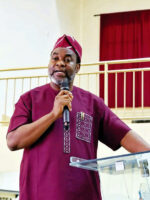
Speaking on the first day of the workshops, ANA President, Usman Akanbi, said the workshops were a response to internal challenges facing the association and the need to keep members in touch with changes in the publishing industry, where writers were expected to reap from the fruits of their labour. The workshop also aimed at shoring up the financial base of the chapters and streamlining their financial operations.
The organisers hoped that participants would come out of the workshop enriched with ideas on how to make ANA more stable and grow bigger. The president was optimistic, too, that the workshops would lay the ghost of internal divisions that had rocked the association in recent years to test. Besides, the writers would learn to tackle financial mismanagement, handle record-keeping with expertise and benefit tremendously from the knowledge and digital economy.
The workshops centered around “Image Building and Marketing”, “Financial Modelling”, “Data Collection for the National Survey of the Nigerian Writers Directory”, “Authorship and Reproductive Rights”, and “Managing Authors’ Rights in the Digital Environment”.
Akanbi, who described ANA as “the foremost literary body in Nigeria and in Africa,” said, “One of the main quests of sanitising the association is to reorient our members so that they understand why we are here. ANA is a non-governmental organisation, not a parastatal.” Thus, his administration’s new reforms were targeted at restoring the ideals and helping members understand their responsibilities.
ANA, said the president, had since moved on with its internal bickerings that bifurcated the association in 2018 at the Enugu Convention, but he reiterated that financial challenges at one point threatened its hosting of conventions.
To generate more funds for the association, he echoed that the association now enforced its annual dues stricter than before and had introduced improved record-keeping. State chapters were now offered financial memoranda to strengthen accountability. Looking back at recent achievements, Akanbi said the rejigged financial systems deployed by his administration had strengthened the association’s external audit records, setting it in a strong position to attract funding opportunities abroad.
The imperatives of the digital economy and the writer’s economy was highlighted by the partnership between ANA and digital bookstore cum publishing platform, Bold Scholars, to develop a directory of Nigerian writers. Bold Scholars offered practical steps on how to upload a writer’s book on its site and the ease with which transactions were done on the site and how money was remitted to the writers faster than other digital book platforms in the world. Participants were held in awe as Bold Scholars recreated the registration process.
Another collaboration at the two-day workshop saw ANA liaising with the Reproduction Rights Society of Nigeria (REPRONIG) and the Nigeria Copyright Commission (NCC) to educate members on protecting their intellectual property and earning royalties from their works.
Acting Executive Director of REPRONIG, Mr Tosin Akeredolu, explained that the organisation protects authors’ secondary rights by facilitating royalties when their published works were reproduced. Contrary to the impression that fighting intellectual thieves was a lost battle, the two bodies said it was not. For instance, Repronig had created a Digital Rights Management System (DRMS) that provides blanket licences to institutions in the country, which allowed them to reproduce copyrighted works legally while paying registered authors involved in the exchange.
Akeredolu said, “It is difficult to track any work. There is no tracker on paperback books. That is why we do a blanket licensing for institutions to ensure that whatever copying activities carried out in their premises are done lawfully.”
Besides, writers wouldn’t benefit from this, he said, if they were not registered. Thus, he encouraged them to register and upload their works on the platform to reap the reward associated with the platform.
Lending his voice, the Deputy Director and Head of Regulatory and Compliance at the NCC, Mr. Olatunji, advised writers to submit their manuscripts to the commission’s digital repository for safekeeping. He said this would serve as evidence should the authors’ copyright be infringed upon either through theft or unauthorised reproduction.
He also told ANA that the commission’s Special Taskforce Against Online Piracy (STOP) had adopted a multi-stakeholder approach to counter copyright violations, which included takedown notices, investigations and prosecution, if inevitable.
Former ANA presidents – Professor Femi Osofisan, Camillus Ukah, and Denja Abdullahi – put up cameo appearances during the workshops. Also did Jahman Anikulapo of Committee for Relevant Arts (CORA).
The topic on “Image Building and Marketing” was handled by Dr. Kabura Zakama, Mr. BM Nagidi, ANA National PRO (North), and Mr. Richard Inya, ANA National PRO (South). “Financial Modelling” was handled by Dr. Keyna Eshika, National Financial Secretary, and Mr. Tonyo Murphy Biriabebe, National Treasurer, and Dr. Stephen Kekeghe. “Data Collection for the National Survey of the Nigerian Writers Directory and Onboarding of New Members onto the ANA Website” was handled by Mr. Chukwuemeka Godswill, CEO of BoldScholar.
Opening ceremony
Other News
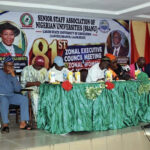
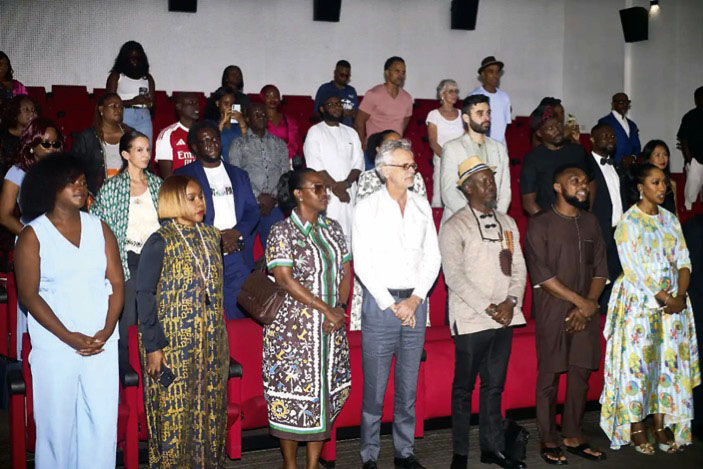
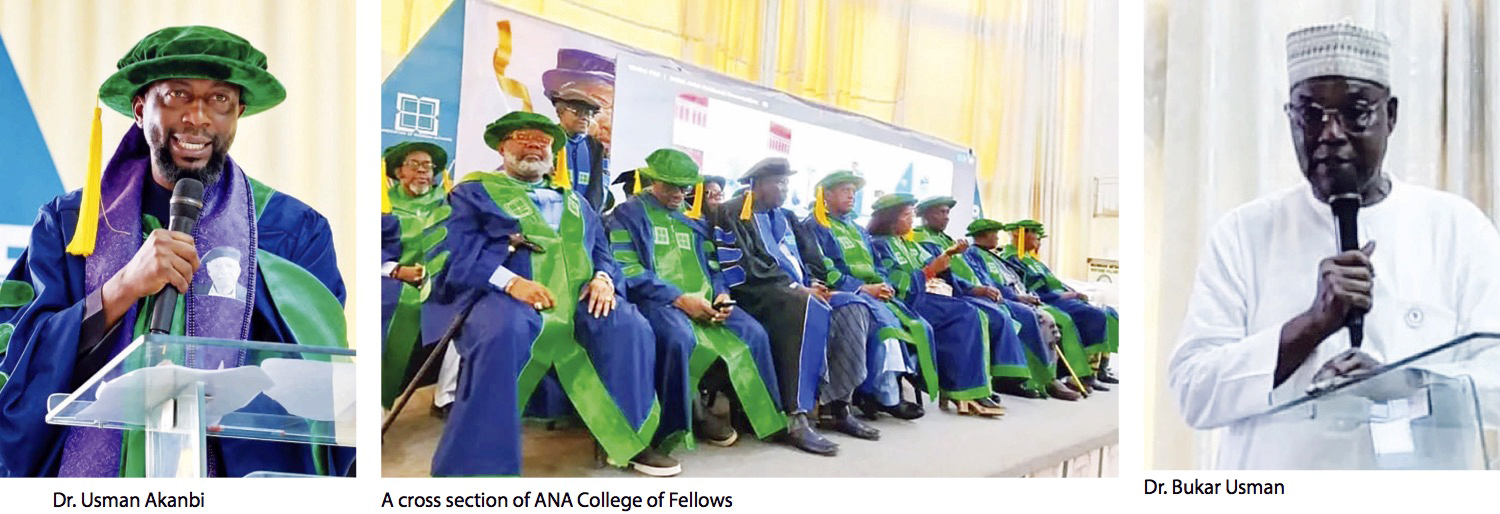
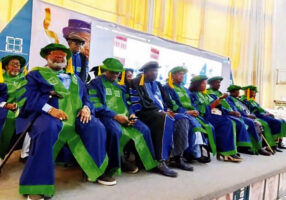
The opening ceremony of the 45th ANA Convention was held at the Chinua Achebe Auditorium at the Mamman Vatsa Writers’ Village. It saw current and past presidents of the association, including Dr Akanbi, Camillus Ukah, Prof. Femi Osofisan, Prof Olu Obafemi, and Dr Wale Okediran in attendance, dressed in green and black academic robes, together with other fellows of the association, like Prof Udenta Udenta, Prof Joe Ushie, May Nwoye, to mention a few. Professor Akachi Adimora Ezeigbo, Sam Omatseye, Senator Ekong Samson, Senator Shehu Sani, among other dignitaries, graced the convention.
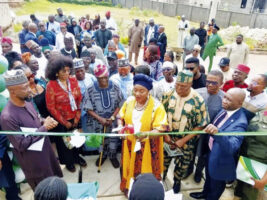
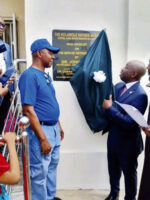
The president of ANA briefly led dignitaries to commission new blocks of flats dedicated to Professors Femi Osofisan, Olu Obafemi and the developer of the writers village, KLM, before returning to the Chinua Achene Auditorium to handle the day’s proceedings. It was his third outing as the president of the association, with a year to go before his tenure expired.
In his opening remarks, Dr. Akanbi said the choice of this year’s theme – “Literature, National Security, and the Place of Nigeria in the World” – was informed by the fact that insecurity had become “the greatest censor of the Nigerian imagination; hence, “the farmer cannot farm; the trader cannot travel; the child cannot go to school, and the writer cannot imagine.” The dystopian world created by the ANA president wasn’t a distant reality. All present at the hal could feel. Many bore the scars on their bodies and on their minds.
Dr Akanbi had been a stabilising factor in a hitherto crisis-ridden association, but he still has much to offer members of the association, founded by the legendary Chinua Achebe. He would like the Mamman Writers’ Village to become an international resort and empower writers through workshops and forming literary clubs in school to catch them young and boost reading culture. One thing probably lacking in the writers’ body today is the dearth of collaboration with the government, compared to bodies like the Nigerian Union of Journalists or the Nigerian Bar Association. Hence, the Akanbi administration would like to re-engage the government in cultural diplomacy. That didn’t stop him from criticising the pangs of many Nigerians facing these days with a harsh economy. For sure, he would like the federal government’s economic reforms to have a human face.
Dr Bukar Usman chaired the occasion and his speech drew attention to the gains made over the years in elevating African literature in schools compared to his schooldays when foreign literature was the in-thing.
“Invariably, post-independence nationalism and interest in literature awakened the consciousness of Nigerians in other Africans to write in earnest from their perspectives and include them on curricular. Hence, students of the 1970s upward, were opportune to read books by Nigerian and other African writers. Notably, from primary to University education (1951-1969). I was not privileged to read any book by Nigerian or African authors except those written in Hausa by Abubakar Imam,” he said.
Usman lamented that current internal security challenges revolved around communal conflicts, armed robbery, kidnapping, herders-farners conflicts, electoral violence/conflicts, labour union strikes, students’ demonstrations and border disputes.
He acknowledged that Nigerian writers had done themselves and the country proud. He added: “Nigeria is facing a great deal of challenges right now such that some of the challenges may lead one to have negative feelings about the country and to write bitterly about it. As writers, we can help the country to solve some of these challenges by highlighting them constructively.”
FG on constructive criticism
The federal government urged Nigerian writers to use literature to address insecurity, social divisions and misinformation as their contributions were needed in Nigeria’s national unity and peaceful coexistence
George Akume, the Secretary to the Government of the Federation (SGF), who was a guest at the 45th annual convention of ANA, said, through a representative, that writers must be allowed to examine government policies, question decisions and draw attention to failures.
He said, “Freedom of expression and the right to question those in authority are important features of democratic life.“ But he urged writers to refrain from using words deliberately to incite violence, spread falsehoods or turn Nigerians against one another. Emphasising the need for balance of opinions, he said, “Nigeria needs honest voices, not silence.”
Keynote address
In his keynote address, predicated on the theme of the convention, Professor Mahfouz Adebola Adedimeji, a professor of pragmatics and applied linguistics, and Vice Chancellor of the African School of Economics (ASE), Nigeria, argued that literature belonged within the ecology of national security. According to him, “It does so not because novelists should become security operatives or poets should write government propaganda but because literature deals with the human conditions from which security and insecurity emerge.”
Above all, he said, “Literature remembers. Literature questions. Literature warns. Literature humanises. Literature imagines. Nations are ultimately held together not only by laws and coercive institutions but by shared and contested narratives about ‘’who’ we are.“
The scholar noted that Literature’s first security function was archival.
every nation possessed official archives comprising constitutions, government reports, treaties, court decisions, security assessments and historical documents, he said nations also possessed emotional archives. “These contain memories of life, suffering, humiliation, war, courage, betrayal, aspiration and loss,” he said, adding that literature preserved the second archive. He also said “literary texts constitute important sources for understanding security.”
For instance: “Achebe’s Things Fall Apart (1958) is not ordinarily classified as a security text. Yet beneath its literary surface lies an extended meditation on cultural collision, political disruption, legitimacy and the catastrophic consequences that can arise when different systems of authority encounter one another without meaningful understanding.” Also, “Achebe’s later A Man of the People (1966) offered an even more explicit diagnosis of postcolonial political deterioration.”
As an early warming mechanism, the scholar said “literature possesses extraordinary ability to render visible what societies prefer not to see,” while “Saro-Wiwa’s wider activism concerning the Niger Delta also anticipated what is now increasingly understood as the security implications of environmental injustice.”
In the same vein, “Helon Habila’s Oil on Water (2010) develops related themes through its portrayal of the Niger Delta. The novel’s polluted landscapes, militarisation, kidnapping, oil politics and fractured communities reveal the inseparability of ecological security from national security.” He cited Chimamanda Ngozi Adichie’s civil war novel, Half of a Yellow Sun, as another literary text with national security concerns. Also, “Literature also alerts us to the political power of language. Words are not neutral containers of information.”
The 46th ANA Convention also featured an exciting stage play, The Village and the Vigilante, written by Senator Shehu Sani. It was directed by Denja Abdullahi. It drew attention to security challenges in the country.
Seven ANA members were inducted into ANA College of Fellows. They included Joan Iheoma Oji, Matthew Chukwuma Odono, Emeka Godwin Ukwuaba, Eriata Edwin Oribhabor, Iornumbe Charles, Akpan Martin Akpan, and Sumaila Isah Umaisha.
Winner of ANA Literary Prizes
This year’s ANA Convention wrapped up with the award night chaired by Sam Omatseye, Chairman. the Nation Editorial Board.
ANA/KMVL Prize for Poetry Jide Salawu, Contraband Bodies
ANA/King Dakolo Prize for Fiction: Onyikan Braithwaite, Cursed Daughters
ANA Prize for Drama: Selome Medemaku, The Throne of Silence, and Bolaji Olatunde, Life Less Abundant (joint winners)
ANA/Amina Talaku Zakama Prize for Literary Criticism: Ekikerebong Aniekan Usoro, “Postcolonialism in Transition”
ANA/Sir Chukwuemeka Sam Nwelue Prize for Non-Fiction: Chude Jideonwo, How Depression Saved My Life
ANA/Ngozi Chuma-Udeh Prize for Children’s Fiction: Foluke Sijuwola Falayi, Beans for Supper
HRM Eze M. O. Kanu/ANA Prize for Young Adult Literature: Erhu Kome, The Smoke that Thunders
Chinua Achebe Prize for Literature
Dexter Loko, The Bako of Zereshe.