Follow Us on Google
By Henry Akubuiro
The Mamman Vatsa Writers’ Village, Mpape, Abuja, offered more than a change of scenery. The steady, boisterous chatters of Nigerian writers thronging in and out of the writers’ resort for days, the ohs and ahs of the audience watching titillating stage performances, the takes of cerebral scholars on topical national and literary issues, the fraternal networking of the writers’ tribe, the merchandising of knowledge based economy with gusto, the revelry of the climactic night, and the epiphany that Nigerian writers now have a home away from home earned the 2025 International Convention of the Association of Nigeria an edifying chapter in the 44 year history of Africa’s greatest writers’ guild.
Though the official arrival date of members of the association from different chapters of the federation and beyond was slated for Thursday, October 30, some members couldn’t wait as they beat the gun to be the early birds at the cozy writers’ village. Thursday night came alive with a writers’ soiree in front of the ANA Hotels, a few removes from the Chinua Achebe International Conference Centre, as words, couched with profundity and symbols, assailed the air. The verdant, rolling, Mpape hills were nodding to the lyricism of the night.
Friday, November 31, expectedly, witnessed a surfeit of warm embraces and banters. Make a mistake about it: before now, literary events had gone round the clock at the Mamman Vatsa Writers’ Village, attracting mostly writers living in the FCT and adjacent axis; but the annual convention offered the majority of the delegates and writers from far and wide a rare opportunity to meet once in a year. It was an election year, too, for the Dr. Usman Akanbi-led national Exco, and it added to the enthusiasm for many to be in Abuja to lend a voice to the association’s chorus and pay homage to the muse.
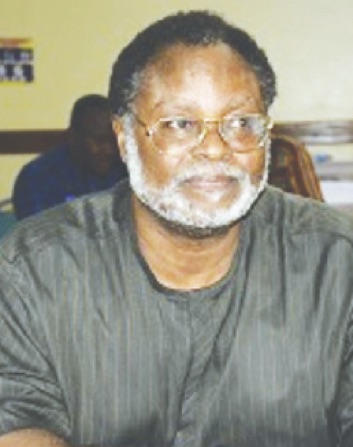
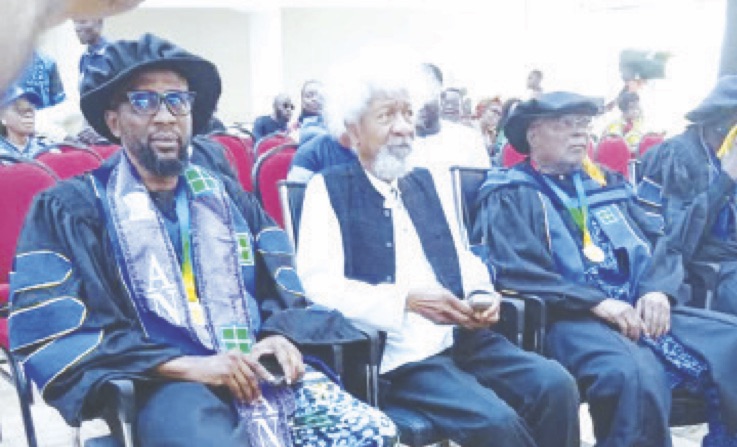
A sight for sore eyes, the presence of the Nobel laureate, Professor Wole Soyinka, made this year’s opening ceremony redolent with more excitement. For years, the leadership of the association had tried to bring him back to the fold – don’t forget, he was among the pioneer members of the association – and it was a eureka moment to see him at the Chinua Achebe International Conference Centre, venue of the opening ceremony. Dr. Usman Akanbi welcomed the writers to the annual convention. Elected during one of the most trying periods of the association, he had contributed immensely to uniting different factions of the association, most of whom turned out in their numbers at the MVWV, Mpape. “The level of progress in this premises shows how determined we are to keep moving on,” he echoed.
In his keynote speech on “The Nigerian Writers and the Urgencies of the Nation State”, cerebral scholar, writer and activist, Professor Udenta Udenta, interrogated the place of Nigerian writers as agency while utilising the instrumentality of communicative action with its heavy reliance on intersubjective rational dialogic, in his elaborate essay. He sought to locate the historical periodisation of Nigerian literature with its diachronous linear flow that constantly ruptures in underscoring the persistence of this interventionist act from the dying days of colonial imperialism to the second decade of the 21st century. He also problematised the limit situations that hampered the discharge of writers’ moral burden to society and how to overcome them; while negotiating the difference in the execution of writers’ social practice, as well as underscoring the imperative of an empowered writers’ community in catalysing this social burden. looked back at literary interventions from the dying days of colonial imperialism to the second decade of the 21st century, as well as the limitations hampering writers’ execution of their social roles.
Professor Udenta opined that early Nigerian writers of the understood the logics of history as part of their lived experiences, whether in the cultural and ideological resistance to colonialism or the critical realist appraisal of the pathologies of the immediate phase of postcoloniality or the revolutionary aesthetic spirit and artistic impulses that defined the work of the Second Generation, Nigerian writers. Even in the more decentered and spatialised historical appearance of late postmodern capitalism and its incubating engine-room of globalisation, translocation, deterritorialisations and border crossings, he affirmed that “the Third Generation and Fourth Generation Nigerian writers deal with multiform urgencies connected to the nation state, as well as matters pertaining to their unique individualities as human entities.”
Therefore, “the periodised historical movement from late colonialism to the second decade of the 21st century is awash with grim manifestations of national pathologies that Nigerian writers mediate using the instrumentality of artistic creations, as well as adopting and advancing committed positions as public intellectuals.”
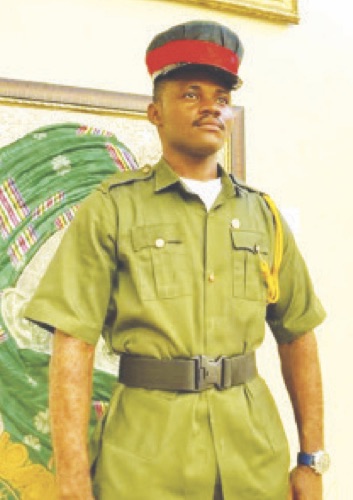
Professor Udenta described writers as nightmares of tyrants, of tin god despots and all those who wield enormous power and resources with which they undervalue human existence. He reminded us that it was Professor Wole Soyinka “who wrote these immortal words that are now permanently engrained on our collective imagination and fully inscribed as part of our social text and cultural logic: ‘the man dies in all who keep silent in the face of tyranny’ – an evocative testament out of the womb of personal tragedy but a testament to his enduring resilient spirit.”
Professor Udenta said Nigeria was in a state of critical national emergencies, in all spheres of life or domains or sites of existence. He stated: “The moral and institutional exhaustion of the military formation as a consequence of repeated political interventions and extensive abuse of power ended on 29th May, 1999 with the inauguration of a ‘liberal democratic’ government. Yet for over a quarter of a century, the grand norms and practices of this hue of democracy have been subverted by a mindless political elite and their cohort in the corporate arena.”
As Nigerian writers were beckoned upon to respond to and mediate the urgencies of the nation state in directions that serve the purposes of the people, the insulted, neglected and discarded, Professor Udenta advised that “they must fashion their reaction in a manner that respects both the perquisites of art and the moral imperative which ethical clarity incarnates. While the perquisites of art respect the boundaries of artistic consciousness in the broad domain of aesthetic ontology the perquisites of humanism signals that writers must persistently confront and expose the ideological, political, economic, cultural, moral and other crises of their generation. Achieving this kind of trembling balance is no easy task.
“One mode of attempting this arduous task is to hold one’s nose and reluctantly declare that just as the only redeeming feature of imperialism – the very handmaiden of post-Enlightenment colonial modernity – is the idea of a nation and nationness, as contingent and problematic as these constructs are, possibly the only redemption of Nigerian ‘democratic’ governance is the very fact that it has endured for over 26 years. For just as an anti-colonial nationalist temper interpenetrated its domain with a view of vanquishing it, as writers, our mass resistance to the odious practices and malpractices of Nigerian democracy is to explore and exploit its normative claims on liberty and freedom as tools of resisting them.”
He urged ANA to step up on its social mission, on its patriotic ethos, and on its moral clarity, stressing, “It should, of course, avoid issues that could lead to the misinterpretation of its motives and roles or run the risk of being called partisan in its political and ideological affiliation, yet it must be vitally relevant in commenting on and taking staunch positions on the burning issues of the day.”
Sequel to the impressive keynote speech, there were interventions by panelists, including the writers – Ifeoma Chinwuba and Tunde Olusunle – and the labour activist and newspaper columnist, Owei Lakemfa, who called on writers to be unrelenting in their societal interrogations. For Chinwuba, the indifference by most Nigerian leaders to read progress-oriented literary works had made it a bit difficult for them to be influenced by the contents of these works. Olusunle defended the intellectual rigours and competence of Nigerian writers to be the moral compass of the society and a stabilising force, even as he called on all and sundry to pull resources together to build a viable nation. Lakemfa, who said the social divides of society must be factored in by the creative enterprise, enjoined Nigerian leaders not to be philistinic in orientation and read as a matter of routine in order to act right and attend to the myriad needs of the people.
The symmetry between literary and visual arts was underscored by the ensuing art exhibition following the first break of the opening ceremony. Led by Professor Soyinka, delegates matched the back side of the Chinua Achebe auditorium, which served as the exhibition hall, to tour and savour the illuminating brilliance of Nigerian artists in variegated hues and tones. Evidently, the new, completed structures adorned the writers’ village to complement the Chinua Achebe International Conference Centre, the ANA Hotel, the Apartments and the Ken Saro Wiwa Writers’ Residency, which had been functional before now. A new building dedicated to Professor Soyinka was also commissioned by the ecstatic Nobel laureate, who was impressed that succeeding generations of ANA leadership had continued from where the founding fathers stopped. From the Remi Raji, Denja Abdullahi, Camillus Ukah and the incumbent, Usman Akanbi’s tenures, in recent years, the transformation of the writers’ village had been swift and monumental, as Prof Soyinka and others noticed.
Hours later, Denja Abdullahi stirred the soul of the balmy, Friday night with his haunting play on Mamman Vatsa, Tory Don Get Now Leg – The Vatsa Story. Lest we forget, Mamman Vatsa was the visionary FCT minister who gifted ANA the writers’ village but was executed by the General Ibrahim Babangida military regime. The performance took us into the alleged coup of 1985 and the tragic executions that followed a few months after, in March 1986, at Kirikiri Maximum Security Prison, for those accused by the government of the day. Abdullahi’s play dramatised, in eleven specters, from his execution to family life and lofty ideals and visions.
Senator Shehu Sani, the chairman of the occasion, while addressing the writers, said we had found ourselves in a new digital era, where the smart phone had changed the communication landscape. With a smartphone, he said you could do so many things unthought of, yet it had created its own problems.
“Nowadays, we struggle to free our kids from smartphones; we struggle to free ourselves from smartphones, from mornings to afternoons, to late nights,” he remarked. But he urged us to be careful of being enslaved by the new technology, while maximizing its benefits. He appealed to ANA to engage the younger generation to cultivate their interest in literature and arts. Also, New ANA fellows, including Professor Ngozi Chuma-Udeh, Anambra State Commissioner for Education, swelled the ranks of ANA fellows.
Winners of 2025 ANA literary prizes
ANA/KMVL Poetry Prize
Gbemisola Adeoti jointly won for Stoning the Wind, and Star Zahra for Girls and the Silhouette of Form.
ANA/King Dakolo Fiction Prize
Olumide Olutola for Habitat of Ordinary People
ANA Drama Prize
Majekodunmi Oseriemen Ebhohon for The Great Delusion.
ANA/Sir Chukwuemeka Sam Nwelue Non-Fiction Prize
David Hundeyin for Breaking Point
ANA/Ngozi Chuma-Udeh Prize for Children’s Fiction
David Okorafor for The Boy Who Built a Titanic Craft.
ANA/Amina Talaku Zakama Prize for Literary Criticism
No entries were received this year.
The 2025 ANA Convention resolutions
Consequent upon the conclusion of the 44th ANA Annual Convention, the writers’ body has issued a communique summing up the resolutions reached at the 3-day event. Among others, the premier body of writers in Nigeria expressed deep concern over the prevailing insecurity in the country manifested in terrorism, banditry, kidnapping, insurgency, and communal conflicts and the continued impact of climate change that continue to undermine Nigeria’s peace, unity, mutual co-existence and development and the need to incorporate creative arts into national peace education programmes as a means to foster empathy, civic responsibility, and cultural dialogue.
Thus, ANA has called on the national and sub-national governments to collaboratively intensify coordinated efforts to secure lives and properties through policies that promote justice, equity, and inclusion in line with the fundamental objective of direct principle of state policy.
It called on the federal and state government to prioritise the rehabilitation, routine maintenance, and strategic upgrading of critical roads with particular emphasis on high-traffic economic routes, agriculturally significant link roads, and underserved rural communities, especially the road leading to Writers’ Village and Mpape community of Abuja.
ANA enjoined the Nigerian government at all levels to prioritise education, which is the bedrock of any nation that seeks growth and security, by urgently addressing the grievances of the Academic Staff Union of Universities (ASUU) through meaningful dialogues and beneficial resolutions and also incorporate literary works into national peace education programmes to foster empathy, civic responsibility, and cultural dialogue.
Besides, ANA has called on the government, through the Ministry of Culture,Tourism, and Creative Economy, to improve the welfare of Nigerian creative writers by establishing a National Endowment Fund for Literature and the Arts; to provide grants, fellowships, and residencies for writers in Nigeria.
ANA said it was poised to sustain the bar of advocacy for fair publishing contracts, transparent royalty systems, and stronger copyright enforcement to protect the Nigerian Writers and to seek partnerships between ANA, government agencies, and private institutions, to promote book festivals, literacy campaigns, and literary tourism.
It urged writers to embrace ICT responsibly by acquiring digital literacy skills and exploring new media for storytelling and literary dissemination without compromising authenticity. The association, in addition, condemns all forms of plagiarism, intellectual dishonesty, and unprofessional conduct within the literary community in Nigeria and beyond, and further affirmed the sustenance of training programmes on digital publishing, online safety, and AI ethics to empower members for the modern creative economy.
The rancour-free, 44th ANA Convention has demonstrated that, when writers converge with purpose in a haven of solitude, away from the madding crowd, there is little room for blinkered opinions.