Follow Us on Google

From Stanley Uzoaru, Owerri Onitsha Enugu
They were supposed to be in the lecture halls, laboratories, and libraries, shaping the next generation of doctors, lawyers, engineers, teachers, and other professionals.
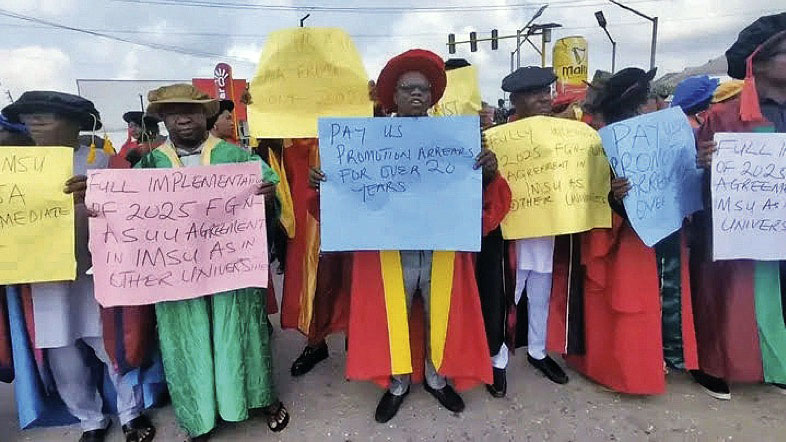
But, on Thursday, November 19, the academic staff of the Imo State University (IMSU), led by professors, took to the streets of Owerri, carrying placards, chanting, and begging to be paid.
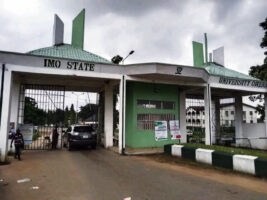
For over 102 days, lecturers at IMSU have been on strike. No lectures. No exams. No graduation. No NYSC mobilisation. Just silence on the campus that used to buzz with over 20,000 students. The strike began on August 10, 2026. Three months later, it has become a waiting game, and everyone is losing.
“Over three months at home, no lectures, no exams!” That was the cry that echoed through the streets in Owerri as lecturers under the Academic Staff Union of Universities (ASUU), IMSU chapter, marched through the city of the Imo State capital.
They were not asking for luxury. They were asking for what they described as their rights: unpaid salaries and arrears, implementation of the new salary structure, earned academic allowances, promotion arrears, and withheld check-off dues.
At the heart of the dispute is the 2025 Federal Government-ASUU agreement, which ASUU-IMSU said the state government and university authorities have failed to implement.
The branch chairman, Stephen Oguji, had earlier disclosed that several letters and meetings with university authorities and the governing council had failed to produce a satisfactory solution. One lecturer, speaking during the protest, captured the frustration of his colleagues and their students.
“We have spent more than three months at home without lectures or examinations,” he said.
The union also kicked against conducting examinations while the strike remained unresolved, insisting that normal academic activities should not continue under the present circumstances.
The big question hanging over Owerri is simple: Who is really paying the price for this prolonged dispute? Is it the government, the university management, or the students whose future is on hold?
Other News
For the students, the answer is clear. They cannot graduate. Graduates cannot proceed to their compulsory NYSC programme. Final-year students cannot defend projects. Fresh students have no idea when they will resume.
IMSU has contributed immensely to the development of Imo State, producing graduates who now occupy important positions across government and society. It is, therefore, disappointing to many that an institution of such importance is being neglected.
A prolonged university strike goes beyond lecturers and government disagreements. It affects students, parents, families, the economy, and the future of our youth.
Across the country, the IMSU strike has sparked anger, sympathy, and frustration:
Chinagorom, a student, said Owerri, “Three months at home is no joke. The government and lecturers should find a way to settle this.”
Chiwendu on her own part said, “Students are the ones suffering while those in authority keep exchanging accusations.”
Also, Mrs Amaka, not happy about the development, said, “How can students plan their future when they don’t even know when school will reopen?”
Another parent urged the government to settle whatever the case may be.
“Government should treat education as a priority. As of the November 19 protest, the Imo State government had not issued a formal response to the specific demands raised by the protesting lecturers. The lecturers are now asking Governor Hope Uzodimma to intervene personally and ensure negotiations produce a lasting solution.
How long must the students continue to suffer for a problem they did not create?
That is the question now echoing from Owerri to Abuja. The lecturers say they want to return to class, but not on empty stomachs and broken promises. The students say they want to return to the classrooms.
Until the government, the university management, and the ASUU find a common ground, IMSU will remain a ghost town, with empty lecture halls and the professors on the streets. The government must act fast and pay the lecturers, resolve the disputes, and reopen the institution.