Follow Us on Google

From Jude Chinedu, Enugu
In a world where modernisation is rapidly changing lifestyles and shaping how people express themselves, the survival of indigenous culture and traditions increasingly depends on the effort made to preserve and pass them on to younger generations.
Across Igboland, much of the effort consists in daily practices, such as the moulding of clay pots; basket weaving; making of traditional fabrics; indigenous music; masquerade performances, and stories/folklores that explain the beliefs, values, and identity of different communities.
But as the older generation of traditional craftspeople and custodians of indigenous knowledge gradually gives way to younger people, questions about the future of these practices have become more pressing.
How could traditions survive when fewer young people are learning the skills behind them? How could cultural practices be documented without losing the stories and meanings that give them significance?
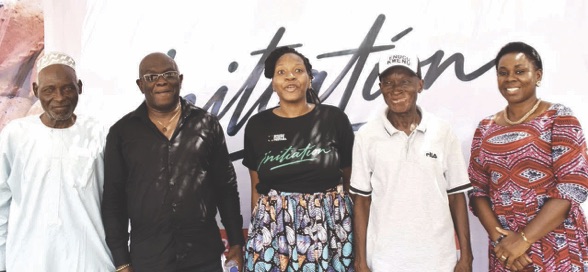
These questions formed part of the conversations at the second day of the Enugu Photo Festival 2026, held at the Centre for Memories, Enugu, where photography, traditional crafts, academic discourses and cultural performances were explored towards preserving the Igbo culture and tradition.
Under the theme, “Initiation”, the festival brought together artists, academics, students, traditional craftspeople, and the general public to examine how cultural knowledge is acquired, practised, and passed from one generation to another.
Beyond the photographs on display, the gathering provided a platform for traditional artisans to demonstrate their skills, young people engaged in indigenous practices and artists explored the role of photography in documenting cultural experiences that might, otherwise, fade from public memory.
For Chidera Sam-Eze, Curator and Artistic Director of the Enugu Photo Festival, the choice of theme was deliberate. She explained that the programme was designed to explore the processes through which knowledge is acquired and sustained, rather than focusing only on the finished products of artistic expression.
“When we chose Initiation, we were interested in what happens before knowledge becomes practice — who teaches, who observes, who inherits, and how that knowledge changes as it moves from one generation to another.
“That is why we brought the photographer, the academic, the student, the potter, the basket weaver, and the performer into the same space. They may work in different forms, but they are all part of systems through which cultural knowledge is transmitted,” she said.
That thinking was reflected in the participation of traditional craftspeople from different communities, whose practical demonstrations brought the festival’s central message closer to the audience.
One of the intellectual highlights was a keynote address by Prof. Chuu Krydz Ikwuemesi, Professor of Painting and History of African Art at the University of Nigeria, Nsukka (UNN).
Drawing from his extensive engagement with African art, traditional Uli aesthetics, and indigenous visual knowledge systems, Ikwuemesi examined the relationship between contemporary artistic expression and cultural continuity.
His presentation offered participants an opportunity to reflect on the resilience of indigenous knowledge systems, particularly how traditional artistic expressions have survived changing times while adapting to new social and cultural realities.
The conversation continued during a panel session titled “Conversations Across Generations and Practice”, which brought together lecturers, postgraduate and undergraduate students from various disciplines, including graphics, fashion, art, history, and photography.
The discussions highlighted the importance of mentorship, practical experience, and interaction between generations in sustaining artistic traditions. They also reinforced the point that cultural knowledge cannot be preserved through academic instruction alone but requires direct engagement with the people and communities that keep those traditions alive.
This became particularly evident when the programme moved from intellectual discussions to practical demonstrations by master potters from Ishiagu, basket weavers from Ukehe and fine artists from UNN.
The artisans demonstrated different aspects of their crafts, giving participants an opportunity to appreciate the techniques, patience, and years of experience involved in producing traditional works.
For many of the participants, watching skilled hands transform clay and other natural materials into objects of cultural and practical value offered a more immediate understanding of how indigenous knowledge is preserved.
Unlike knowledge contained in books, many traditional skills are acquired through observation, repeated practice and guidance from experienced hands. A young person learns by watching a master at work, attempting the same process, making mistakes and gradually developing the competence to practise the craft independently.
By bringing the artisans into the same space with students and contemporary artists, the festival demonstrated the importance of creating opportunities for such knowledge to move beyond the communities where it originated and reach a wider audience.
The programme also featured poetry readings and a cultural performance by the Adanta Cultural Group, adding indigenous storytelling, movement, and rhythm to the celebration. These performances further demonstrated how cultural identity is expressed and sustained through forms of artistic communication that have been handed down across generations.
Photography, however, provided another important dimension to the festival’s cultural preservation effort. A major attraction was the opening of its flagship photography exhibition, featuring more than 70 photographs and works by eight emerging and established artists selected through the 2026 Open Call.
The exhibition explored themes, including cultural practices, spirituality, identity, environmental changes, and collective memory. Through their lenses, the artists documented masquerade traditions, indigenous pottery, community festivals, sacred spaces and environmental challenges confronting different communities.
The images offered audiences glimpses into cultural practices and community experiences, making visible aspects of indigenous life that are often overlooked or insufficiently documented.
More than artistic compositions, the photographs served as records of people’s experiences, traditions and changing environments. They provided a means through which future generations could encounter and learn about cultural practices beyond their immediate communities.
During a curator-led tour of the exhibition, Sam-Eze encouraged visitors to look beyond the finished images and pay attention to the histories, practices, and communities represented in them.
She explained that the exhibition was intended to provoke deeper conversations about the relationship between photography and the preservation of indigenous traditions.
“Photography is not separate from these traditions. It can become a way of entering them, documenting them, and asking what responsibility we have when we encounter knowledge that has survived across generations. For us, that is also a form of initiation,” she said.
That perspective captures one of the important contributions of the Enugu Photo Festival: the recognition that preserving cultural heritage requires more than celebrating traditional practices at occasional events. It demands deliberate efforts to document them, create opportunities for younger people to learn from their custodians, and ensure that the knowledge behind them remains relevant.
Presented by FUJIFILM, the festival brings photography into this conversation, using the camera not merely as an instrument for producing beautiful images but, also, as a tool for documenting cultural identity, preserving collective memory and connecting generations.