Follow Us on Google

The International Monetary Fund (IMF) has stated that the challenges of import restrictions and foreign currency shortages in Nigeria and other African countries have continued to stifle businesses.
In its Regional Economic Outlook for Sub-Saharan Africa titled, “A Tepid and Pricey Recovery,” the body stated that these challenges could mar the post-pandemic recovery in terms of profitability of companies across the region.
It said the post-pandemic recovery for the region comes during a time of global uncertainty and shocks, as rising interest rates push Sub-Saharan African (SSA) countries’ expenditure from critical capital investments towards debt servicing.
According to the body, such divestment results in low educational outcomes and rising food insecurity in the regions. It cited a report that states that only 65 per cent of school children complete their primary and secondary education in the SSA compared to the global average of 87 per cent. It also noted that food insecurity has increased in the region, with Nigeria and D.R Congo a flash point.
“Several countries are facing challenges like foreign currency shortages or import restrictions (for example, Angola, Chad, Ethiopia, Kenya, and Nigeria) which have complicated business operations. This comes at a time when companies in the region have just turned a leaf and returned to pre-pandemic profitability.
“The liquidity squeeze is imperiling the growth prospects of the region’s future generations, as funds are sorely lacking to address the vast development needs, intensified by the pandemic’s scarring effects. For instance, nearly 3 in 10 school-age children are not attending primary and secondary education. Of those who do enroll in primary school, only about 65 percent complete it, compared to the global average of 87 percent. As of 2023, an estimated 140 million people across the region, including a significant number in the Democratic Republic of the Congo and Nigeria, are grappling with acute food insecurity, with policymakers facing constraints in their ability to respond effectively given limited fiscal space,” the IMF said.
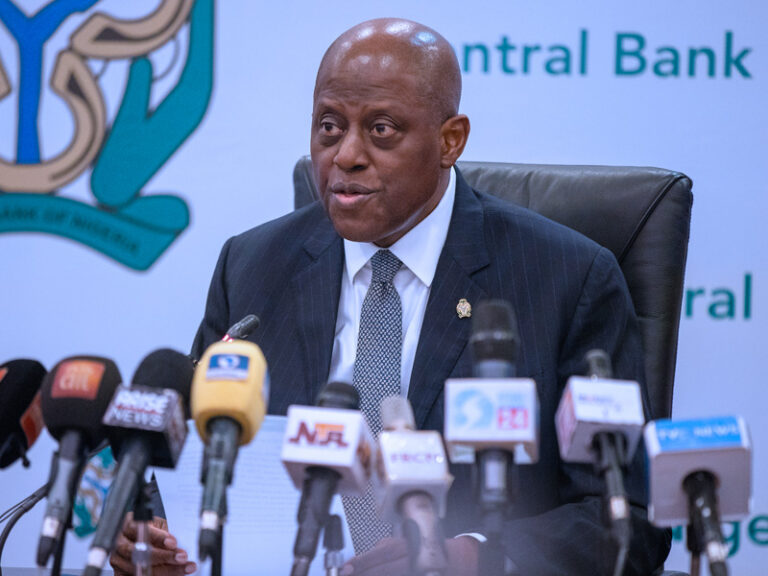
Nigeria implements certain trade policies to favour local production, self-sustenance, and job creation. In 2015, the Central Bank of Nigeria (CBN) announced a restriction on importers of 43 items to be barred from accessing foreign exchange on the official market.
In October 2019, former President Muhammad Buhari directed all land borders across the country to be closed in a move to discourage smuggling and boost local production of products where Nigeria has a competitive advantage. However, the policy contravenes the spirit of the African Continental Free Trade Agreement (AfCTA) which became operation under a year later in June 2020.