Follow Us on Google

By Uche Usim
The war in the Middle East has triggered a fresh global shock, unsettling energy markets, disrupting trade routes and tightening financial conditions just as many economies were beginning to recover from previous crises.
According to senior officials of the International Monetary Fund (IMF), the crisis is both global and uneven in its impact. Tobias Adrian, Jihad Azour, Nigel Chalk, Pierre-Olivier Gourinchas, Alfred Kammer, Abebe Aemro Selassie, Krishna Srinivasan, and Rodrigo Valdés warn that while the effects are widespread, “energy importers are more exposed than exporters, poorer countries more than richer ones, and those with meager buffers more than those with ample reserves.”
Beyond the humanitarian toll, the conflict is already damaging infrastructure and economic activity in directly affected countries. While some resilience remains, growth prospects in the short term have weakened, with longer-term risks tied to rebuilding and lingering instability.
For the global economy, the primary transmission channel is energy. The disruption of key routes, especially the Strait of Hormuz, through which a significant share of global oil and liquefied natural gas flows, has shaken supply chains and pushed up prices.
For fuel-importing nations, the IMF describes the situation as equivalent to “a large, sudden tax on income.” Higher import bills are squeezing public finances in Africa, the Middle East, and Latin America, where fiscal space is already limited.
In Asia’s major manufacturing hubs, rising energy costs are feeding into production expenses and reducing purchasing power. In Europe, the shock is reviving concerns reminiscent of the 2021–2022 energy crisis, with countries heavily reliant on gas-fired power, such as the United Kingdom and Italy, more exposed than those with diversified energy sources like France and Spain.
Energy-exporting countries stand to benefit from higher prices, but the gains are uneven. Some producers may see stronger revenues, while others face limited upside due to export constraints or infrastructure damage. Even for exporters, higher risk and uncertainty could deter investment and slow growth.
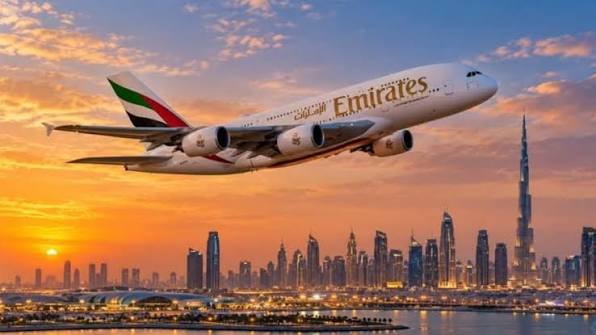
The conflict is also reshaping global supply chains. Rerouted shipping lanes, higher insurance costs, and longer delivery times are raising costs for goods across industries. Airspace disruptions in parts of the Middle East are also affecting tourism and global connectivity.
Food systems are under pressure as well. The war has disrupted fertiliser supplies, about one-third of which passes through the region, raising concerns about crop yields and global food prices. With planting seasons underway in the Northern Hemisphere, the risk of shortages is growing.
The IMF highlights a stark disparity in vulnerability. In low-income countries, food accounts for roughly 36 percent of household spending, compared to 20 percent in emerging markets and just 9 percent in advanced economies. This means that any spike in food prices could quickly translate into social and political stress.
Other News
Additional supply risks extend to critical industrial inputs. The Middle East is a major supplier of helium, essential for semiconductors and medical equipment. Meanwhile, disruptions in Indonesia’s nickel supply chain, key for electric vehicle batteries, could intensify if sulfur shortages persist. Trade-dependent economies in Eastern Africa are also facing weaker remittances and reduced export demand from Gulf states.
Inflation is another major channel of impact. Sustained increases in energy and food prices are likely to push global inflation higher, while also slowing economic growth. The IMF warns that “higher transport and input costs work their way into the prices of manufactured goods and services,” increasing the risk of persistent inflation.
The effects, however, are uneven. In Asia and Latin America, rising costs could test already fragile inflation expectations, particularly in countries with weaker currencies. In Europe, the risk is renewed wage pressures following another energy-driven price surge. In low-income countries, the impact is more severe, as households spend a larger share of income on basic needs.
A key concern is inflation expectations becoming unanchored. If households and businesses begin to expect persistent price increases, they may adjust wages and pricing accordingly, making it harder for central banks to restore stability without slowing growth further.
Financial markets have also reacted. Global stock markets have declined, bond yields have risen, and volatility has increased. While the sell-off has been less severe than in previous global crises, financial conditions have nonetheless tightened.
Rising yields and widening credit spreads are increasing borrowing costs for governments and businesses, particularly in Europe and emerging markets. In regions such as sub-Saharan Africa, limited access to financing and low reserves make external shocks even more dangerous, especially when combined with widening trade deficits and currency pressures.
In contrast, advanced economies and some commodity exporters with stronger buffers are better positioned to absorb the shock, though they are not immune to tighter financial conditions.
Overall, the IMF emphasises that the war’s economic effects are complex and highly uneven. The same shock can act as a windfall for some economies while creating severe strain for others. It can trigger balance-of-payments pressures, deepen cost-of-living crises, and widen global inequality.
The situation is unfolding at a time when many countries already face high debt levels, limiting their ability to respond to new shocks. This makes policy responses more critical than ever.
The IMF is urging countries to adopt carefully tailored measures suited to their individual circumstances. Those with limited reserves and fiscal space are advised to proceed cautiously, while ensuring support for vulnerable populations.
At the institutional level, the IMF says it is stepping up support through policy advice, technical assistance, and financial aid where necessary. As Managing Director Kristalina Georgieva put it, “In an uncertain world, more countries are needing more of our support. We are there for them.”