Follow Us on Google
From Uche Usim, Washington DC
Global public debt is climbing toward historic highs and policymakers must act fast to ensure sustainability and inclusive growth, the International Monetary Fund (IMF) warned on Wednesday during its 2025 Annual Meetings in Washington DC.
Presenting the Fiscal Monitor Report, IMF Fiscal Affairs Director Vitor Gaspar said global public debt prospects have worsened significantly since April.
“Global public debt prospects and risks have deteriorated further since our last meetings.
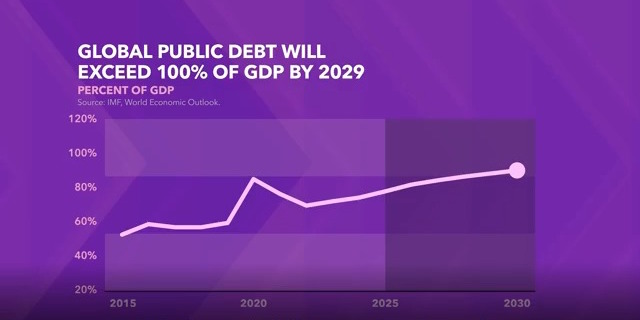
“We now project that global public debt will rise above 100 per cent of GDP by 2029, the highest level since 1948,” Gaspar said.
The report added that, under a 5 per cent risk scenario, the ratio could soar to 124 per cent of global GDP by the end of the decade.
Gaspar explained that while many G20 economies operate with debt ratios above 100 per cent, their deep financial markets and broader policy tools help sustain stability.
However, he cautioned that emerging and low-income economies remain far more vulnerable.
“Relatively low debt-to-GDP ratios are often accompanied by low debt tolerance. It’s not only the size of debt but also the cost that matters,” he said.
Gaspar urged governments to adopt prudent fiscal policies that create room to respond to future shocks.
Other News
“Countries can make spending smarter and more efficient by shifting budgets toward growth-friendly areas like education and infrastructure,” he said, adding that such measures could boost productive capacity and long-term growth.
At a separate session on boosting productivity in the digital age, IMF Managing Director Kristalina Georgieva linked slowing productivity to weaker global growth.
“More than half of the slowdown in medium-term growth is because of the slowdown in productivity growth,” she said.
The panel discussion, moderated by David Wessel of the Brookings Institution, brought together thought leaders from finance, technology and academia, including Nobel Laureate Simon Johnson, Google’s Ruth Porat, Heirs Holdings Chairman Tony Elumelu and Saudi Arabia’s Finance Minister Mohammed Al-Jadaan.
Johnson argued that artificial intelligence (AI) could drive a new era of growth but warned that its benefits “will not be evenly distributed without deliberate policy action.” Porat noted that AI is already transforming sectors like agriculture, medicine, and transportation.
Elumelu stressed that true productivity lies in human opportunity.
“Productivity is really about opportunity per person,” he said, urging policymakers to make inclusion a top priority. Al-Jadaan added that governments must invest heavily in reskilling, education, and infrastructure to prevent widening inequality.
Closing the discussion, Georgieva called for unity and global cooperation. “If we want to reduce the risk of people and countries falling behind, we must work together for the benefit of all,” she said.