Follow Us on Google

By Chinenye Anuforo
The Impact Investors Foundation (IIF) has stepped up efforts to mobilise domestic institutional capital for Nigeria’s impact economy, with stakeholders identifying weak policy implementation, poor capital allocation and limited investment pathways as major barriers to financing businesses that drive inclusive growth.
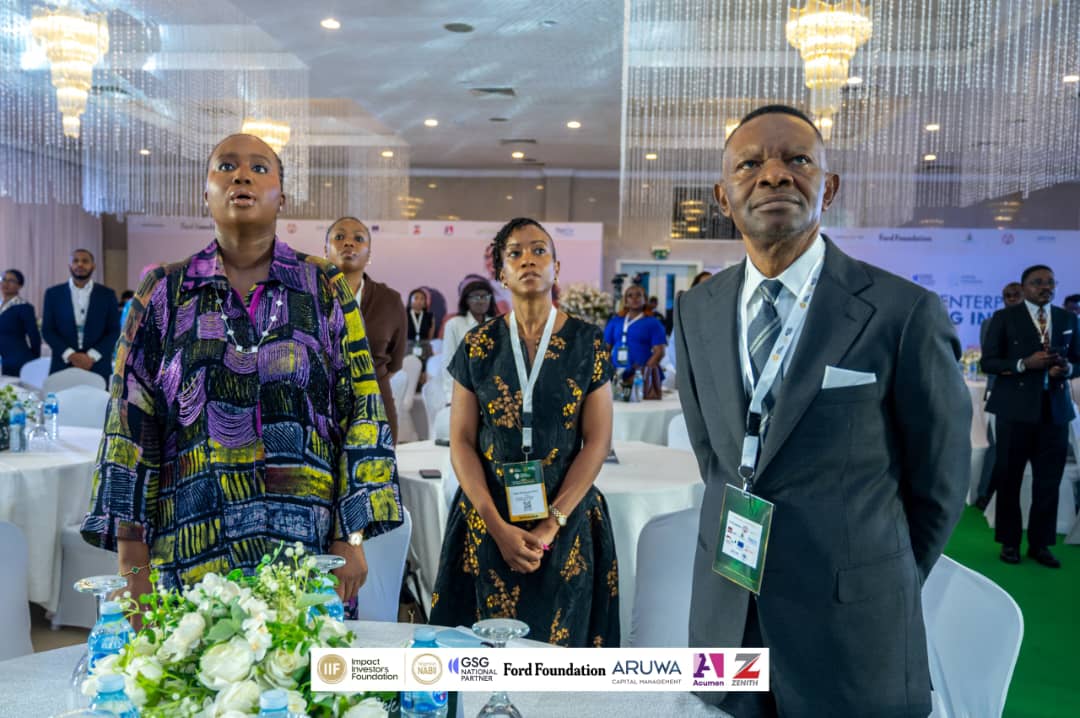
The foundation made this known at its 9th Annual Convening on Impact Investing (ACII), held on Wednesday in Lagos under the theme, “Unlocking Institutional Capital for Nigeria’s Impact Economy.”
The two-day event brought together investors, policymakers, entrepreneurs, development institutions, philanthropists and academics to explore ways of directing institutional capital towards investment-ready enterprises and projects with measurable economic, social and environmental benefits.
A major highlight was the launch of the Nigeria Impact Investing Policy and Diagnostic Report, presented by Mr Inye Kemabonta of Plus Element Consulting. The report examined the policy and market conditions shaping the participation of domestic institutional investors in Nigeria’s impact economy.
The foundation also unveiled the rebranded Nigeria Impact Economy Community (NIEC), a platform designed to bring together public, private and development sector stakeholders around a shared agenda to advance the country’s impact economy.
Speaking at the convening, the Chief Executive Officer of IIF, Oare Ehiemna-Ochui, said Nigeria’s challenge was not simply a shortage of capital, but the absence of sufficient structures and confidence to channel available funds into businesses requiring growth financing.
“Nigeria’s pension industry now manages more than ₦31 trillion, while the small businesses that provide close to nine in ten of our jobs are starved of growth capital. That is not a shortage of money. It is a shortage of structure and shared confidence,” she said.
Ehiemna-Ochui noted that institutional investors were careful because they managed funds belonging to retirement savers and other beneficiaries, adding that the responsibility of the impact investing ecosystem was to develop investment pipelines, standards and policy clarity that would align financial prudence with social and economic purpose.
She said IIF had advanced the draft National Impact Investing Policy Framework through consultations with government, regulators, investors and industry stakeholders, while contributing proposals to the National Development Plan 2026–2030.
The foundation also announced the launch of two policy publications outlining barriers to impact investing and proposing reforms to strengthen institutional participation, improve regulatory clarity and mobilise catalytic financing.
On capital mobilisation, Ehiemna-Ochui said the WHIP SME Fund Accelerator, launched in November, was supporting 22 fund managers across 14 states, including 14 women-led fund managers.
She said the initiative was designed to strengthen the intermediaries through which institutional capital could reach small and medium-sized enterprises (SMEs), while work continued on regulatory processes and capital commitments.
The discussions also examined findings from the Impact Economy Index, which showed that Nigeria had made progress in market infrastructure, corporate disclosure and reporting frameworks but continued to face significant gaps in implementation.
A presentation on the index identified weak procurement and demand for impact-driven products, poor government capital allocation and limited reporting on corporate supply chains as areas requiring urgent attention.
The speaker said Nigeria’s market rules were ahead of actual practice, calling for a shift from adopting policies to enforcing and implementing them.
The presentation urged government agencies and businesses to incorporate social and environmental considerations into procurement decisions, while encouraging consumers and corporate organisations to demand products and services that deliver measurable impact.
It also called for stronger mobilisation of institutional capital, including consultations with the National Pension Commission (PenCom) on the possibility of establishing an impact allocation window for pension funds.
The Bureau of Public Procurement (BPP) was identified as a key institution that could support the recognition of social value and the introduction of green procurement guidance.
The presentation further urged subnational governments to move beyond their regulatory responsibilities to become investors and market builders, citing the need to scale initiatives such as education outcome funds across the country.
Speaking on the need to connect institutional capital with businesses, the Chairman of IIF, Frank Aigbogun, said inadequate access to finance was forcing entrepreneurs, particularly women, to make difficult choices between sustaining their businesses and meeting family needs.
He illustrated the challenge with the example of a woman who might have to sell her fish-trading business to pay for her son’s secondary school boarding fees.
“These are not unique stories. They are decisions that are being made in households across Nigeria today. The circumstances might change slightly, but the ramifications are all the same,” Aigbogun said.
He urged the government and private sector to collaborate in accelerating capital mobilisation, arguing that financing businesses was an investment capable of generating employment and government revenue rather than a giveaway.
Aigbogun cited the example of a businessman who received funding from a federal government agency in December 1984 and subsequently established three businesses employing more than 500 Nigerians.
He said the businesses had created direct and indirect jobs while contributing to state and federal government revenue through taxes.
The IIF chairman also cited information shared by a representative of FCMB, who said the bank had provided 2,000 interest-free loans, mostly to women.
He said the initiative demonstrated the potential of financial institutions to ease the burden of access to capital for entrepreneurs if similar programmes were expanded across the banking sector.
Other News
Across the two-day convening, plenary sessions and keynote addresses explored how policy, regulation and market innovation could unlock capital at scale.
Representatives of the Securities and Exchange Commission (SEC) Nigeria and the Bank of Industry examined how regulators and development finance institutions could attract domestic institutional capital, with emphasis on measurable outcomes in job creation, import substitution and carbon emissions reduction.
Leaders from the Nigeria Sovereign Investment Authority (NSIA), PenCom, the Pension Fund Operators Association of Nigeria (PenOp), Kuramo Capital Management and the Ministry of Finance Incorporated also discussed policy, fiduciary and market barriers influencing institutional investment decisions.
Aruwa Capital Management Managing Partner, Adesuwa Okunbo-Rhodes, said Nigeria’s SME funding gap, estimated by the firm at about $150 billion for Nigeria and Ghana combined, highlighted the need for financing structures that could support businesses in the “missing middle.”
She said SMEs accounted for more than 90 per cent of businesses in Nigeria and employed about 80 per cent of the population, but many were too large for microfinance institutions and too small to access commercial bank loans or most private equity funds.
Okunbo-Rhodes disclosed that Aruwa Capital Management managed about $80 million and had invested in 17 businesses, with 70 per cent of its portfolio comprising female-led or female-founded enterprises.
She said the firm’s investments supported more than 200,000 direct and indirect jobs, while 70 per cent of employees across its portfolio were below the age of 35.
According to her, the businesses had recorded significant growth since receiving investment, demonstrating that impact investing could deliver commercial returns alongside social and economic benefits.
“It is not charity. It is not a donation. This is growth equity deployed with discipline, deployed with governance, and it shows that impact and performance can sit hand in hand,” she said.
However, Okunbo-Rhodes said raising capital remained difficult, disclosing that it took her eight years to close her first fund, with much of the funding coming from foreign institutional investors and development finance institutions.
She said Nigeria’s impact economy could not depend solely on foreign capital, stressing that domestic institutional investors, particularly pension funds, needed to play a greater role.
With Nigeria’s pension industry managing more than ₦31 trillion, she said the challenge was to develop credible investment pathways that would enable a responsible portion of domestic savings to reach businesses in the real economy.
“The capital exists, the business exists. What we haven’t built yet are the bridges between them,” she said.
The programme also focused on strengthening the pipeline of investment-ready enterprises through research commercialisation, enterprise support, technical assistance and improved project bankability.
Sessions examined financing underserved markets, strategies for fund managers investing in SMEs, climate investment, the creative economy and the use of artificial intelligence in environmental, social and governance (ESG) reporting and impact measurement.
A dedicated session, held in partnership with Lagos Angel Network and Impact Hub, explored opportunities to develop a new generation of impact angel investors and expand domestic capital available to impact enterprises.
Curated deal rooms held on both days connected investment-ready SMEs with institutional and impact investors.
The convening concluded with the IIF Annual Dinner and Awards, which recognised organisations advancing impact investing and delivering measurable social and environmental change.
The 2026 Annual Awards for Impact Investing were presented in the Social Enterprise and Impact Investor categories, alongside the Innocent Chukwuma Award for Social Impact.
Stakeholders called for the convening to produce concrete commitments, with Aigbogun urging participants to identify practical steps that would translate discussions into improved financing opportunities for Nigerian businesses.
Okunbo-Rhodes also challenged pension funds to engage fund managers on the conditions required to move capital into their portfolios, while urging fund managers to respond with data, track records and evidence of performance.
She said the next convening, which would mark the 10th anniversary of the event, should focus on what capital was actually committed and deployed rather than what was discussed.
Ehiemna-Ochui said the next phase of impact investing in Nigeria would depend on the ability of domestic institutions to translate commitments into investments that support businesses, create jobs and improve livelihoods.
“Nine years ago, impact investing in Nigeria was a conversation among a few pioneers. Today it is a market, and what we saw in this room tells me the next chapter will be written by domestic institutions,” she said.
She added that the foundation would measure progress by the enterprises that grow, the jobs they create and the lives they change.
The convening ended with renewed calls for policymakers and institutional investors to address barriers preventing domestic capital from reaching businesses and to translate the event’s recommendations into measurable action.