Follow Us on Google

…warns Middle East conflict, election spending may fuel inflation
The Central Bank of Nigeria (CBN) has retained its Monetary Policy Rate (MPR) at 23 per cent, maintaining its tight monetary policy stance amid the continued moderation in inflation.
However, the apex bank warned that the ongoing conflict in the Middle East and increased spending ahead of the festive season and elections could fuel inflationary pressures.
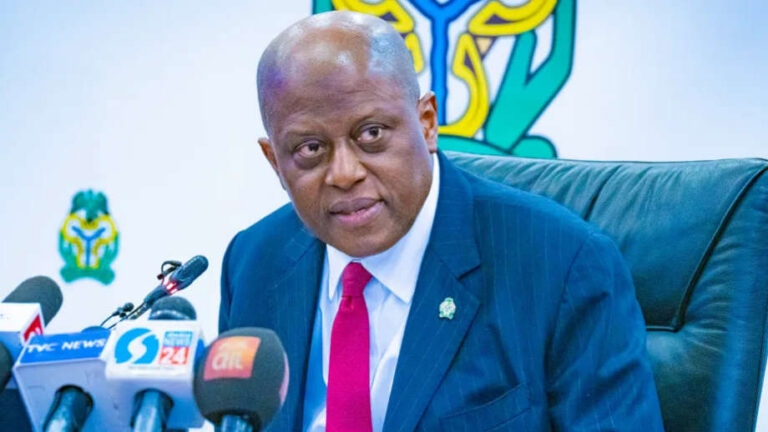
CBN Governor, Mr Olayemi Cardoso,
disclosed the decisions of the Monetary Policy Committee (MPC) at a briefing in Abuja on Tuesday.
He said the committee also retained the asymmetric corridor around the MPR at +50 and -300 basis points, while keeping the Cash Reserve Requirement (CRR) for deposit money banks at 45 per cent, merchant banks at 16 per cent and non-Treasury Single Account (TSA) public sector deposits at 75 per cent.
According to the CBN governor, the decision was informed by the need to consolidate the gains recorded in the disinflation process, despite lingering upside risks to the inflation outlook.
Cardoso disclosed that headline inflation declined to 14.06 per cent in October 2026 from 14.63 per cent in September, marking the fifth consecutive month of moderation.
He said core inflation also eased to 10.78 per cent from 12.95 per cent, while food inflation declined to 19.13 per cent from 19.59 per cent during the period.
The CBN governor attributed the moderation to sustained exchange rate stability, improved monetary policy transmission and increased food supply following the commencement of the harvest season.
He identified the ongoing Middle East conflict as a major risk to the inflation outlook, warning that disruptions could sustain pressure on global energy prices.
He added that increased spending associated with the end-of-year festive season and election-related activities could raise aggregate demand and exert further pressure on prices.
Cardoso said maintaining the current monetary policy stance would help anchor inflation expectations and sustain the disinflation process.
On the external sector, he disclosed that Nigeria’s gross external reserves stood at $54.02 billion as of November 17, 2026, sufficient to cover 10.26 months of imports of goods and services.
He also welcomed the Memorandum of Understanding between the CBN and the Nigerian National Petroleum Company Limited (NNPC), aimed at enhancing foreign exchange inflows, supporting energy project financing and improving macroeconomic stability.
According to him, effective implementation of the agreement would strengthen foreign exchange market liquidity, support external reserves and enhance investor confidence.
Cardoso further disclosed that the Composite Purchasing Managers’ Index (PMI) increased to 53.2 index points in October from 53 points in September, indicating sustained expansion in economic activities.
He attributed the improvement to increased activities in the industrial, agricultural and services sectors.
On the economic outlook, the CBN governor expressed optimism about growth prospects for the remainder of 2026 and into 2027, supported by improved crude oil production and sustained expansion in agriculture, industry and services.
He said: “Members noted the moderation in headline inflation for five consecutive months, reflecting the impact of sustained exchange rate stability and improved monetary policy transmission.”
“Given the prevailing headwinds which have slowed the pace of moderation in price pressures, members were of the view that maintaining the current policy stance would further anchor inflation expectations and support the disinflation process.”
“Members were mindful of lingering upside risks, particularly those arising from the ongoing Middle East conflict, which could sustain pressure on energy prices.”
“In addition, the MPC observed that the anticipated increase in spending from the end-of-year festive season and election-related activities could impact aggregate demand with likely upward pressure on prices.”
“Nevertheless, the committee judged that maintaining the current policy stance is appropriate to safeguard the gains of disinflation so far achieved, while remaining data-dependent and vigilant in taking further appropriate measures.”
“The outlook for the domestic economy remains positive for the rest of 2026 and into 2027, supported by improved crude oil production and sustained expansion in agriculture, services and industrial activity.”