Follow Us on Google
Titles in Igbo cosmology are never ornamental. They are condensed philosophies. They are biographies written in metaphor. “Ogbunechendo” is not a flourish appended to royalty; it is an ethical blueprint. Ogbu – the great oak. Not shrub, not vine, not seasonal grass, but oak: thick-rooted, time-tested, wide-armed. An oak does not wander; it endures. It does not whisper in passing winds; it stands and receives them.
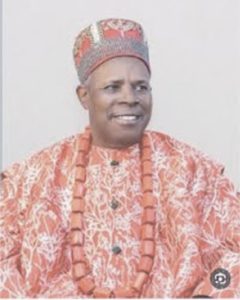
Eze Ogbunechendo – Ogbu, the great oak, whose exuberant foliage shelters his people – casts a moral silhouette over the landscape of Nigerian politics. In speaking truth to power, Igwe Dr. Lawrence Agubuzu does not falter in ceremonial deference; he rises, trunk firm, branches outstretched, and extends shade over grievance, neglect and injustice alike. The oak does not retreat from the storm; it absorbs, withstands and translates exposure into protection. In February 2023, irony and historical memory extended the canopy, shielding his people from political abandonment. By February 2026, the rustle of leaves became the clarion call of directive, demanding accountability without uprooting loyalty or national unity. His title and action are inseparable: authority that shelters, admonishes and steadies the polity, morally and culturally.
Despite the polish of his diplomatic past, Igwe Agubuzu shed the silken cloak of ceremonial courtesy and the velvet gloves of political correctness, laying aside diplomatic niceties like a ceremonial robe discarded at the threshold. He did not crumble the edifice of the nation; rather, he carved corridors of clarity through its gilded halls. Where words are often cushioned in euphemism and obeisance, he planted stakes of candour. Ritual politeness bowed, but the republic stood firm. In their place, he enthroned speaking truth to power: sharp, unflinching and rooted in moral gravity, turning words into both shade for the weary and compass for the powerful.
In two Februaries separated by three years, in halls heavy with protocol and power, Igwe Agubuzu altered the temperature of the room. In February 2023, before the presidential campaign team of Atiku Abubakar in Enugu, and again in February 2026, at the National Traditional and Religious Leaders Summit on Health in Abuja, he chose not the safe vocabulary of courtesy but the sharp grammar of accountability. Both occasions were elite-controlled spaces, one electoral, another one ceremonial; but in both, he bent ritual expectation to expose injustice, while remaining anchored in communal and national loyalty. Together, these interventions reveal a progressive intensification of illocutionary force, from indirect institutional caution to direct moral confrontation, while illustrating how traditional authority can operate as a culturally grounded mechanism of political accountability within Nigeria’s hybrid governance space.
The 2023 speech unfolds like a ledger of disappointment. Speaking on behalf of the Traditional Rulers Council of Enugu State, Igwe Agubuzu welcomed the visiting campaign delegation yet embedded a scathing moral audit within ceremonial framing. He opened with historical lineage: the PDP was “midwifed” by the G-34 under the stewardship of, a revered South East son. Midwifery, he implies, is laborious and generative; it implies care, sacrifice and moral investment. The PDP is not an abstract machine; it is kin, and betrayal cuts deeper because it is measured against the love of one’s own lineage. He enumerates the deficits: unemployment, insecurity and dehumanisation of Enugu indigenes. The speech acts as both accusation and accounting. The monarch does not simply grieve; he places the party in moral debt. By invoking – “go and count your teeth with your tongue” – he wields irony as both shield and spear. The critique is indirect, yet piercing: he does not say, “You have failed us,” but forces introspection through a proverb-laden lens. However, the speech does not culminate in despair. Hope persists: “We pray that the election produces the best candidate, irrespective of his political party.” By decoupling expectation from partisan identity, he locates legitimacy in performance and justice, not affiliation. The 2023 speech, therefore, functions as mitigated confrontation – eloquent, historically grounded, and institutionally anchored. It is dissent within decorum, demonstrating that moral authority may operate quietly yet powerfully in elite space.
Three years later, the discursive stakes rise. At the 2026 National Traditional and Religious Leaders Summit, Igwe Agubuzu’s remarks shift from irony to pointed directive. He opens with disappointment: the President was absent during the Ooni of Ife’s opening remarks, a speech emphasizing national unity. Initial affirmation is cautious: “Maybe this is good,” he offers. Yet, the pivot comes with stark contrast. While the Ooni prepares to confer a high honour on, Igwe Agubuzu points to Nnamdi Kanu, detained in Sokoto. Regional asymmetry is stark: honour for one, incarceration for another. “In my part of the country,” he declares, “we see him as the Southwest counterpart of Nnamdi Kanu…the pain in my heart when Nnamdi Kanu is in Sokoto.”
This is moral geography: injustice mapped not in abstract metrics, but in lived experience. The South East bears the weight of grievance, while celebratory gestures privilege another region. His speech illuminates the ethical terrain of national unity: unity preached but not practiced is hypocrisy. The directive follows: “Bring this man out. If we don’t want him in Nigeria, send him back to Kenya or London.” The illocutionary force escalates. What began as implicit irony in 2023, inviting reflection, is now a forthright appeal to executive action. Nonetheless, the speech remains tethered to law and order; it is institutional critique, not revolutionary incitement. The monarch channels moral urgency without destabilizing the polity, embodying the tension of traditional authority in modern governance.
The twin speeches demonstrate the features of speaking truth to power as a distinct discourse mode. Delivered in elite-controlled spaces, they break the ritual politeness frame yet do not shatter national cohesion. The speeches combine critique with hope, maintain national unity rhetoric, and invoke cultural capital to strengthen moral authority. References to Ekwueme and Achebe, to collective council voice and personal moral reckoning, convert the speeches into more than rhetorical exercise; they are institutional dissent embedded in culturally resonant epistemologies.
Unlike revolutionary rhetoric, these interventions do not call for upheaval. They operate within the nation’s ceremonial, political, and legal architecture. Critique becomes corrective, accountability becomes counsel, and moral authority becomes bridge between community expectation and state practice. The mode reveals that traditional rulers, far from symbolic relics, can occupy a hybrid space of oversight: culturally anchored, morally compelling, and pragmatically aligned with democratic norms.
Across 2023 and 2026, Igwe Agubuzu’s discourse illustrates a calibrated escalation of illocutionary force. In 2023, irony, historical recall, and proverb perform the labour of critique. The moral intervention is subtle, indirect, designed to provoke reflection while leaving face intact. By 2026, the stakes intensify. The speech moves from rhetorical shade to the rustle of imperative leaves: “Bring this man out.” The pragmatic shift is deliberate – when subtle counsel fails, moral imperative must speak with clarity. However, even in escalation, the speech remains disciplined. It does not invite rebellion; it demands responsibility. It is anchored in legal and ceremonial frames, moral obligation, and collective expectation. The oak, metaphorically, does not uproot itself; it withstands storm, extending shade while signaling urgency. This progression is both ethical and rhetorical: it teaches that institutional dissent need not be explosive to be effective; measured escalation carries force precisely because it is disciplined.
To speak thus carries risk. Traditional rulers in Nigeria navigate a precarious terrain – symbolic authority intertwined with political and social exposure. By critiquing dominant parties in 2023 and addressing the President in 2026, Igwe Agubuzu risks censure, marginalization or securitized suspicion. Invoking Nnamdi Kanu in a national forum amplifies this risk. Mitigation, however, is strategic. In 2023, he speaks collectively on behalf of the Traditional Rulers Council, distributing responsibility across institution. In 2026, he situates critique within a national summit focused on health, framing moral appeal in shared civic concern. Patriotic anchoring, i.e., affirmation of unity, prayer for credible elections, signals loyalty to the republic even while exposing asymmetry. Cultural legitimacy, rooted in title and historical memory, grants him moral insulation, allowing critique to be heard as counsel, not threat. The monarch’s rhetoric balances exposure with authority, risk with responsibility, tradition with contemporary relevance.
The image of Eze Ogbunechendo – the great oak – illuminates the moral geography of Igwe Agubuzu’s interventions. Oaks provide shade; they do not flee storm. Their roots split rock, their trunk withstands wind, their canopy shelters many. So too does Igwe Agubuzu extend protection to his people: shielding them from neglect, articulating their grievances, and demanding reciprocity from the state. The oak grows slowly, remembering seasons, absorbing hardship, yet its stature and canopy signal stability. In both 2023 and 2026, the monarch embodies this arboreal ethic. The leaves, i.e., collective voice and communal expectation, rustle with grievance, while the trunk, that is, his personal moral authority, anchors critique. By invoking historical memory, he chronicles injustice, ensuring the polity remembers as the oak preserves rings of time. The metaphor captures both patience and force: shade for those suffering, leverage against those with power. In speaking truth to power, Igwe Agubuzu fulfills his title: he shelters, admonishes, and steadies, converting symbolic authority into ethical intervention.
Together, the February 2023 and February 2026 speeches chart a trajectory of moral and rhetorical escalation, demonstrating how traditional authority can operate as a culturally grounded mechanism of political accountability. From irony-laced counsel to directive moral challenge, Igwe Agubuzu negotiates loyalty, regional asymmetry, and the delicate architecture of elite space, all while upholding national unity and democratic norms. In a polity where legitimacy often frays at the edges, such institutional dissent matters. It signals that authority must answer for neglect, that loyalty demands reciprocity, and that hope must be actionable. The monarch, like the oak, does not dominate or uproot; he shields, sustains, and reminds. He transforms the ceremonial halls of power into moral arenas, demonstrating that traditional authority, far from being ornamental, can anchor conscience in a nation too often adrift.
Words matter. In 2023, he invited politicians to count their teeth with their tongues. In 2026, he asked the President to act. Between those moments lies a quiet escalation and a profound lesson. In a polity where words are often cheapened by repetition, his speeches remind us that words can still wound, warn, and weave. If loyalty is betrayed, it must be named. If asymmetry festers, it must be confronted. If unity is proclaimed, it must be practiced. The crown, in these moments, becomes not ornament but instrument, a voice that risks proximity to power in order to remind power of its obligations.
To conclude, when traditional voices speak truth to power not to destroy but to demand better, they expand the democratic conversation. They insist that unity be just, that loyalty be mutual, that hope be earned. In that insistence, Igwe Agubuzu does more than criticize. He keeps faith both with his people and with the fragile promise of Nigeria itself. In the measured cadence of his words, the rustle of the oak becomes a call: accountability is rooted in history, responsibility grows from moral courage, and justice, like shade, is a right owed to all beneath the canopy. Eze Ogbunechendo does not merely speak; he shelters; he warms; he warns; he steadies. In doing so, he exemplifies the profound role that culturally grounded authority can play in shaping a just and responsive Nigeria.
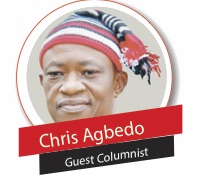
• Agbedo writes from University of Nigeria, Nsukka.