Follow Us on Google
• Reckless drivers turn Abuja’s roads to killing fields
From Juliana Taiwo-Obalonye, Abuja
Every day in Abuja, motorists set out expecting an ordinary commute. Too often, they end up driving past mangled vehicles, shattered windscreens, or lifeless bodies lying by the roadside.
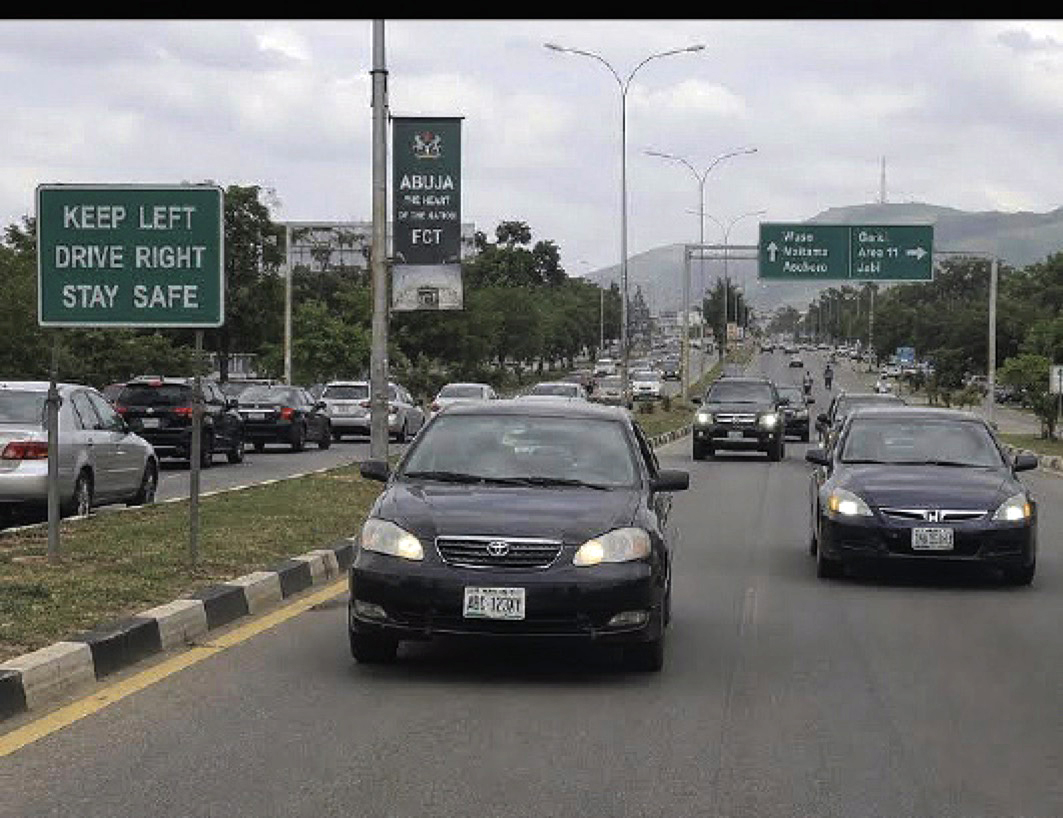
The Federal Capital Territory’s newly expanded highways were built to ease congestion, improve connectivity and make journeys safer. Instead, many have become dangerous race tracks where impatient motorists drive against traffic, ignore red lights and gamble with human lives.
For Abuja resident, Daniel Eyitayo, the horror has become disturbingly familiar: “On my way home, especially along Airport Road, it is now common to see dead bodies. You will just be driving and suddenly you see somebody lying there. Sometimes it is already too late. It has become normal, and that is the scary part of driving against traffic and reckless driving.”
His experience mirrors a growing reality across the nation’s capital. A green light no longer guarantees safety and staying in the correct lane offers little protection when another vehicle suddenly appears from the opposite direction.
The statistics reinforce that reality. According to the Federal Road Safety Corps (FRSC), Nigeria recorded 10,446 road traffic crashes in 2025, resulting in 5,289 deaths and 33,400 injuries. Although fatalities declined slightly from the previous year, the number of crashes increased by more than 9 per cent, underscoring the country’s persistent road safety crisis.
Abuja has become one of the clearest examples of that challenge. Driving against traffic, beating red lights, dangerous overtaking and impatience have become common features of the city’s roads. In September 2025 alone, FRSC mobile courts in the FCT secured 245 convictions from 254 offenders arraigned for 563 traffic offences, including traffic light violations, dangerous driving, wrongful overtaking and route violations.
The convictions followed a renewed crackdown by the Federal Capital Territory Administration (FCTA), which warned that motorists caught driving against traffic or running red lights would have their vehicles impounded and prosecuted before mobile courts under the FCT Road Transport Regulations 2023. Yet the offences continue with alarming frequency.
The consequences are felt not only in lives lost but also in the daily frustration of commuters trapped in gridlock caused by traffic offenders. Emmanuel Chukwuma plies the Nyanya-Jikwoyi Road. His experience:
“There are days I spend close to four hours on the Nyanya-Jikwoyi Road simply because some drivers refuse to stay in their lanes. Once they begin driving against traffic, they block the entire road and everyone suffers. The people trying to beat the traffic end up creating a worse traffic situation.
“The only language habitual offenders would understand is stiff punishment. The fines should be heavy enough to serve as deterrent. Law enforcement agents must stop looking the other way. They should arrest and prosecute offenders consistently because, if there are no consequences, people will keep breaking the law.”
In Karu, residents eventually decided they could no longer wait for enforcement agencies alone to restore order. The road linking ECWA Church to the Abattoir is a one-way route. But impatient motorists routinely ignore the restriction, particularly in the early hours of the day, creating constant danger for other road users.
Everything changed after a child was knocked down and killed by an okada rider speeding against traffic. The tragedy united the community. Today, residents no longer watch in silence. Young people, women and the elderly stand at the entrance to the road each morning, turning back any vehicle attempting to drive against traffic. Private motorists, commercial drivers and even government officials are asked to turn around.
For them, no one’s position is worth another person’s life. Eyitayo believes a similar resolve is needed across the capital: “Every trip now feels like a test of survival.”
The dangers are not limited to those who break the rules. Those who obey them often become targets of abuse. For Debo Ademola, stopping at a red light frequently attracts insults instead of respect: “Whenever I stop because the light is red, drivers behind me start blaring their horns. Okada riders pull up beside my car, point at me and call me a mad man because I refuse to beat the traffic light.”
His experience illustrates how lawlessness has become normalised on Abuja’s roads, where caution is mocked as weakness and obedience to traffic rules is viewed as an unnecessary inconvenience.
Motorists defend their actions by pointing to long diversions, traffic congestion, rising fuel costs and the desire to save time. Others simply dismiss the risks with the familiar refrain: “Everybody dey do am.”
Road safety authorities reject those excuses. The FCTA insists that driving against traffic and running red lights are criminal offences under the FCT Road Transport Regulations. FRSC has repeatedly identified wrong-way driving as one of the leading causes of fatal crashes nationwide.
Ironically, Abuja’s improved road infrastructure has also made reckless driving easier. The wider roads and smoother pavements designed to improve traffic flow now allow impatient motorists to accelerate faster, overtake more aggressively and drive against traffic with even greater confidence. Better roads, experts say, cannot compensate for poor driving culture.
Recognising the growing danger, the FCTA and FRSC have intensified enforcement through impoundments, special patrols and mobile court prosecutions. Road safety advocates, however, argue that enforcement must be consistent and unavoidable if motorists are to change their behaviour. They say functioning traffic lights, physical barriers to prevent counterflow, sustained public education and swift prosecution of offenders are all essential to restoring sanity on Abuja’s roads.
For commuters, however, the issue goes far beyond traffic management. It is about getting home alive – whether a parent returns safely to their children, whether a child makes it back from school, or whether a family survives an ordinary journey across the city.
Eyitayo believes the most dangerous aspect of the crisis is society’s growing acceptance of reckless driving: “It has become normal. That is what scares me the most.”
His words capture Abuja’s greatest road safety challenge. The capital has invested billions of naira in modern highways, but asphalt alone cannot save lives. Until motorists begin to respect traffic laws—and authorities ensure there are real consequences for those who do not—every red light ignored and every wrong lane taken will continue to turn Abuja’s roads into killing fields.