Follow Us on Google
By PJ Ezeh
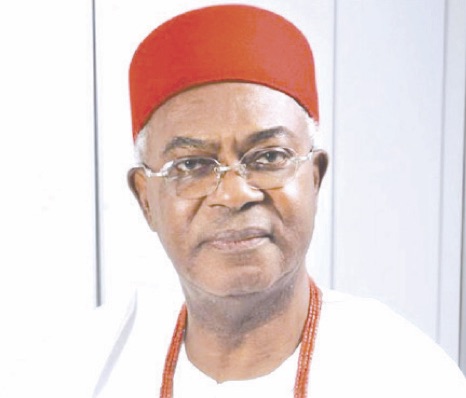
A new chapter on Igbo studies, indeed on the study of the antique Kwa glotto-culture, has been opened by Igwe Nnaemeka Achebe, the Obi of Onitsha. It was on Tuesday, December 17, 2024, on the occasion of his inaugural discourse to herald the proposed Igboiana that is named after him at the Nnamdi Azikiwe University, Awka. The intellectual storehouse is called Obi Nnaemeka Achebe World Centre for Igbo Repository. The title of his paper was “Onitsha traditional society – origin, spread, culture.” It was a strategy that aimed to discuss his domain as a subset of the pan-Igbo group. And while, like in any other paper written by a human being, there may be one or two flaws in it, he, in all, performed splendidly. He ended up treating more than just the Igbo. He ineluctably dealt with the larger topic of the Kwa glotto-cultural groups, not least the ethno-historical connections among the Yoruba, Edo and the Igbo.
The king has demonstrated that even a discourse that is meant for the general public must be evidence-driven to be useful. He drew from diverse sources: a melange of time-honoured ideofacts and artefacts, social processes, and publications across a vast time span.
Three sets of conclusions stand out from the paper: where he is definitive because he has found enough information to support them, e.g. the various Igbo communities that are related to Onitsha; and grey areas where he invites researchers to do more work, such as the various Yoruba subgroups where the dissimilarity between orthography and phonology make definitive conclusions debatable. They are communities whose names are written as Onisa, but pronounced as Onisha in Oyo, Ogun, and Osun. In the third example, elements of the other two commingle. In a voluminous discourse of 62 pages, one may only pick out a sampler, for space constraint. Onitsha is known in full as Onicha Ado na Idu, or colloquially as Onicha Mili, míli being the Igbo for water; in this case the Niger River. The name is usually anglicized as Onitsha. The attribute is used in order to differentiate this Onicha from many other groups of the same name on the east and the west of the great river. I find his treatment of the Ado na Idu qualifier remarkable.
He stated, citing an earlier researcher, that Ado na Idu was an ancient Igbo kingdom that held sway in Ile-Ife, its capital, and which included also the Yoruba group. The kingdom predated the arrival of Oduduwa. The rivalry of the Igbo and the Yoruba for the succession of Oduduwa drew down a war where the Igbo initially had an upper hand because their warriors wore masquerade gears, and presented themselves as spirits. To save her people Moremi Ajasoro offered herself to be captured and given to the Igbo king as a wife. In that position it became possible for her to learn the secret of the seeming invincibility of the Igbo and gave it out to her people. The ensuing defeat resulted in the expulsion of the Igbo elements who then moved eastwards.
In the popular Yoruba narrative of the Moremi account, the enemy group that suffered defeat are called Ugbo. That this word and Igbo are cognates is easy to see from usual glottochronological analysis. M.A. Fabunmi, an Ife chief and author, in his well-known book on the subject, Ife—the genesis of Yoruba race, uses the orthography, “Igbos” for those aborigines who cohabited the kingdom with the Yoruba. An important sacred venue in the coronation and funeral of the Ooni is Ilegbo, which I am told translates an Igbo house or Igbo place.
That the Igbo and the Yoruba are closely related is evident from lore, and scholarly sources from both groups, and researchers of other origins. Obi Achebe said, “The late eminent historian and anthropologist, Professor Ade Obayemi, stated that the cradle of Yoruba origin was once settled by the Igbo, led by Obatala.” In 2014, an Enugu publishing house re-issued a study by an Igbo scholar, Michael Olisa, A comparative survey of Igbo and Yoruba worldview and social values, where the author saw compelling similarities. Bolaji Aremo, in one of the most ambitious books on the subject, How Yoruba and Igbo became different languages, highlights the settled linguistic similarity between the varieties spoken by the two groups.
The primevality of Ile-Ife in the Igbo world may also be deduced from extant linguistic evidence; from everyday Igbo as still spoken by the group. In the dialects of some subgroups in the Bende districts, one hears the expression, ndí ìfè (Ife folk) with reference to humanity, or one’s fellows. A related variant Énúìvè (Ife plains) is heard in some dialects of the northern Igbo cluster, e.g. Okposi.
Other News
The lecturer made a very impressive effort at tracing the multi-century migration of his ancestors from Ile-Ife through ancient Benin kingdom, Agbor, other Igbo-speaking areas west of the Niger until the place they now live as Onicha Ado na Idu, or Onicha Mili. In doing this, he proceeded with the level of detachment not usually found in a popular discourse that addresses a mixed audience. While recognising the importance of study of the subsets, it is the broad Igbo outline and the future intellectual task that is the focus of my assessment. It may be the case that the Igbo, as the Yoruba themselves, are not of the same provenance. Several sources have shown that the Aro, for example, have sections that are of Ibibio, Efik, Ekoi origins. There are also sources reporting similar extraneous provenance for some north-eastern Igbo groups.
The story of Igbo’s remote past, indeed the remote past, of any group with nascent literacy, must be approached with due caution and relevant competence. The facts are there but are so fragile and therefore require expert handling. The information that is required is, in a manner of speaking, delicate. This does not say, though, that the task is impossible. It is only challenging.
For example, in the Okposi clan of Ohaozara, there is a village-group known as Umuka. Usually among the Igbo a group may add a praise name, which when joined to its core name recounts a feat or other features about its members. Umuka’s unanglicized full name (the core name plus the praise name) is Unwùká Ogwumá Eze Chima. In Obi Achebe’s lecture, he proceeded, probably unaware of these facts about this place in Ebonyi State. But of course, he included, quite expectedly, that the founders of Onitsha that left Benin were led initially by Eze Chima until he died, without reaching the town that has continued to venerate him till date. In the ensuing struggle for succession of the great Eze Chima, those that lost out branched out to other territories to found different clans. Some historians speak about the group, Ogwuma, who moved to Aboh and later continued to the Cross River basin. In Achebe’s paper, we see a combining of the elements, Ogwuma and Eze Chima, appearing in the name of a village in one corner of the Igbo country! There could be many of such other facts, or other types of onomastic nuggets. In the Nsukka districts, for example, practically all place names in the southern parts of the Igbo country are replicated.
Obi Achebe’s paper is a new starting point in the efforts to better understand the past of Nigerian groups, not least those that are related to the Igbo. This paper of uncommon breadth and depth does more than just present information. Its value as a wakeup call and a pointer to new intellectual tasks is immense as well. It is laudable that the Nnamdi Azikiwe University, Awka, has set up a special centre, namely the Obi Nnaemeka Achebe World Centre for Igbo Repository, for this essential project.
I suggest a multidisciplinary approach: qua history, historical linguistics, archaeology, art history, various branches of anthropology, onomastics, ethnomedicine, among others. Managers of the Obi Nnaemeka Achebe Repository should find ways of getting committed scholars to be involved in the task at the pan-Igbo levels. Up and coming students too should be brought in through relevant incentives such as scholarships, fellowships, awards, and such things. It is a new dawn in Igbo studies.
• Professor Ezeh, President of Ethnological and Anthropological Society of Nigeria (EASON), teaches anthropology in University of Nigeria, Nsukka