Follow Us on Google
…Says politicians have hijacked traditional institution
By Simeon Mpamugoh
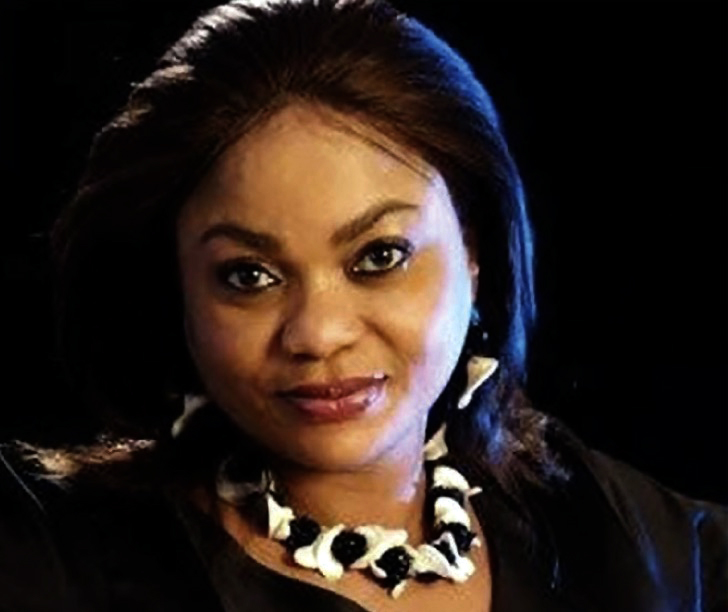
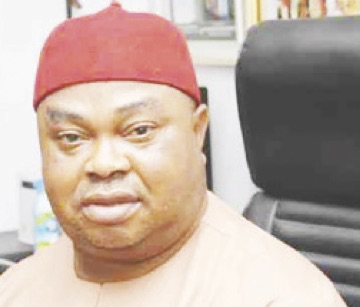
Pillar of culture and the authentic President of Ohaneze Ndiigbo, Lagos State Eze Solomon Ogbonna has blamed politicians for the debasement, and hijacking of the traditional institutions and lifestyles of the people of Nigeria. In this interview held in his office, Ogbonna who is also the Chairman Board of Trustees (BoT) Aguene Art Foundation bares his mind on various national issues that affect affect Ndigbo.
Immediately after Independence, the Igbo Union was strong and protected the interests of Igbo in all parts of the country, but today that cannot be said of the Ohaneze Ndigbo which seems to be more political. What do you think is responsible for the situation?
I can tell you that today’s politicians have hijacked everything that belongs to everyone. And without going after them, Igbo tradition will die totally. We must go after them, either to finance it, or to accept that our tradition is still exiting. This shouldn’t be the way to go given that we had leaders as administrators of schools. They were like governors and things were working well. But by the time leadership entered into the hands of some unknown people, even some parents cannot explain the kind of children they have; tradition became something else, a back end practice. Politicians hijacked everything such that they are even the ones choosing who becomes a traditional ruler. Even those who don’t know how to present kolanut are today traditional rulers in Igbo land. I think that the fault is from the politicians who hijacked everything that belongs to the traditional institution while the government on the other hand places traditional institutions under their control. So, there is no more freedom anywhere. The traditional institution has become an enslaved entity under the leadership of the politicians.
When MKO Abiola was alive, he advocated for reparation for our artworks stolen by our colonial masters but the Muhammadu Buhari-led government came up with the repatriation of our artworks, especially the bronze artifacts also stolen from us by our colonial masters. What is your view on this?
Before now one could understand that most of the artworks that were not worthy emanated from the colonial masters who came to Africa. Artworks were like their first business. We are talking about the Portuguese. As they traded on art, they also traded on slavery. In most cases it was only a glass of gin known as a hot drink that they gave to our people for so many art monuments that date back to over 300-400 years, which were crafted by our people for tradition and cultural purposes. For instance, the Elaho head (bronze head) of Benin people; Isi Ojongo (Ojongo mask) from Nsukka; Berger statue from Anambra State and other statues of Igbo extraction in some areas of Imo State. These colonial masters exchanged our artworks with just a glass of gin given to our people. Then the British expeditionary force invaded the Oba of Benin palace and looted all the artworks and took them back to the Queen in England. It was hard for them to believe that men that were not taught in Western education were able to craft such artworks. Up till today, they are still studying the kind of instruments those craftsmen used to produce those artworks, especially the bronze art pieces, which is extended to Igboukwu bronze discovered in Anosike’s compound in 1938. And in 1952, a retired coal miner was hired to get the bronze in the new era. In the same 1952, the first archeologist in the University of Nigeria, Dr Charles Thurstan Shaw, from the United Kingdom was the one invited to examine the object. But he got it wrong when he said that the Igboukwu bronze may be exchanged for ivory cups and other metals in the Sahara desert and later moved to Igboukwu to be used as a decoration on the tombs of high profile men and warriors.
So, those artworks that have found their way to different places such as Brazil, European and Asian countries are basically the fault of the Western world’s approach to Africa. And that is why they have to bring them back from all the museums or other places where they have displayed them. I want them to be returned because there was no proper process applied to acquire those works.
During the last general elections, the Igbo in some communities in Lagos State were manhandled. What was the role of Ohaneze Ndigbo in Lagos State to assuage them?
I cannot predict Nigerian politicians because their lives are not stable. They are always looking for a fault to deny anybody what belongs to him or her. So I cannot really stand up to defend what they’re doing to Ndigbo because there are many bad eggs among them. But I know in no distant future they will realize that Igbo people are not their enemies. We are not outright competitors in politics or any other spheres of life. And no one can predict what a person will do the next day when that individual becomes a serious politician. But I am sure they know what they are doing and by the time they realize that we are not their enemies, they will adjust.
What should be the role of culture in national development?
The main planks of national development rest on our ability to respect each other’s cultures. The absence of this is the reason the country is not stable. We must come together and respect each other’s culture and traditions. We don’t have the same cultures in Nigeria. The way our languages are so many is the way the tradition and culture of our people are many. But the most important thing is for us to know that every culture or tribe has their own peculiar way of life. What we need to harness these diversities to our benefit and development is to embrace each other’s cultures with respect. Our diversities should be a source of strength for growth and advancement, not division. The only solution to the ethnic groups’ rivalries and agitations among us is to develop a policy objective that will guide the three major tribes. Before you contest any election, you must know how to speak the WAZOBIA languages: Yoruba, Hausa, Igbo, which are the three major languages we have in Nigeria. If the government can plan and implement this for the next 20 years, then we can begin to think as one, indivisible nation. We say of a fact that Rome was not built in a day but if this is made compulsory that one must know how to speak these languages in addition to knowing their cultural and traditional norms, their ‘dos and don’ts, then we will make progress in development and unity of the country. And these are the major prayers of this country in spite of the marginalization of Ndigbo who have brought awareness and major developments in Nigeria while others are sitting down in administrative capacity because of the civil war impediments. If not for the setback of the Nigeria-Biafra civil war no tribe would have overtaken Ndigbo in intellectual and developmental advancement in this country. And as the situation is today, the remedy is to implement this language policy that will acculturate the major ethnic groups in Nigeria. If they know how to speak the three major languages and as criteria for vying for elective offices, otherwise we will continue to bicker, and engage In tussles over who gets what among the different ethnic groups in the country.
The Ooni of Ife, Oba Adeyeye Enitan Ogunwusi visited your art foundation recently. Could you share some of the experiences of that royal visit?
He was very happy and excited visiting an art collection centre of that level. He also commended my collections, noting that he was surprised to see an Igbo man involved in preserving and protecting culture and tradition by floating an art foundation. The Igbo are known for commerce. He said he never believed that he could find an Igbo man who could be in the business of collecting artworks for preservation and also make every effort to promote culture, young artists and the contemporary art itself. He believed that the sacrifice should be worthy of emulation. However, the truth is as far as bronze art collection is concerned in Nigeria, Aguene Art Foundation is still the number one. We have the best bronze for royalties, high and upwardly mobile individuals in Nigeria. We have the highest collection of authentic bronzes in our foundation. Oba Ogunwusi knows about most of the works I have in my centre and the fact that I am the only one who can sacrifice much to preserve the culture and traditions of his people and also able to embark on such investment because if I allow it to go into the hands of the business people and traders of the art, we would no longer see the likes of those artworks again.
How did you come into art, culture and tourism?
I started following my father to traditional events at the age of 11. He was one of the most powerful leaders of Ogbe-ekwa, a community group of the elderly people known for managing security by bringing in police, chasing out evil people or those standing against any other community or coming to encroach on any community land in the old South East. He was also involved in art. His kola tray was one of the oldest when it went on test outside the country to find out how many years it had been in existence. My grandfather equally was involved in art. He bequeathed the kola tray to my father who bequeathed it to me.
In the Aguene Art Foundation we also promote art, culture and tourism. We organize exhibition on Nigeria’s artworks and help to promote young artists through those exhibitions. We equally organize cultural dance most times. And some of our artists who have fantastic works that portray our culture and traditions the way it ought to be, we take them to the palace of any king.
How can we save our culture and language from becoming extinct among our youthful generation?
I think some of them may have studied it in school, for instance the tradition of kola nut breaking, which is an important ceremony in Igbo land, but feel it is now outdated and no longer part of modern life. Listen to the music they are playing today, it is completely different from the type of music and message we were exposed to. We had the music of the likes of Osita Osadebe, Ali Chukwuma, and many others. Today, it is no more about messages but how to jump up to the groove. That is the way of life of our youths now.
What is your impression about the reorganization of Ohaneze Ndigbo?
The politicians did not spare the apex body of Ohaneze Ndigbo. They are the ones controlling it. And this has resulted in the ineffectiveness of the body. The apex body is no longer effective and the person that is there is working for the politician who is picking up the bills. And he cannot do anything without consulting the politician, who is the leader of either one of the states or senator of the Federal Republic of Nigeria, as godfather that will speak on behalf of the leaders of the sociocultural organization.
Recently at an event in Lagos you picked up a kolanut on behalf of the embattled president of the Lagos State Chapter of Ohaneze Ndigbo l, Sunday Ossai, promising to hand it over to him. What is the position?
I picked up the kolanut in sympathy to Sunday Ossai because I know that he is not a vibrant leader, even though what he is doing is not backed up by the law. I’m still the authentic President of Ohaneze Ndigbo in Lagos State with consent judgment by the Lagos State High Court and the Certified True Copy (CTC) in my possession. I sympathize with Sunday Ossai because I think someone is nudging him in what he does not know. He wants to be President, Ohaneze Ndigbo in Lagos State without the capacity to manage our Igbo people. I think they brought him with a different motive, which is to use him as a front while they indulge in malfeasance without anyone who can challenge or stop them. This is the main reason they brought him and nothing else. To their chagrin Ossai knows better and he has agreed he is under my leadership and that is why I picked up the kolanut and I think it is necessary to do so on his behalf.