Follow Us on Google

From Okey Sampson, Umuahia and Kenneth Udeh
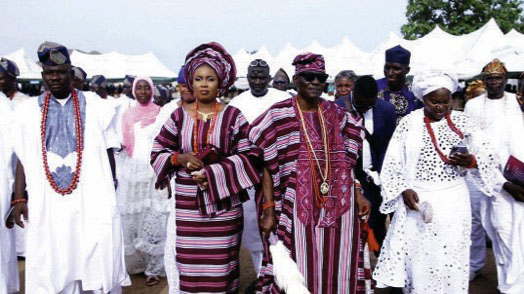
All roads led to Igbere, a community in Bende Local Government Area of Abia State on January 2, for the 3rd edition of the annual Igbere Carnival.

The event was the first after the COVID-19 pandemic.
Sponsored by Orji Uzor Kalu (OUK) Foundation, the carnival, meant to showcase the rich cultural heritage of the Igbere people, had previously been held at the Camp NEYA country home of Senator Orji Uzor Kalu, the Chief Whip of the Senate.
However, there was innovation in this year’s edition. The carnival was held simultaneously in all the 13 villages of Igbere, where each village showcased her cultural heritage, and at the end, judges who came from abroad, announced winners.
The Senate Chief Whip, Dr Kalu, was joined by other dignitaries, including the Speaker of the Djibouti National Assembly, Muhammad Ali Humad at the event. They moved round the 13 villages of Igbere to watch their cultural displays, as the foreign judges assessed their performances.
The first port of call was Agbo village, said to be the ancient headquarters of Igbere.
The village welcomed Kalu and his entourage with a dance procession called the ‘Alammam Dance’ comprising mostly kids followed by youths and elders.
The village, believed to be where the entire villages consult the oracle that tells what would happen in Igbere, displayed the deity, which was controlled by the Chief Priest called ‘Ajizu.’
Prominent sons of the village led by the traditional ruler, Eze John U. Oko came out in their numbers to receive the visitors.
From Agbo, the next destination was Eziama village. The village presented the famous ‘Ogudu War Dance’ with the actors bearing a wooden sword and traditional guns. The people presented how their forefathers celebrated victory after winning battles. A well organised traditional wrestling followed later.
Amaukwu was the next destination, as the village welcomed the guests with a dance procession called Egwu Itu – Ota consisting mainly of women wielding beautifully designed palm fronds known traditionally as Ota. They also performed the Umanwa Dance which is used to celebrate the birth of a new baby.
According to Igbere folklore, the village was where a once dreaded human head hunter from a neighbouring community was beheaded. The villain was said to be a well-known warrior who had conquered other villages like Arochukwu, Ohafia but was captured alive in Igbere, and taken to Amaukwu where he was beheaded.
The community is equally touted as the place of unity, where all villages in Igbere converge to drink palm wine from one pot and with one cup.
At Amakpo Igbere, the people performed the Uronyi Dance. They presented the guests with their farm produce, which included; yam tubers, palm kernel fruits, plantain, and native beans known as Ojuju.
Amakpo, in the entire 13 villages of Igbere, is said to be the only one that holds the traditional staff known as the Okpu Ndi made out of an Elephant Tusk and decorated with feathers, palm fronds and other traditional ornaments.
Ibinanta was the next destination. The village performed their traditional dance known as the Ohuba Agiri Dance. They presented a gigantic plant pod known traditionally as Ofi, which contained seeds that grow the popular fluted pumpkin vegetable, commonly called Ugwu; Cassava flakes also known as Abacha, and native yam also known as Una.
The village holds the title of being the first to build a community hall in Igbere, which was built in 1937.
The last place visited was Umuisi where the people trooped out in their numbers to showcase their rich culture.
At the end of the event, Senator Kalu and the Djibouti National Assembly Speaker, Humad spoke on the significance of the day.
Kalu said the event was deliberately shifted to the communities to allow more people to participate and have access to the festival as previous editions were centralized at the Senator’s residential field at Camp Neya.
The former governor described culture, which the carnival epitomised, as the string that has bound the people together in unity adding that the festival would be sustained as a means of teaching the younger generation the value of unity and love.
“You can see the joy and excitement on the faces of the people – the young, the old, children and women. When we were doing it at Camp Neya, only few people could attend but now they are happy enjoying themselves and still dancing in their communities till now.
“You see, we didn’t speak in the 13 villages. It is not about politics, it’s about our people. It’s just to resonate our culture; the culture has to be brought back, Kalu said.
The Senate Chief Whip, accompanied by his guest, the Speaker of the Djibouti National Assembly, Humad and his family, called on other Igbo communities to key into the carnival, which he attributed to the peace being enjoyed in Igbere.
He promised that the 2024 festival would be better organised because the president general of the communities would be involved and enough time given for preparations.
Speaking on peace, Kalu said: “We don’t want anyone to cause trouble here. We have told anybody that will cause trouble here that we will take him away. We don’t want anybody to cause trouble for us in this community. If we see you with trouble, we’ll come after you and take you away. It is the law of the 13 villages; it’s not my law.”
Expressing his impression of the cultural festival, the Djibouti National Assembly Speaker, Humad said he was excited to witness the festival and the unity it engendered among the people, adding that he would take the experience back to his country. He said culture has given Africa its true identity.
“As soon as I go back to my country I will show them what I have seen in Nigeria. It’s an example of what Nigeria and indeed Africa should be. We should work together for cultural exhibitions. It is the culture that brings the value of Africans out, from what we have seen today,” he said.
Also speaking, the Executive Secretary, OUK Foundation, Mrs Jemima Ola Kalu said the 2023 edition of Igbere Cultural Festival was for “creativity and restoring our cultural heritage.”
She explained that to add impetus to the cultural renaissance, the event had to be conducted in the various villages to give, especially the younger generation, the sense of participation and sustainability.
“If they all came to Camp Neya, the children may not have the opportunity of coming but we want to groom them so that as the old people are phasing out, the young ones will continue to uphold the culture,” she said.
An APC governorship aspirant, Chief Daniel Eke, expressed joy that “our Senator is organising this for the community to showcase our culture to the world.” He described the event as a unifying factor for a community built on love.
Senator Kalu later announced the winners with Ibinanta and Eziama jointly taking the first position; Amankalu, Okafia and Umusi, second position, while Ibinaukwu and Ohumuola took the third position. Cash prizes were given to the winners.
The next edition according to the organizers, will hold on January 2, 2024.