Follow Us on Google
By Chukwuma Umeorah
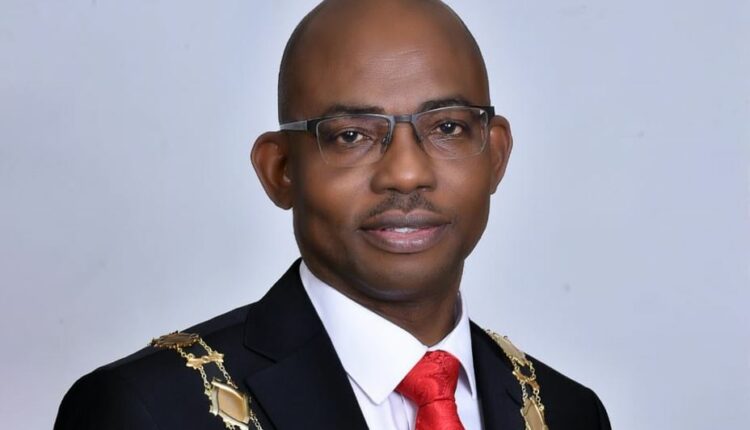
The 59th President of the Institute of Chartered Accountants of Nigeria (ICAN), Innocent Okwuosa, has called for comprehensive and sustained policy reforms driven by both the public and private sectors to improve the performance of Nigeria’s power sector.
He made this call when he led a delegation of the Institute’s council members to the office of the MD/CEO of Eko Electricity Distribution Company (EKEDC), Tinuade Sanda.
Okwuosa urged the federal government to create a conducive environment that will attract investment to the sector through establishing and implementing clear and consistent policies as well as creating the right incentives. “To this end, we commend the recent power sector stakeholders’ engagement organized by the Minister of Power, Adebayo Adelabu as a step in the right direction. However, we advise that, in the future, invitations should be extended to professional bodies like ICAN, which has a Technical Committee on the Power Sector.”
During the visit, Okwuosa highlighted the multifaceted challenges facing the power distribution sector in Nigeria, including outdated infrastructure, regulatory issues, equipment vandalism, and dissatisfaction among consumers.
He stressed that the lack of reliable power in Nigeria was a significant constraint for citizens and businesses, resulting in annual economic losses estimated at $26.2 billion (N10.1 trillion).
“In our recent position paper, we drew attention to a $500 million World Bank loan meant for DISCOs’ large-scale metering to improve the electricity distribution sector. Despite such effort, the World Bank reports that 85 million Nigerians, or 43 per cent of the population, do not have access to grid electricity, making Nigeria the country with the largest energy access deficit in the world. We will continue to advocate for greater accountability and transparency in the power sector, given that it holds the key to production and service activities that will boost economic growth in Nigeria.”
In addition to demanding accountability within the sector, Okwuosa revealed that in July 2023, when the DISCOs moved to increase electricity tariff, the Institute advised against this move, not because they were unaware of the challenges facing the DISCOs, but because of the cost implications on consumers. According to him, “It was because of our public mandate interest, as we are aware that the goal of SDG 7 is about ensuring access to clean and affordable energy for all citizens. The goal cannot be achieved with the proposed hike in electricity tariff, which came at the same time that the government removed fuel subsidy and unified exchange rate, causing a massive devaluation in the value of the naira.
“We urge the President Tinubu administration to implement policies that will enable Nigeria to achieve the SDGs’ goal, especially SDGs 1 to 10,” he advised.
The managing director of EKEDC, Tinuade Sanda, in her response, said that the distribution company believed in using innovative ways to ensure that its customers are metered.
Sanda, however, called for an urgent resetting of electricity tariffs to avoid an illiquidity problem in the energy sector.
“We need to match up our tariff with the rising price of gas,” Sanda said, emphasizing that the sector could not grow by booking losses because of its almost 80 per cent reliance on gas that is priced in the United States’ dollar.