Follow Us on Google
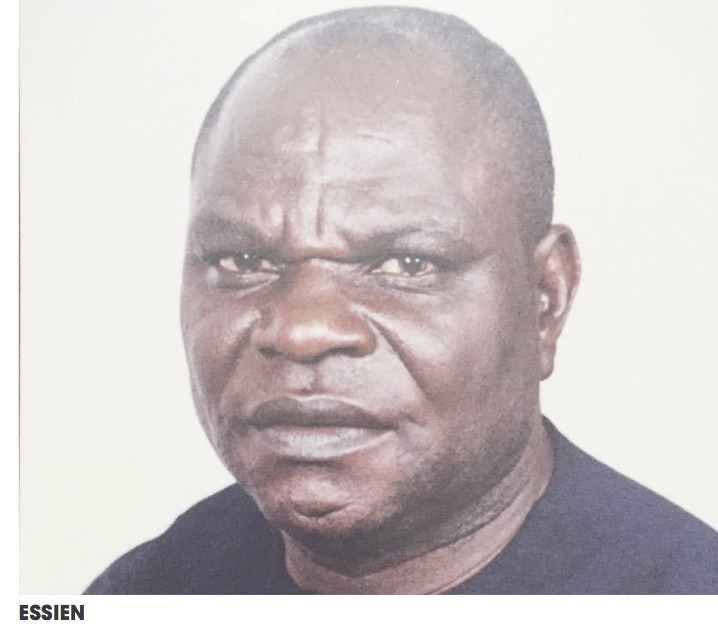
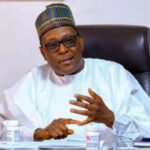
A member of the Peoples Democratic Party (PDP) Board of Trustees (BoT), Senator Emmanuel Ibok Essien, has cautioned that the divisiveness in the country, including rising ethnic tensions, can lead to a huge crisis if not immediately curtailed. Essien, who asserted that INEC didn’t do well in the recent elections, urged the Federal Government to initiate processes that would heal the nation before the May 29 handover date.
He also spoke about the Group of Five PDP governors who did not support the party’s presidential campaign, noting that the governors also became their own nemesis, as some of them lost their elections. He spoke with VINCENT KALU.
What is your take on the presidential election?
The presidential election didn’t follow the INEC much-preached electoral act and guidelines. The electoral umpire promised Nigerians that they would conduct very free, fair and credible elections; they would use the BVAS and ensure that the results were uploaded from the polling unit in real time to the IRev, but only for them to do otherwise. So, that is fraud, as far as the electoral process is concerned. It is very unfortunate that this is happening to Nigeria at this time. That is why a lot of people are not happy with the outcome of the presidential election. There is a lot of agitation, let’s hope that the tribunals and the courts would be able to address the injustice that happened during that election. It is now left for the courts and tribunals. I’m not a lawyer, but there are certain provisions of the law, which even as a layman you should know. It is that a candidate must score 25 per cent in two thirds of the 36 states and Abuja. It is two thirds, which is 24 states of the 36 states, and it says, ‘and Abuja’. It didn’t say, ‘including Abuja.’ I’m not a lawyer, but I think something is wrong there about the interpretation. During the Second Republic election, you remember how the court interpreted two thirds of 19 states. It is left for the court to interpret, but as a layman, I think something is wrong.
What is your opinion on the governorship election?
There was a little improvement in the governorship election because there were so many shouts after the presidential and National Assembly elections. I think there was quite substantial improvement, especially in the transmission of results. That one was fairly okay.
Are you satisfied with the conduct of the security agencies during the polls?
There were lots of compromises by the security agencies, especially during the presidential election. Some of the security agencies were very hostile to some political parties, while for some, they were very friendly. There were some compromises even in both elections.
Why did INEC not do well? Were they not prepared? Where did they get it wrong?
They told Nigerians that they were fully prepared, having collected so much money for the election, but on ground, it seems that they were not quite prepared or they deliberately compromised, because if they were fully prepared, all the lapses wouldn’t have taken place.
What’s your take on the performance of the Labour Party in the election?
The Labour Party was like a mass movement. Initially they were written off, but they proved many people wrong as they came out very strong. You find out that mostly the youths voted for the party. This cut across the zones of the federation. The youths really came out to vote for the party. So, it came as a shock to the two older parties, the APC and the PDP that have been in existence and have structures across Nigeria.
Some said the G5 governors were the nemesis of the PDP and its candidate. What is your position on this?
The G5 may be the nemesis of the presidential candidate, but it also turned out they were their own nemesis because some of them who had hoped to go to the senate lost their senatorial ambitions. So, you found that some of them were not even popular in their senatorial zones and in their states, otherwise, why would you as a state governor lose your senatorial zone? You are a two-term governor; you lost your senatorial zone. So, it was not only PDP that lost, they themselves also lost. They were part of the nemesis of the party, but they were equally affected.
What lessons should people, especially the politicians learn from this G5?
The lesson is for the people to understand that unity is strength and that the party matters, and that wherever the majority of the members of the party take a decision, people should follow and obey that decision.
Crisis is also brewing in the PDP, with the suspension of its national chairman, Iyorchia Ayu. What is going on in the party?
I know that the issue would be sorted out at the end of the day. You should expect that to happen where the national chairman of a party lost his unit, lost his ward, lost his local government, lost his senatorial zone, it means that he was not really on ground as far as the party is concerned. If it was just in one election, it could be excused, but he lost in all the elections. I think he didn’t do much for the party in his ward, in his local government, and in his unit because that is your base. You shouldn’t be uprooted in your base.
By this time four years ago, PDP was very strong. Don’t you think that party may head towards extinction the way things are going?
Many politicians in Nigeria do not have ideology, that is why they jump from one party to the other. Don’t be surprised to see people crisscrossing from one party to the other depending on the political or power dynamics from May 29, 2023 after the inauguration of the new government. Don’t be surprised when you see people jumping boats. Don’t also be surprised to see people defecting from the ruling party to PDP and even other parties. People don’t have ideology in Nigeria and that is the problem.
What’s your take on the issues of ethnicity and religion affecting political choices, even leading to hate speeches and ethnic profiling?
It is very difficult and that is why we need a lot of prayers. Even the president once said that the problems of Nigeria need prayers. We need a lot of prayers because the hatred going on between religious lines and ethnic lines is becoming deeper on daily basis. Look at what happened in Lagos, where the Yoruba and the Igbo have problem over election and the right to vote. I also heard of an alleged criticism of the Yoruba by the Igbo leader. It is becoming very divisive, which is not very healthy for the country. What we need at this time is the unity of this country. The population of Nigeria is too much for us to have a crisis. There is no country in West Africa or even other African countries or the world that would accommodate the humanitarian crisis in Nigeria. So, we are pleading with all the different religious organisations, different ethnic groups to think Nigeria first. We should all think Nigeria first before we think of our individual regions, religion or ethnic groups so that we don’t brew more crisis and hatred among ourselves. That is my appeal, and I’m also joining other well meaning Nigerians to ensure that there is unity of purpose in this country and for us to unite to work together as a nation.
Don’t you think the silence of the authorities regarding the hatred and division in the country is a wrong signal?
It is a wrong signal. Like I keep saying, when the head is rotten, the whole body is also rotten. We should sit on a round table and agree on true federalism, and everybody goes to the centre with something, and the regions and states have something so that you see some level of competition in this country.
There is the need for us to practise true federalism and it is one way we may have a stronger unity in the country, which I’m talking about. Not where everything is put at the centre and whoever sits there considers only his tribe and religion and his state and region, which is not fair to other parts of the nation. This will continue to bring division in the country, and create crisis everywhere. I keep appealing to those in charge of government, especially the incoming one as this one is almost on its way out to look critically on the issue of restructuring of this country, which will be beneficial to all its components.
Do you think the incoming government can do anything about restructuring?
They mentioned it when they were coming in 2015, and they even set up a committee headed by the Kaduna State governor, Nasir El-rufai. Their report never came out. If this incoming government is sworn in on May 29, they can dust the report and work on it. They can also look at the 2014 Confab Report, and the one of 2005. They can look and consolidate all these reports, and come with a policy that will be beneficial to all the components of this country.
But they never promised restructuring. How can they do what they never promised?
You never can tell. There may be a lot of agitations and pressure from this country. With the level of the pressure, if you don’t do something for the country, you may be toying with the unity of the country. So, the pressure will never stop until the right thing is done.