Follow Us on Google
By Brady Chijioke Nwosu
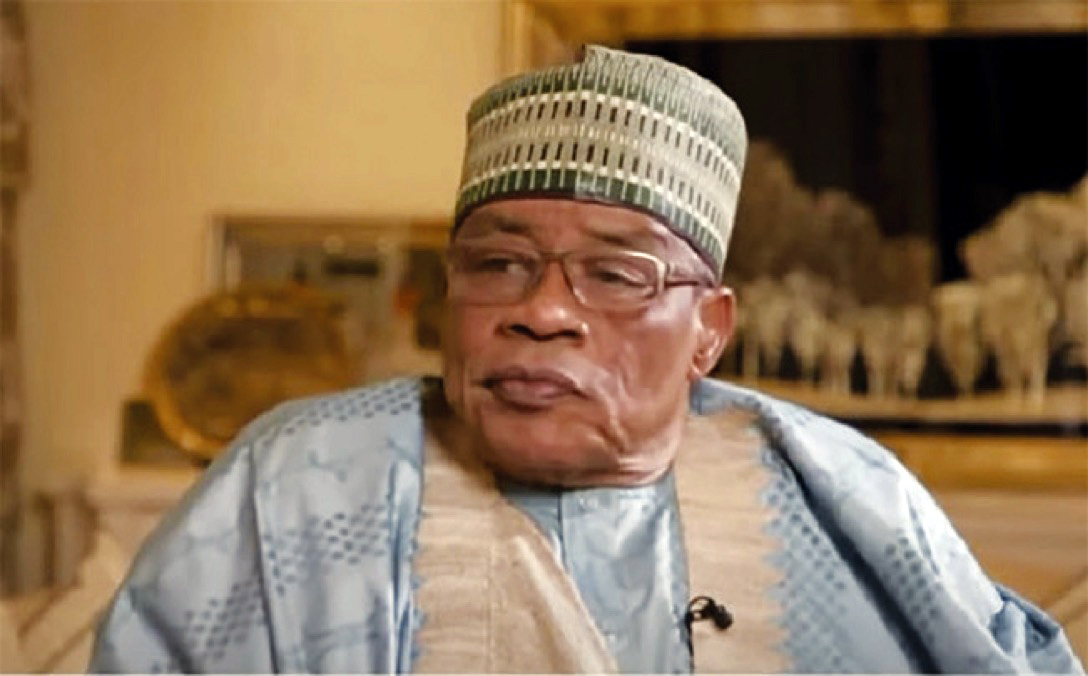
The faithfulness of God has once again manifested in the life of Nigeria’s former military president, General Ibrahim Badamasi Babangida (rtd.).
Today, August 17, 2026, we celebrate 85 years birthday for a visionary leader who strode across Nigeria’s political landscape like a colossus, leaving footprints that time cannot erase.
Nigeria’s 65 years of independence have produced a variety of civilian and military leaders, each unique in his style of leadership and distinguished by the policies and programmes introduced during his administration. Among them, Ibrahim Babangida remains a phenomenal figure. A super unequal leader in our collective memories .
Although his administration was military in character, Babangida did not govern entirely by fiat. He frequently opened national issues to public debate, allowing civilians, intellectuals and other stakeholders to contribute to discussions on matters of national importance. This approach earned him the unusual description of a “benevolent dictator”—a phrase that subsequently became part of Nigeria’s political lexicon. Forensically, every administration after his has followed his pattern in all sectors of the Nigerian model and style of governance .
IBB was also one Nigerian leader who cultivated friendships and alliances across political, religious and ideological divides. He understood Nigeria’s diversity and made deliberate efforts to weave the different threads of the country’s “coat of many colours” into one national fabric.
Under his administration, Nigeria experienced a period of relative peace in the Niger Delta, while separatist agitations that later became prominent were not as widespread or intense as they are today.
A visionary ahead of his time
Babangida introduced several programmes and initiatives that were designed to stimulate socio-economic development and improve the lives of ordinary Nigerians. Among them were the deregulation of the telecommunications sector, broadcasting reforms, the People’s Bank, Community Banking, the National Directorate of Employment (NDE), the Directorate of Food, Roads and Rural Infrastructure (DFRRI), and the Federal Road Safety Corps (FRSC).
any Nigerians who are unfamiliar with the history of the country’s telecommunications revolution may not appreciate the foundations laid during the Babangida era.
The People’s Bank, for instance, was established to provide access to credit for petty traders, artisans and other low-income Nigerians, with the broader objective of encouraging entrepreneurship and stimulating economic activity. The idea was reportedly inspired by similar initiatives in Bangladesh.
The NDE was established to tackle unemployment and create opportunities for young Nigerians, while the Urban Mass Transit programme was designed to address transportation challenges.
The Babangida era also witnessed significant recruitment of graduates into the Federal Civil Service. After that, there hasn’t been recruitment of that magnitude.
Recruitment into civil service is surreptitiously done to benefit the political eites.
These programmes, particularly DFRRI, the People’s Bank, Urban Mass Transit and the NDE, were intended to encourage private enterprise and bring government programmes closer to ordinary Nigerians.
They were innovative initiatives that touched the lives of Nigerians in ways many government programmes had failed to do.
A foreign policy that asserted Nigeria’s place in Africa
Babangida’s foreign policy remains one of the most notable aspects of his administration.
His government pursued an assertive African foreign policy, particularly in West Africa. This was evident in Nigeria’s leading role in the establishment and deployment of the Economic Community of West African States Monitoring Group (ECOMOG) during the Liberian civil war.
Nigeria’s intervention in Liberia, which began in 1990, was driven by the conviction that instability in the sub-region could not be ignored. ECOMOG subsequently played a major role in Liberia and Sierra Leone, helping to stabilise countries devastated by civil wars.
For many, Nigeria’s leadership in the intervention reinforced the country’s position as the “Big Brother” of Africa.
Another major initiative was the Technical Aid Corps scheme, inaugurated in 1987, through which Nigerian professionals and graduates volunteered to serve in African, Caribbean and Pacific countries. The programme strengthened Nigeria’s image as a nation willing to share its human resources and expertise with other developing countries.
Babangida’s foreign policy was ultimately driven by a desire to ensure that Nigeria commanded respect within the international community and maintained its influence across Africa.
A Statesman Beyond His Administration
Even after leaving office, Babangida continued to play a role in Nigeria’s political and diplomatic affairs.
Successive administrations have occasionally relied on his experience and relationships in resolving political crises, particularly across Africa. He was, for instance, involved in diplomatic efforts during periods of political instability in other African countries.
His influence has therefore extended beyond the eight years he spent as Nigeria’s military president.
The June 12 Question
For all his achievements, Babangida’s legacy cannot be discussed without confronting one of the most controversial decisions of his administration: the annulment of the June 12, 1993 presidential election.
The election, widely regarded as one of Nigeria’s freest and fairest, was won by the late Chief Moshood Kashimawo Olawale Abiola , this he admitted in his recent published book . Its annulment triggered widespread protests and political unrest and ultimately contributed to the end of Babangida’s administration in August 1993.
For many Nigerians, June 12 remains the defining blemish on his otherwise remarkable political career.
Yet, even critics acknowledge that the Babangida administration made significant contributions to Nigeria’s transition towards democratic governance. His administration introduced political reforms and programmes aimed at returning the country to civilian rule, although the process ultimately ended in crisis.
Setting the Record Straight on the 1966 Coup
Another subject on which Babangida has spoken forcefully is the interpretation of the January 1966 military coup.
For decades, the coup was widely described as an “Igbo coup” because it was led by Major Chukwuma Kaduna Nzeogwu and involved several officers of Igbo origin.
Babangida, however, has argued that the coup should not be reduced to an ethnic conspiracy, maintaining that the young officers involved were drawn from different parts of the country and were motivated by concerns about Nigeria’s deteriorating political situation, and wanted to instal Chief Awolowo as the head of state.
That interpretation remains a subject of historical debate, but Babangida’s willingness to address one of the country’s most sensitive historical controversies is significant.
The Man and His Legacy
General Ibrahim Badamasi Babangida was born on August 17, 1941. He attended primary school between 1950 and 1956 and later Government College, Bida, from 1957 to 1962.
He joined the Nigerian Army on December 10, 1962, and received his commission as a second lieutenant from the Indian Military Academy on September 26, 1963.
He later rose through the ranks to become Chief of Army Staff in January 1984 before assuming the position of Head of State on August 27, 1985. He remained in power until August 26, 1993.
Babangida was a central figure in several defining moments of Nigeria’s military history, including the July 1966 counter-coup, the 1976 Dimka coup attempt, the December 1983 coup and the August 1985 coup that brought him to power.
At 85, General Ibrahim Badamasi Babangida remains one of the most consequential and controversial figures in Nigeria’s political history.
His legacy is complex. It contains remarkable initiatives, bold foreign policy decisions, economic and social programmes, political reforms and, undoubtedly, decisions that continue to attract criticism.
But history will ultimately judge him not by one event alone, but by the totality of his years in public service and the enduring impact of the ideas and institutions his administration left behind.
Happy 85th birthday to General Ibrahim Badamasi Babangida (rtd.), a phenomenal leader whose place in Nigeria’s history remains indelible. IBB remains the most charmingly and greatest Nigeria’s president in the history of our country and on this occasion of his birthday its congratulations.
• Nwosu [Ozowara], writes from Okai, Eziama Isiala Mbano, Imo State.