Follow Us on Google

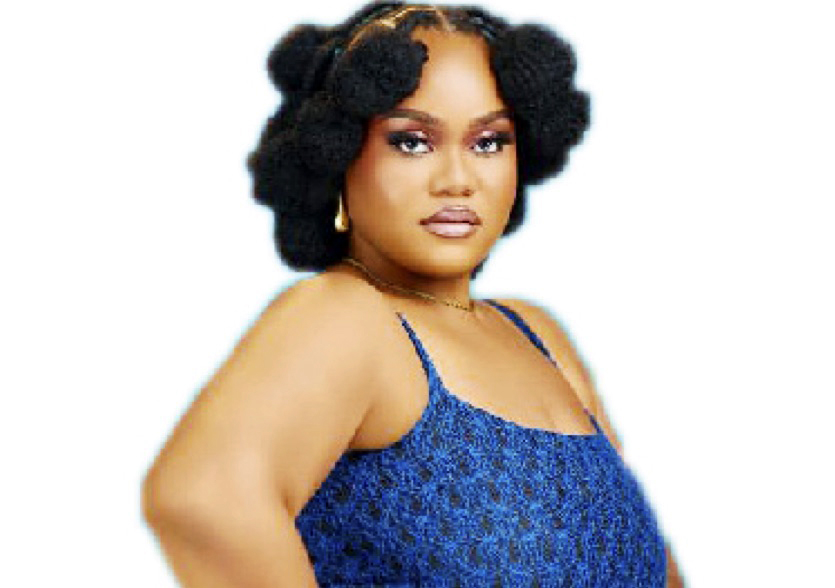
For Nollywood actress Obioma Ofoegbu, talent should never be confined by body type, and passion alone is not enough to guarantee financial stability in Nigeria’s movie industry.
In this interview with Sunday Sun, she opens up about breaking industry stereotypes, the realities of surviving as an actor, the economics of Nollywood, and her dream of earning international recognition.
Enjoy!
When did your journey into Nollywood begin, and what were the biggest challenges you faced when starting in the industry?
My journey into Nollywood officially began in 2020, when I featured in a short film. We had to travel to Niger State to film it, and it was a beautiful experience. But before then, I had always been acting – in secondary school and upto university. In every school I attended, I was known for acting, stage plays, scriptwriting, basically theatre and drama. That has always been my life.

One of the biggest challenges I faced when I started was being stereotyped because of my body type. A lot of times, they tried to give me roles just because I’m a plus-size woman – roles that were not even for my age grade. They would make me older in some movies, or give me the same stories that a plus-size woman is expected to tell.
But there are so many things a plus-size woman can do. I’m young; I don’t have to play an older woman or a married woman just because I’m plus-size.
So I broke the norm. I rejected a lot of roles, and I’m branding myself to be as versatile as I can be. I don’t want to be placed in a box because of my looks, my appearance, where I live, or any other limitation.
What has been the most challenging role you have played so far, and what did the experience teach you about yourself as an actor?
The most challenging role so far has to be my role in The Low Priest on Africa Magic. I got to play a mad woman, and eventually I got delivered and healed. Then I maintain my youth even though I’m elderly, and I start causing a lot of havoc and chaos. I just became a full villain – one of the most hated villains in the series, up until the last episode.
That was very challenging. I had to learn Igbo because my Igbo is not solid. I learned a lot more Igbo; I had to chant incantations in Igbo; I had to be painted black; I had a lot of breakouts; and we filmed in bushes. It wasn’t the best experience physically, but it was so worth it and so fun.
And it went on to win an AMVCA. I mean, my efforts were not in vain. Every single person was challenged on that series.
Since then, I don’t think I’ve gotten any other role that challenged me like that. I’m almost sick of hearing myself talk about The Low Priest alone as the most challenging role, so shout-out to producers and casting directors – please give me more challenging roles!
What did that challenge teach you?
What it taught me is that there is no role I can’t do. As long as I’m resilient, pay attention, study the script and prepare – literally, once you prepare for anything, you can conquer anything. It taught me that there is really nothing I can’t do in the industry, and that I can push to be the best version of myself as an actor and as a human being. It was an amazing experience.
Actors often get typecast after playing certain roles repeatedly. Would you accept being stereotyped if it meant getting more acting jobs, or would you rather take on diverse roles even if they came less frequently?
Typically, a lot of people might say they would rather take on diverse roles even if they came less frequently. I would have said that a couple of years ago, too. But with the current situation in Nigeria, the economy is really poor; we are really struggling, the standard of living is low, and you have to survive. And as a creative, you are not exactly lucky to have a lot of other things to do. A lot of times, creatives have a side business, and you have to balance it. A lot of times, actors are literally overwhelmed with that job alone, and it would never be enough to pay your bills.
So if I’m seeing a stereotypical role that comes frequently with very good pay, I’m still building my portfolio. I’m not Funke Akindele yet; I’m not big enough to produce as I please, so I would definitely take those roles. I would grow as an actor, save, build, and get my face out there as much as I can.
And eventually, when I have the funding and the right amount of fame, I can decide, “Okay, I want to stop taking on this role; it’s too much.”
Other News
But at the level I’m at right now, I’m open to taking roles as often as possible because I really love working. I’m a workaholic, so that would make me so happy.
But if we aren’t considering everything we have to deal with in Nigeria, I would like to take on diverse roles, play different characters, and test myself as an actor.
Given the uncertainties surrounding the entertainment industry, do you consider acting a lucrative career in Nigeria today? Can an actor comfortably make a living from acting alone?
This circles back to what I said in the previous question. I would not consider acting a lucrative career in Nigeria today, because you will actually suffer. Often, actors who are not household names don’t get paid as much. This is something I wish I could address when my platform is bigger. It’s just always nice to pay people a tangible amount of money, especially when these movies are on streaming platforms, and you know you will keep getting paid from that movie even in years to come.
So I think, as an actor living in Nigeria, you can make this your main hustle; it’s fine, but always have something else you are doing to make money. Always have something else.
And this is coming from somebody who has been very shaky when it comes to having other sources of income, because sometimes I just put my mind, body and soul into the industry. I’m fighting, and I’m trying to be an actor before anything else. And I know how much that has cost me. It’s literally so painful, because a lot of times your face might be going viral, but you are not as financially stable as you want to be.
And so you go out on the road, you are taking a walk, or you are trying to head somewhere, and you are in a cab, and people are wondering why you are not driving a G-Wagon yet, why you are not driving a GLK yet. Even when you buy a car, maybe your car is a Corolla, your car is a Camry, and people are looking at you, and they are wondering why. Oh, is this the cash Nollywood has?
Because truly, really and truly, you don’t get as much money until you become a household name or you go viral, and that’s just how it is here. That’s literally how it is here, and it’s very sad. So, I wouldn’t advise anyone to see Nollywood as a lucrative career you can use to survive in Nigeria if you are not a household name. Always have other things you are doing. Sometimes use that face to open a business, start influencing, and consider other ways to earn extra money. And sometimes that cash can help you even fund your dreams, because you could produce with ease; do what you like; and have autonomy over your work, your finances, and your life. It’s bliss. So yeah, that’s my take.
Some producers complain that actors do not do enough to promote the movies they feature in. Do you believe actors have an obligation to promote films after shooting, or should that responsibility rest primarily with producers and distributors?
I definitely think that every actor should push the work they were featured in. Push the work you were in. I’m speaking from the POV of an executive producer. I know what it’s like to have people push your movie alongside you. It’s just very blissful; it’s amazing to see. There’s that sense of community, that sense of family.
But this is not the case for every producer. Some producers don’t treat their actors well, and then they expect you to keep promoting the film because, at the end of the day, you are selling your face. Some people don’t want any memory of that film, so once they are done with it, they erase it from their brain, from their mind, from everything. And then you wonder, how come this person isn’t promoting it? There is that side too.
However, I think producers and directors – basically producers- should have a solid marketing plan, not solely relying on the actors to promote that film. There should be a solid plan. Actors should be just one part of the plan. Okay, we are going to have actors wear this T-shirt; we are going to have actors do this content on social media and everything. Amazing.
At the end of the day, there are so many other things that a producer can do to push their film than relying solely on the actors. Because as you are relying on them, other producers are relying on them as well. And these people are actors before they are content creators.
So, I think they should give actors grace and, at the same time, make other plans. And actors, too, should support the films they were featured in. It just makes sense. I don’t see how I would feature in a project, spend a lot of time, energy, and effort, and not push that film. I would definitely push that film.
What is your biggest dream as an actor, and what milestone would make you feel you have truly achieved your ambition in Nollywood?
My biggest dream as an actor would be to have my work, my art, recognised in and outside of the continent, and appreciated as well. You know, a situation where people are seeing my worth, and people are seeing my talent, and people are requesting me to feature in different projects for them outside of the confines of Nollywood.
Getting to spread my tentacles and do other things with other creatives from other parts of the world – that would really mean so much to me. Because at the end of the day, I’m an actor; I’m not just a Nollywood actor. I like to see myself as an actor. So Nollywood is a starting point for me; I still want to do other things in other industries outside of Nigeria.
So, yes, pretty much just having my art recognised everywhere, appreciated as well, and just the ease that comes with it.
A milestone that would make me feel like I’ve truly achieved my ambition in Nollywood – I wouldn’t say that there’s a milestone I would hit now and I would say, “Oh, I’ve achieved this,” no. Because one thing – I don’t know if this is a good thing – but I’m a self-critic, and I really don’t give myself a lot of applause for the things I do. So I don’t know if there’s a milestone.
However, I would definitely love to receive accolades. You know, give me my flowers while I’m still alive, for the hard work, the years of resilience and intentionality. I mean, it’s been a lot, but I’m still here, I’m still pushing, I’m still trying. And I would just love to be given the applause due to me; I want accolades at some point in my career.
It would just make me really happy to know that my work is being recognized and appreciated. So yes, that’s typically what I would love.