Follow Us on Google

By Agatha Emeadi
Nephrologists at various times have said that the primary function of a dialysis machine is to act as an artificial kidney to filter waste products, remove excess fluids and balance essential electrolytes from the blood when a person’s natural kidney can no longer function.
Kidney disease, therefore, should not automatically be described as terminal as outcomes depend on its cause, severity and access to appropriate treatment.
It might be interesting to know that research has proven that there has been an increase in kidney disease among young adults. At different government hospitals the numbers have become a concern for families and the society.
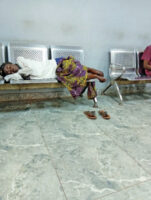
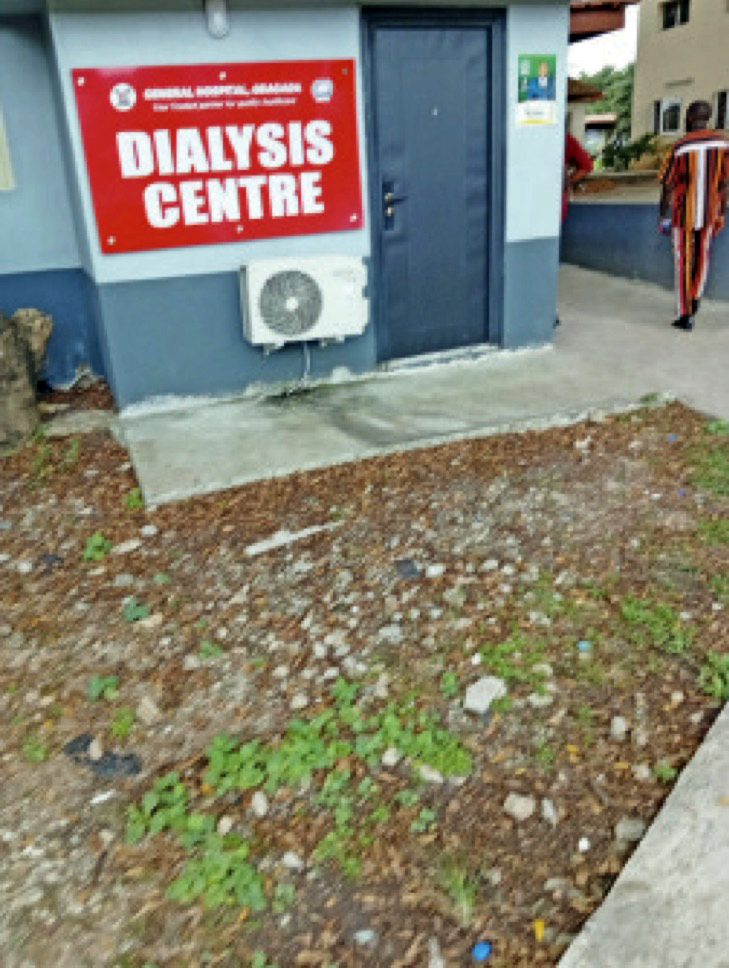
What is of greater concern for many is the state of dialysis centres in government hospitals to tackle the increasing number of patients. Findings reveal that many dialyses centres that exist in public and private hospitals are overworked due to the increasing cases.
Prof. Emem Bassey is the immediate past Chief Medical Director (CMD) University of Uyo Teaching Hospital UUTH, Akwa Ibom State gave an insight into the state of the equipment at the hospital he once managed.
He said: “Yes, there are fully functional and overworked dialysis centres which can barely cope with the influx of patients. They are actually overworked, but we coped with them.”
In the same vein, Dr. Udeme Ekrikpo, a US based Consultant Nephrologist also agreed that there are functional dialysis centres in Nigeria.
“Yes, functional dialysis services were available in government hospitals in Nigeria. Nationally, there are more than 100 dialysis centres across the public and private sectors, as well as a number of kidney transplant centres. Nigerian transplant programmes have demonstrated that good outcomes are achievable locally. Some centre’s report outcomes comparable to international benchmarks, although results vary between centres and according to the outcome and follow-up period being assessed.”
Ekrikpo argued that the availability of a functional centre alone is not enough. “Patients need reliable equipment, safe dialysis water, quality consumables, appropriately trained staff and affordable sustained access to treatment.”
He added that the system needs consistent standards, continuing professional training, regular clinical audits and quality assurance across centres. According to the consultant, supporting quality-assured local manufacture of dialysis consumables could also improve supply and help reduce costs.
Then, the reliable reporting to the Nigerian Kidney Disease Registry is essential according to Ekrikpo.
“It allows us to measure the burden of disease, assess outcomes and identify where services need improvement because the registry data show that approximately 50 per cent of patients starting dialysis are aged between 40 and 65 years, while about 30 per cent are aged between 18 and 40. Approximately 15 per cent are older than 65.
“These national figures show that kidney failure affects many Nigerians during their productive years. They should not, however, be interpreted as figures specifically for undergraduates.
“For a young adult, dialysis can interrupt education, employment and family responsibilities. Repeated hospital visits reduce time available for work, while treatment costs place substantial pressure on household finances.
“Our priorities must therefore include prevention, early detection, affordable dialysis, access to transplantation and sustained care after transplantation.”
For Dr. Zumnan Gimba, Consultant Nephrologist from Jos University Teaching Hospital (JUTH), Plateau State, the experience is the same.
He said: “There are many government functional hospitals all over Nigeria that have dialysis services which are used to treat people with kidney diseases. But maintenance of these dialysis centres can sometimes be a challenge such that they may have a few functional machines for many patients who need them.”
The Federal Government once announced a subsidy on kidney dialysis costs in Federal Teaching Hospitals and Medical Centres. They slashed the price from N50, 000 to N20, 000. The subsidy was supposed to apply across federal medical centres in Nigeria.
Investigation, however, shows that most of the Federal Government hospitals do not comply with that directive due to circumstances beyond their control.
A health worker at one of the medical centres said: “Yes, we heard that as a story. If as a government hospital we have all the necessary medical requirements, that price will work. But for the fact that hospitals lack 24 hours electricity supply and other essential medicals, it will not work. In fact some patients’ relatives will be willing to bear the cost of some hospital needs.”
Mr. Raphael’s family lost him through a kidney disease. In an interaction with his wife, she told how the functional dialysis machine helped them.
“We were using the facility at the Lagos State Teaching Hospital, (LASUTH), until they went on strike. We were directed to one private facility at Oshodi called Dialesa which is just for dialysis. As a first timer, it costs us N100, 000 while subsequent days costs N50,000,” the wife said.
Mrs. Raphael insists that going to a government hospital for dialysis is far cheaper, but one might go there and might not be attended to unlike in the private hospital which is more expensive but with swift approach.
In essence, it is a known fact that government hospitals as usual with functional dialysis machines will experience traffic because of the rates. This has become an abode for the young ones. Dr. Ekrikpo again stated that patients who need the dialysis are more of the younger people.
“Patients presenting with kidney failure in Nigeria are, on the average, younger than those in Western Europe and North America. This means that many Nigerians develop kidney failure during their years of education, employment and active family responsibility.”
Again, he said that several factors contribute to this burden. “It is not simply a question of lifestyle or fast food but genetic susceptibility plays a role. Certain variants of the Apo lipoprotein L1 gene, APOL1, increase susceptibility to some kidney diseases in people of West African ancestry. However, having these variants does not mean that someone will inevitably develop kidney failure; other factors influence whether disease develops and how it progresses.
“Other important causes include inflammation of the kidney’s filtering units, known as glomerulonephritis, inherited kidney disorders, infections, hypertension and diabetes. Severe dehydration, serious infections and exposure to substances that damage the kidneys can also cause acute kidney injury.
“Lifestyle contributes through unhealthy diets, excessive salt intake, obesity, physical inactivity and smoking. These can increase the risk of hypertension and diabetes, which in turn can damage the kidneys.”
He did not forget the misuse of certain painkillers and the use of unregulated herbal preparations which all give additional concerns.
He added: “In the place of fast food, it is also relevant because frequent consumption of meals high in salt and excess calories can contribute to these health problems. However, we should avoid attributing kidney failure generally to fast food or food adulteration without evidence identifying the specific exposure.
“Our public message should encourage prevention without blaming patients. Young people should know their blood pressure, avoid self-medication and seek kidney assessment when they have risk factors, including a family history of kidney disease.”
Dr. Gimba warned that early detection is the key to managing kidney disease to avoid visiting the hospital for dialysis. But depending on the cause of the kidney disease, early treatment can reverse the damage. However, even if it is not the reversible type, early detection and treatment can help the individual live a long productive life without developing kidney failure. Again, having regular health checks is very important in the early detection and treatment of kidney diseases.
Dr. Olatishe is a Nephrologist at Zenith Medical and Kidney Centre in Abuja, a private hospital. He also agreed like his colleagues that “There are functional dialysis centres in government hospitals but they are too few and overstretched. We do not really have a clear estimate of the dialysis machines we have in the country, but we know that we need a lot more.”
Olatishe adds that in their facility, when they looked at the data of kidney transplant recipient, 51.8 per cent were people aged between 18 to 49 years. These according to him were people that they attended to in their facility for kidney transplant, meanwhile there are still a lot of young people on dialysis and many who are not able to access care.”
In treating a kidney patient to avoid dialysis, Nephrologists insist that early detection is key in managing the patient. Dr Ekrikpo said “Several features of Chronic Kidney Disease (CKD) make screening and early intervention particularly valuable.
First, CKD often has a long, largely silent course. It is classified into five stages according to kidney function, and progression can occur over many years. Although some diseases progress rapidly and not every patient passes through every stage, this often provides a substantial window for intervention. Waiting for symptoms can mean missing that opportunity.
Secondly, he said that, the tests are relatively simple, affordable and accessible. A blood test measuring creatinine allows us to estimate kidney filtration, while a urine test for albumin can identify kidney damage. Neither requires surgery or a biopsy. Blood pressure measurement is also essential, and abnormal results may require repeat testing to establish whether the problem is persistent.
Then the third is that effective interventions are available. Reducing salt intake, maintaining a healthy weight, exercising, stopping to smoke, and avoiding kidney-damaging substances can help. Appropriate control of blood pressure, diabetes and other underlying conditions is equally important.
He warns that medicines such as angiotensin-converting enzyme inhibitors, or ACE inhibitors; angiotensin receptor blockers, or ARBs; and sodium-glucose cotransporter-2 inhibitors, or SGLT2 inhibitors, can slow progression in suitable patients. In some patients, experts say kidney function can remain stable for prolonged periods. These medicines require appropriate prescribing and monitoring; ACE inhibitors and ARBs are generally used as alternatives rather than together.
He also stated that, advanced kidney care is expensive. At approximately ₦50,000 per haemodialysis session, a patient requiring three sessions weekly would spend roughly ₦600,000 – ₦650,000 monthly on dialysis sessions alone, before other medicines, investigations, transport and related expenses. Charges vary, and subsidies may reduce costs for some patients.
Kidney transplantation can cost more than ₦30 million, depending on the centre and the care required. Expenses continue after surgery because recipients need lifelong anti-rejection medicines, regular investigations and follow-up.
Can kidney disease be completely cured? Ekrikpo said: “That depends on the cause and the extent of damage. Acute kidney injury a sudden deterioration in kidney function may resolve completely with prompt treatment, although some patients have lasting damage. Established chronic kidney scarring is generally irreversible, but treatment can slow progression and reduce complications. Some underlying kidney diseases can also go into remission. The practical message is clear: identify people at risk, detect disease early, intervene promptly and maintain long-term follow-up.”
Now that it has been established that there are overstretched dialysis centres at government hospitals, Nephrologists have warned that young ones should avoid certain lifestyles to avoid some diseases. They have also said early detection could make a difference.
Dr. Olatishe, therefore charged youths to know their blood pressure, avoid smoking and do not take psychoactive drugs, painkillers, without a doctor’s prescription. Do not take herbal mixtures or other mixed products without medical advice. Get a urine test and kidney function test once in a year and more frequently, if one has hypertension, sickle-cell disease, or a familiar history of kidney disease, all hands must be on deck to fight kidney disease.”