Follow Us on Google
By Juliana Taiwo-Obalonye
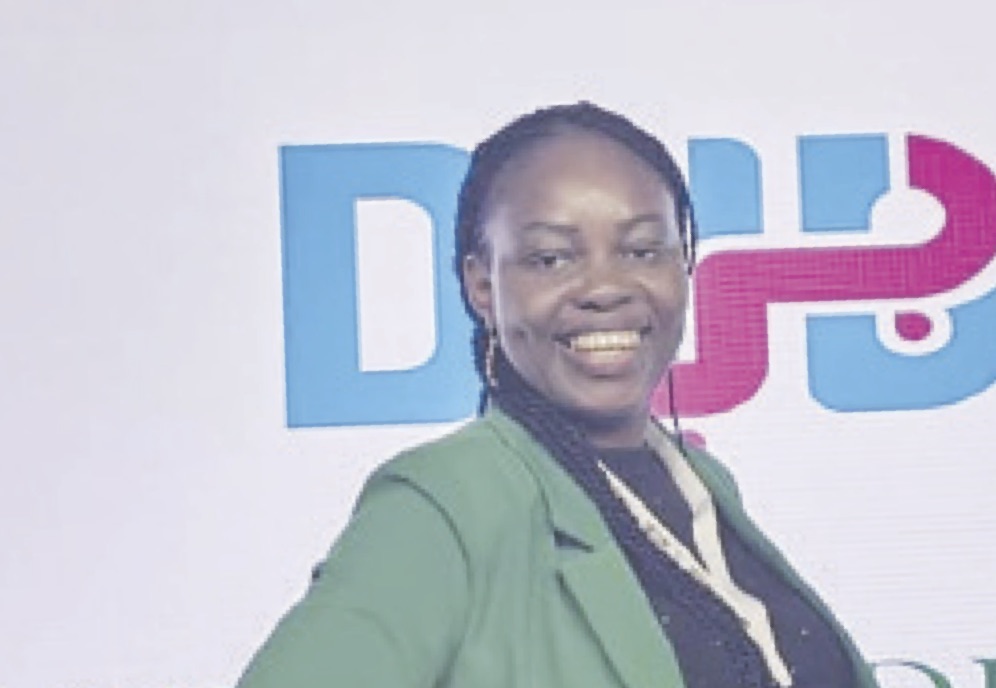
Ufuoma Akpomeyoma is a distinguished figure in the world of geosciences, with an 18-year career in seismic interpretation and reservoir geophysics that spans Nigeria, the USA, and Oman. Her journey into this specialised field was sparked during her undergraduate internship and cemented by her passion for geophysics, a passion that has only deepened over nearly two decades of professional practice.
Growing up in a family-oriented environment, Ufuoma was inspired by close relatives and early experiences that shaped her character and career aspirations. Her work plays a crucial role in optimising oil and gas exploration and production in Nigeria, directly contributing to the nation’s economy by ensuring safe, efficient, and responsible extraction of hydrocarbon resources. Beyond technical expertise, she is a mentor and advocate for building local capacity, transferring global best practices to empower the next generation of geoscientists.
In this interview, Ufuoma shares insights into her projects, the challenges of balancing a demanding career with family life, and her vision for the future of seismic interpretation amid the evolving energy landscape. She also opens up about the personal passions that recharge her and her commitment to fostering sustainable, impactful work in the energy sector.
You have built an impressive 18-year career in seismic interpretation and reservoir geophysics across Nigeria, the USA, and Oman. What first inspired you to pursue this path, and what continues to fuel your passion for geosciences today?
During my undergraduate years, my internship and the research paper I wrote in my final year ignited a deep passion for seismic studies. Among the various aspects of my four-year geology programme, the geophysics component stood out as the most exciting and quickly became my favourite.
I vividly recall an application test after graduation where I was assigned core geology questions, while others who specialised solely in geophysics received seismic questions. I felt a strong desire to swap my questions for theirs, driven by a genuine fascination with seismic work.
This passion led me to pursue a master’s degree in Structural Geology with Geophysics, where I found great satisfaction in interpreting geological formations through seismic cross sections. My first industry role as a seismic interpreter laid the foundation for my career, and I have continued to build on that experience ever since.
Growing up, how would you describe your experiences among family, friends, and school colleagues? Were there any early influences or moments that shaped your character and career aspirations?
Growing up, I had cousins, uncles and aunties living with us because my dad believed strongly in family. He was truly a family-oriented person. In particular, I had a cousin who was in secondary school at that time. I admired how he carried himself, and eventually, he went on to university to study Architecture. I liked the drawings I saw from him. Later on, he switched from Architecture to Civil Engineering. His influence made me want to also become a civil engineer. He finished university and started working in construction, and also went offshore to work on a rotation basis. His company had grand end-of-year parties, and he would come back with big bowls of food and lots of goodies to share, and he was also doing well for himself. Seeing all that, I thought to myself, ‘If civil engineering comes with all this, I want to be a civil engineer.’ Those goodies fuelled my passion and was one of the key influences for the course of study for the career. My university application choices were Architecture and Civil Engineering. These courses were not available at my preferred school, but I ended up studying Geology. It was a new journey of experience for me, and thankfully, it has been good so far.
Your work has a direct impact on optimising oil and gas exploration and production. How does your expertise in seismic interpretation and geohazard assessment contribute to Nigeria’s economy, especially considering the current challenges facing the oil and gas sector?
What I do is very relevant to the economy, especially in times like these, particularly within the oil and gas sector. With the global push for cleaner energy, fluctuating oil prices, declining margins, and shifting government regulations, my work plays a crucial role in ensuring that Nigeria extracts maximum value from its subsurface resources. We do this safely, efficiently, and responsibly, so that in the end, it benefits Nigeria, the people involved at the workplace, and the environment.
To explain further, my work supports the Nigerian economy by optimising hydrocarbon discovery and recovery. Discovering these resources is one thing, but producing them efficiently is another. Ultimately, it’s not just what you discover, but it’s the production that drives economic growth. My role involves identifying where these hydrocarbon resources are located, producing these resources safely, and optimising production. I analyze key subsurface factors that could be showstoppers; these are factors that might prevent effective production or be a hindrance to reaching our optimal output safely.
In addition to this, I work on Geohazards Assessment, which involves identifying in the subsurface anything that can cause harm to people, infrastructure, and the environment. It’s not just about identifying Geohazards, but ensuring that operations are carried out safely. When we recover hydrocarbons that benefit the economy, we must do so responsibly without causing harm to the environment, infrastructure, or people. Safety is paramount for us and we want to avoid operating in ways that harm the environment or local livelihoods, as no community would accept that.
Another way my job contributes to the Nigerian economy is through building local capacity via technology transfer. Over the past 18 years, I have been trained as an expert in seismic interpretation, reservoir geophysics, and geohazards assessment. This expertise is a valuable asset to the country because it brings global best practices to Nigeria. It also helps develop younger professionals, ensuring that we continue to improve and manage our resources effectively for the benefit of our people.
Can you share a standout project or achievement from your career that you feel has significantly advanced field development or well planning? How did this project help improve safety or efficiency?
It was a project in the western part of the Niger Delta, where the field was being developed and appraised for drilling new wells. The available data was good, but not the best in class. While the best-in-class data was still being acquired, the project team had already advanced significantly in the field development plans, with major equipment and infrastructure being brought to the site.
I was given the recently acquired data to interpret and provide assurance that the planned infrastructure and current development were safe. However, there was a showstopper: the new data suggested an opportunity to optimise the infrastructure and wells.
Since things were already set, my findings threatened to disrupt many schedules, but I spoke up and shared my results with the integrated team. The decisions made were tough, but we did the right thing to deliver the project successfully.
Balancing a demanding technical career with family life is no easy feat. How do you manage your professional responsibilities alongside your commitments, and what advice would you give to women aiming to thrive in the energy industry?
Balancing work and family can be challenging, but it’s achievable. I’m fortunate to have a strong support network that makes this possible. It begins with my husband, who truly understands my career, encourages my ambitions, and gives me the freedom to pursue my goals.
My parents have been another pillar of support; they have been there through major moments like the birth of my children, and are always ready to step in at a moment’s notice when I need them. Their presence has been invaluable.
My children have been incredibly understanding and supportive in their various ways, making it possible to go do my job and still be a mummy without being guilty.
Beyond having this support, I make a conscious effort to balance my professional and personal life. It’s not always an even split, but I prioritise time for both. I recognise the important seasons in my work, as well as the significant moments in the lives of my husband and children.
I don’t allow either side to suffer. I intentionally give my best to my family and then make up for it at work. When my family is well-supported and happy, it empowers me to focus fully on my career and achieve my goals.
Sometimes, conflicts arise between work and family demands. In those moments, I carefully decide which responsibility I can set aside temporarily without causing harm to the people involved.
For younger women professionals, it can be tough, but it’s doable. If you aspire to be a successful working woman, having a support system and setting clear priorities from the start is essential. Be intentional about what matters most.
Remember, children don’t stay young forever. Don’t sacrifice your time with them for unnecessarily long hours at a job; be intentional and know when to prioritise. Careers come and go, but your family is your lifelong foundation. It’s the love and effort you invest over the years that truly count.
Working internationally in diverse geological and cultural environments must come with unique challenges. What are some of the biggest obstacles you’ve faced, and how have you adapted to overcome them?
Leaving my comfort zone to enter different environments, building new relationships, learning the workplace culture, and adapting to thrive in it has been a journey. One of the challenges is ensuring that not just I, but everyone in my family thrives, succeeds, and is happy.
To navigate this, I have focused on developing emotional and cultural intelligence, which helps us succeed both inside and outside of work. I have also cultivated a strong support network—a community that shares my values—where I feel safe to be vulnerable, share openly, and exchange ideas. Rather than isolating myself, I make a conscious effort to integrate with other nationals and especially with the local community, building meaningful connections. Giving back through mentoring and sharing knowledge has been an important part of my journey, allowing me to contribute and grow. Staying connected with home in Nigeria keeps me informed about what’s happening and enables me to contribute in ways that matter.
Beyond this, I intentionally create environments through relationships where my family can thrive, succeed, and be their best.
Mentoring young professionals is a key part of your role. What motivates you to invest in developing future geoscientists, and how do you see this shaping the future of the industry?
My key motivation in mentoring is to help younger professionals get it right from the very start. This doesn’t replace the learning process, nor do I spoon-feed them, but the aim is to help them avoid unnecessary mistakes that could be costly. This guidance helps them position themselves properly for success within the organisation.
If I have travelled a particular road many times and know all the hurdles, it wouldn’t be right to let a younger person face obstacles that don’t add value. I want to ensure that anyone I mentor is set up and positioned for success, not failure. This mindset also benefits the energy sector by equipping younger professionals with the right skills to build on the significant work their predecessors have done. If younger people aren’t properly trained, it reflects a failure on the part of those who came before, and there is no continuity in the positive progress made.
The oil and gas industry is rapidly evolving with new technologies and sustainability pressures. How do you see the role of seismic interpretation and reservoir geophysics changing in the next decade? Are there any innovations you’re particularly excited about?
Seismic interpretation, reservoir geophysics, and geophysics in general are evolving from their traditional role of imaging the subsurface and identifying optimal hydrocarbon resource locations to becoming central tools for sustainable subsurface management. There is a growing emphasis on data integration, which is crucial for effective risk management, not only for hydrocarbon resource development but also for broader clean energy systems.
Carbon capture and storage (CCS), hydrogen storage, and underground energy storage are at the forefront of the energy transition. Geophysics plays a key role by integrating with other disciplines to ensure optimal monitoring of CO₂ injection and migration within subsurface reservoirs. Understanding critical reservoir properties and seal integrity is essential to enable safe and effective hydrogen storage in underground systems.
Another exciting advancement is high resolution Full Waveform Inversion (FWI) imaging. This technique is highly valued by seismic interpreters and reservoir geophysicists because it produces subsurface images that approach the detail of well logs. FWI is particularly useful for resolving complex geology and detecting subtle variations in unconventional plays.
It is also fascinating to witness innovations in artificial intelligence and machine learning being applied to interpret seismic horizons, faults, and other subsurface features rapidly. These technologies help ensure faster and more accurate project delivery.
When you’re not working on complex seismic data and well planning, how do you like to relax and recharge? Do you have any favourite hobbies or activities?
I enjoy meeting up with friends and family, whether virtually or in person. I also love listening to the inspirational stories of men and women who are thriving in their various fields of endeavour. After all, the secret of people often lies in their stories. Additionally, I enjoy watching movies and taking long walks while listening to music or podcasts.
Everyone has their comfort food and dream holiday destination. What’s your favourite cuisine, and where do you love to go when you want to unwind and escape?
My comfort food is Nigerian cuisine. I especially enjoy okra, stew, plenty of fish and meat, as well as pap and pudding. These dishes bring me joy, whether I’m feeling stressed or not.
I also love places with clean beaches, no matter where they are in the world. Having a house or hotel room overlooking the beach is incredibly relaxing for me and has a wonderful calming effect.
Looking ahead, what are your personal and professional goals for the coming years, and how do you plan to continue making an impact in the geosciences and energy sectors?
I continuously strive to grow and evolve into a better version of myself, both professionally and personally. I am passionate about mentoring younger professionals, especially women aiming to work internationally while building intentional families. I am eager to share my insights and show that we can achieve our fullest potential and beyond.
In my professional journey, I am committed to advancing the clean energy movement by sharpening my skills and consistently contributing my part. My goal is to lead impactful energy projects that prioritise excellence without compromising the well-being of people or the environment. I welcome collaboration with fellow professionals to deliver energy initiatives that will elevate Nigeria’s standing on the global stage.