Follow Us on Google
By Christy Anyanwu
She is fondly called Ezi-Ada, a title given to her by her Amako in Orsu LGA, Imo State, community in 2014, based on her contributions to the community.
Her marriage to a Yoruba spouse did not separate her from her roots.
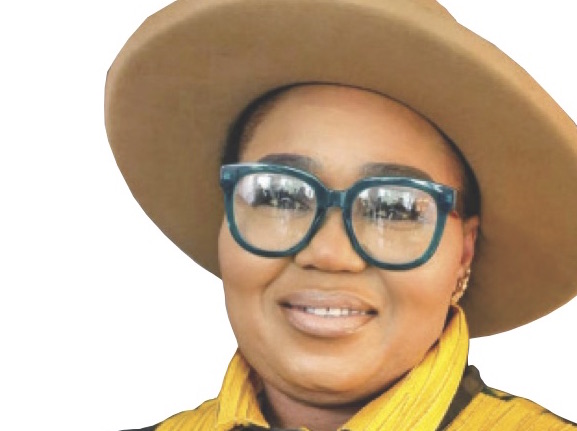
 Folashade Balogun, the CEO of House of SOTA and founder, Black History & Lifestyle Awards, is a down-to-heart personality.
The amiable woman, who is also into oil and gas business, spoke with Sunday Sun about her passion for fashion, her experience as a female in oil and gas business and her recent collaboration as the founder of Black History & Lifestyle Awards with Africa Fashion Week, London.
Tell us your journey into fashion?
I have always been a fashionista. And I have always been creative, but all along I have been quiet. All along, I know I have passion for fashion. So in 2015, my four kids were all in the university. The first thing I asked myself was, what really takes money away from you, and that question was Fashion. You give tailors good money to make you beautiful outfits. Then, would cut off that from my budget. I said that I would be wearing only Ankara. The oleku and IRO style. The first thing I did was to get a local machine. I started from my house. I made my own clothes and whenever I go to church or my friends see what I’m wearing they loved it and the rest is history.

What are the challenges you met initially?
The only challenge was the tailors; to get a very good tailor has always been a problem. When you even get one, they don’t stay. That is the most challenging time in this job.
What inspires your designs?
Sometimes my dream, I dream a lot, there was a time I saw a design, then I woke up, I don’t know how to sketch it, but I can elaborate and they can build it up. Also my mood inspires my designs.
Did you start Black History and Lifestyle Awards before establishing House of Sota?
No, it started two years ago. As a matter of fact we have a store in America, Florida precisely and the store is in a big mall that has all these big designers, it is called Tanga outlet mall. Three years ago precisely, around February, they sent email to say its black history month in February, it just clicked in my head, and that there’s going to be a lot of black people in the store coming to shop. But that day, there was no activity to mark the black history month. Why are we not celebrating? I said to myself if nobody is celebrating us , we have to celebrate ourselves; that’s how I registered it…that every February we have to start celebrating ourselves, our culture, our heritage, black achievements, that’s how we started black history and lifestyle awards. This year, we also started Africa Cultural Centre in Los Angeles (ACCL).
Tell us about your collaboration with Africa Fashion Week London in its October fashion event?
The collaboration is between Africa Fashion Week London and Black Lifestyle History Awards. AFWL has been in existence for the past 12 years and this is their 13th year that they will be having a huge event in London. Black History and Lifestyle Awards, this time around the two brands are collaborating to have events in London. October is black history month in London so we are trying to change the narrative of black slavery by us showcasing our heritage, our culture and let people know that black-owned business has come to stay. At the show, we would be having celebrities walking on the runway, rocking designs from different fashion brands. We would also be giving out awards and lots of entertainment.
What was the very first experience like when you held your first event in the US?
It was lots of questions. People were saying, you are black and why are you doing this, what do you mean by black history month and so many other questions. But because I have a dream and vision, I said to myself, along the line they would see what I’m trying to do. So, here we are.
Is there any of your children that took up your love for fashion?
Yes, as a matter of fact my second child, TJ. He started before I even ventured into fashion. He started when he was in the university. It’s not the same brand, he is working with his friend, but he is very much into House of Sota.
What’s happening to your oil and gas business, is it still on?
No, that wasn’t my passion that was like a business.
Was it easy for a woman to be into oil and gas?
I would tell you categorically that Nigeria is a man’s world, it is sad, but it is, we just have to tell ourselves the truth as of today it’s the man’s world. No business is going to be easy when it comes to women being in that field, so when it comes to oil and gas, it wasn’t easy at all. You have the men challenging you in a lot of things even when you want to deliver diesel to them and they would be like this is going to be this price and that. A lot of challenge, even in the fashion a lot of challenges, when you think you have gotten it or you see another person with his/her idea you would say let me buckle up.
Would you say they bullied you a lot while you’re in oil and gas sector?
I would say yes, because I had this nasty experience with one of the GM of a big notable company. I supplied diesel, I remembered I was pregnant and I went to get my cheque and the man said the cheque wasn’t ready and I asked him how long would it be ready, I told you it is cash I’m having and you said come back the next day and the man wasn’t nice to me, he told the security to walk me out despite the fact that I was heavy, but I refused to leave the place and I told him I would only leave this place if I have my diesel back; you can’t take my product for over two days without paying me.
So, did they give you your diesel back or your money?
After everything I waited for one week before being paid.
What is your kind of style?
I wear jeans, leggings, but I make sure I rock House of Sota all the time because that’s a way of selling the brand. We do casual and ready to wear a lot, it is not a fashion brand that can have like boubou all the time, if you see our skirt or the pant you can call it Gen Z. I don’t dress my age, I call myself Sweet 16.
How would you describe the fashion sector in Nigeria?
Fashion Sector in Nigeria has grown as a matter of fact we are doing very well, we are doing better than other Africa countries. I kid you not; I can say that 10 years ago is not what the fashion industry was then, now we are a lot better. As a matter of fact globally, we are being recognized. Early this year I met a Nigerian lady that ties gele for Beyoncé, I even have her card, in LA (Los Angeles), so you can say Nigeria fashion has grown, everybody wants to wear what we are wearing. I have been stopped several times and they asked where can I get this? (My outfit). The off takers of our fashion brand is good especially the senators. In my store in America, I see a lot of men as a matter of fact they gave it their own name. They called it African suit. We do up to three export you know, they are big men they don’t have their sizes, they only rock jeans and t-shirt.
What advice do you have for young people who want to come into fashion?
They have to be creative, most especially perseverance. You know now the youths are so much in a hurry. And in fashion you can’t be in a hurry, you have to take it one step at a time. You have to be patient; you know it is a journey.
And you have to dream of what you want your design to be, what you want to be known for and the most important thing you have to be original in your craft.
Was there any point in the early days you felt like quitting?
Maybe it’s my passion; I have never, even when I wasn’t making money. I have never thought of it. That’s why I would always tell the youths, you must have a passion for it, because if you have a passion for something you would be addicted to that thing and that is it.