Follow Us on Google
From Abel Leonard, Lafia
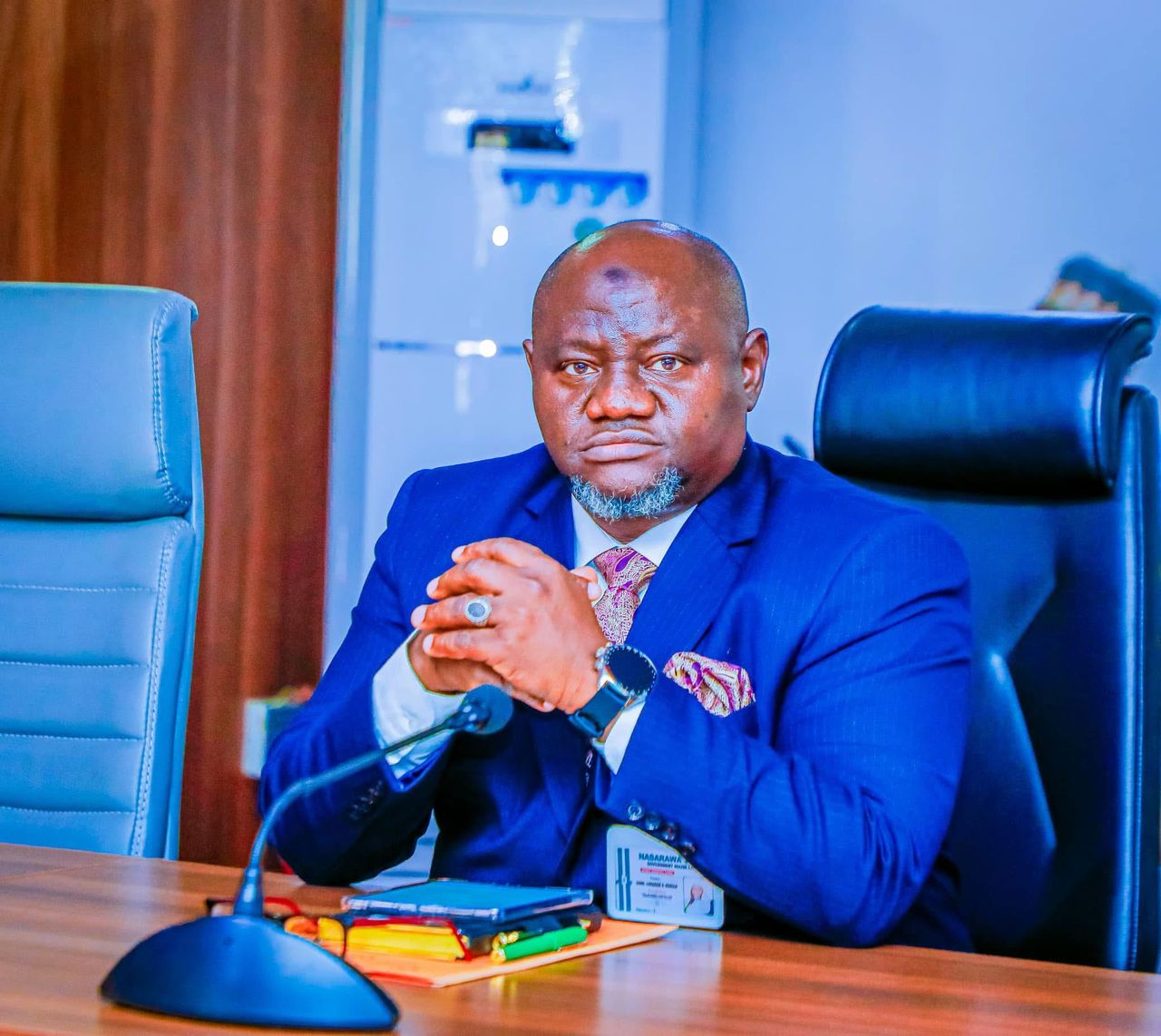
In this exclusive interview with the Secretary to the Nasarawa State Government (SSG), Dr Labaran Magaji, SAN, opens up on his withdrawal from the Nasarawa West senatorial race, his decision to back Dr Faisal Shuaibu, and his loyalty to Governor Abdullahi Sule’s administration.
He speaks on party unity, governance reforms in the SSG’s office, and the unfolding political dynamics ahead of the 2027 general elections in Nasarawa State.
Q: What really informed your decision to step down from the Nasarawa West Senate Race?
A: Governor Abdullahi Sule never gave me a directive. It will be recalled that after expressing my interest to recontest for the Senate, which I lost to Arch Shehu Tukur in 2023, Dr Faisal and his gubernatorial campaign team visited His Excellency in his office and informed him of his decision to withdraw from gubernatorial aspirations and would seek His Excellency’s support to run for the Senate seat for Nasarawa West.
In his response, His Excellency told them that he would need time to plead with some of us who had earlier indicated interest. When I heard the outcome of the meeting and the steps to be taken by my principal, I said to myself, God forbid the day Engr Abdullahi Sule will beg me for what I am capable of doing to make him happy, and I decided to withdraw my aspirations without letting him talk to me.
Moreover, as he is going for election and his deputy is also going for election, courtesy demands that, in the interest of the state, I should remain behind and support His Excellency in delivering the mandates of the people of Nasarawa State. The decision was taken in the broader interest of stability and continuity, and I believe that collective interest must always come before personal ambition in politics.
Q: Some people described your withdrawal as a rare act of loyalty and discipline in Nigerian politics. How do you view it personally?
A: I see it not as a sacrifice, but as a responsibility. Politics should not only be about contesting positions; it should also be about strengthening institutions, respecting agreements, and preserving unity. If my action is seen as loyalty and discipline, then I am grateful because those values are essential for sustainable political growth.
Q: Was it a difficult political sacrifice for you, considering your growing support base across Nasarawa West?
A: Naturally, every political aspiration comes with strong support and expectations from followers, so it was not an easy decision emotionally.
However, leadership requires maturity and sacrifice. As for Dr Faisal Shuaibu, I believe he is a competent technocrat with strong administrative experience, national exposure, and the capacity to represent Nasarawa West effectively.
Those qualities made it easier for me to support his ambition.
Q: How would you describe your relationship with Governor Abdullahi Sule over the years?
A: My relationship with Governor Abdullahi Sule has been built on mutual respect, trust, and shared commitment to the development of Nasarawa State. Over the years, I have come to appreciate his visionary leadership, his focus on infrastructure and economic growth, and his openness to constructive engagement.
Q: Many observers say the Office of the Secretary to the State Government became more coordinated and effective under your leadership. What reforms or changes are you most proud of?
A: One of the things I am most proud of is improving coordination among ministries, departments, and agencies to ensure smoother implementation of government policies. We strengthened communication channels within government and emphasised accountability, efficiency, and prompt decision-making in governance processes.
Q: What would you describe as the biggest achievements of the Sule administration so far?
A: The Sule administration has recorded significant achievements in infrastructure development spread across the three senatorial zones, industrialisation, education, healthcare, and security. The administration’s efforts in attracting investments and improving the business environment have also positioned Nasarawa as an emerging economic hub in the North Central region.
Q: What has been the most challenging aspect of your office as SSG?
A: The biggest challenge of the office is balancing the enormous expectations from different sectors while ensuring effective coordination of government activities. Governance requires constant engagement, consensus-building, and timely responses to emerging issues, which can be very demanding.
Q: With political activities gradually building ahead of 2027, do you believe the APC in Nasarawa remains united and focused?
A: Yes, I believe the APC in Nasarawa remains united and focused. Like every political party, there may be differing opinions at times, but the leadership has continued to prioritise dialogue, reconciliation, and unity. I am confident that the party will remain strong ahead of 2027.
Q: Do you think loyalty is disappearing from Nigerian politics today?
A: Loyalty appears to be diminishing in some areas of Nigerian politics because politics is increasingly driven by personal interests. However, I still believe there are many leaders who value integrity, consistency, and party loyalty. Without loyalty and discipline, it becomes difficult to build stable political institutions.
Q: In your opinion, what qualities should Nasarawa people look for in the next generation of leaders?
A: The people of Nasarawa should look for leaders with integrity, competence, humility, vision, and commitment to public service. Leadership should not be about rhetoric alone; it should be about capacity, character, and the ability to unite people for development.
Q: Do you think personal ambition sometimes overshadows collective interest in politics today?
A: Unfortunately, personal ambition sometimes overshadows collective interest in politics today. However, strong political systems can only survive when party supremacy, internal democracy, and collective goals are respected. Individual ambition must always align with the broader interests of the people and the party.
Q: Do you believe Nasarawa is producing more technocrats and professionals for leadership?
A: Yes, I believe Nasarawa is gradually moving in that direction. There is growing recognition of the importance of competence, innovation, and professionalism in leadership. Young technocrats and professionals bring fresh ideas and energy, and they should be encouraged to participate actively in governance.
Q: Looking back at your journey in public service, what moments have defined you the most?
A: Several moments have defined my journey in public service, especially opportunities where I had to make difficult decisions in the interest of peace, unity, and development. Serving the people of Nasarawa in different capacities has strengthened my belief that leadership is fundamentally about service and sacrifice.
Q: What advice would you give to young politicians aspiring for leadership?
A: My advice to young politicians is to remain patient, focused, and principled. They should avoid shortcuts, respect institutions, build relationships based on trust, and understand that integrity and loyalty are long-term investments in leadership. Public service should always be driven by values, not desperation for power.
Q: Beyond politics, what legacy would you like to be remembered for?
A: Beyond politics, I would like to be remembered as someone who contributed to strengthening governance, promoting justice, supporting unity, and mentoring the next generation of leaders.
Legacy is not just about positions held but about the positive impact one leaves behind in society.
Q: What is your message to the people of Nasarawa State as 2027 approaches?
A: My message to the people of Nasarawa State is to remain peaceful, united, and hopeful as political activities towards 2027 continue to evolve. Democracy thrives when citizens participate responsibly, and leaders place the interests of the people above personal ambitions. Together, we can continue to build a stronger, more prosperous, and more united Nasarawa State.