Follow Us on Google
By Uche Usim and Chinelo Obogo
Every year, Nigerians battle disturbing food scarcity during the planting season. But this year’s suffering appears to be the worst in decades.
The triple blight of naira crash, high energy cost and plummeting crude oil production sent the economy stalling at a frightening speed. The ensuing inflation reduced most citizens’ wages to near zero.

For low-income earners who constitute over 70 per cent of the population, surviving in Nigeria is now tougher than living in war-torn climes as food prices reach stratospheric heights with no hope of an imminent fall.
Social scientists list the immediate and remote causes to include tumbling economy, smuggling, terrorism, farmers-herders’ clashes, climate change, subsistence farming, inflation, poor infrastructure and more.
Inflation numbers from the National Bureau of Statistics (NBS) released recently, show that food inflation in May 2024 surged to 40.66% on a year-on-year basis, a stark rise from the 24.82% recorded in May 2023, and slightly higher than the 40.53% recorded in April 2024. The sharp increase in food prices is attributed to various factors affecting different food categories.

On the flipside, crimes and suicides are reportedly on the rise as citizens snap after exceeding their elastic limits, accentuated by widespread starvation and desperation.
The numbers of families rummaging through dumpsters to eke a living are alarming. Vulnerable families are on the throes of annihilation.
In states like Imo, Niger, Ogun and the FCT, there have been reported cases of delivery trucks carrying foodstuff or cattle savagely attacked and looted by hungry and angry youths patrolling various markets and streets. The drivers fled to avoid collateral damage.
In some other instances, security operatives have severally foiled attempted invasion of food warehouses by young, jobless and distressed citizens struggling to survive.
To avoid becoming victims of such spontaneous attacks, many truck drivers are now forced to offload goods at night when most people are asleep.
The organised private sector (OPS) has described the terrifying development as a prelude to anarchy, as hunger turns hitherto sane persons to beasts.
However, to contain the humanitarian crisis, the United Nations World Food Programme (WFP) is collaborating with the Nigerian government and other countries in West and Central Africa to launch this year’s food assistance initiative for the lean season from June to August. Lean season is mainly the planting window when there is shortage of food and the WFP is working with hard-hit countries to close the gap.
WFP said it aims to reach 7.5 million people in the region, despite the near-record number of people needing food assistance.
However, this target falls short of addressing the severe food security issues projected for the region. The WFP estimates that 55 million people will face severe hunger during the lean season in West and Central Africa, leaving approximately 87% of food-insecure individuals without support due to funding constraints.
According to experts, food scarcity in Nigeria is a complex and multi-faceted issue influenced by a combination of environmental, cultural, economic and social factors. Here’s a breakdown of the key challenges contributing to food scarcity in the country:
Smuggling
Aside from inflation and naira float, smuggling has played the spoiler and worsened the raging food crisis.
Many agrarian communities, especially those up north, have found it commercially rewarding to sell their farm produce to French-speaking West African neighbours since the CFA franc is now stronger than the naira.
Recently, Daily Sun exchanged N5,000 for 2,000 CFA franc at the Seme-Krake border, explaining why food producers will defy all odds to smuggle their goods to places where they will get the best value for them.
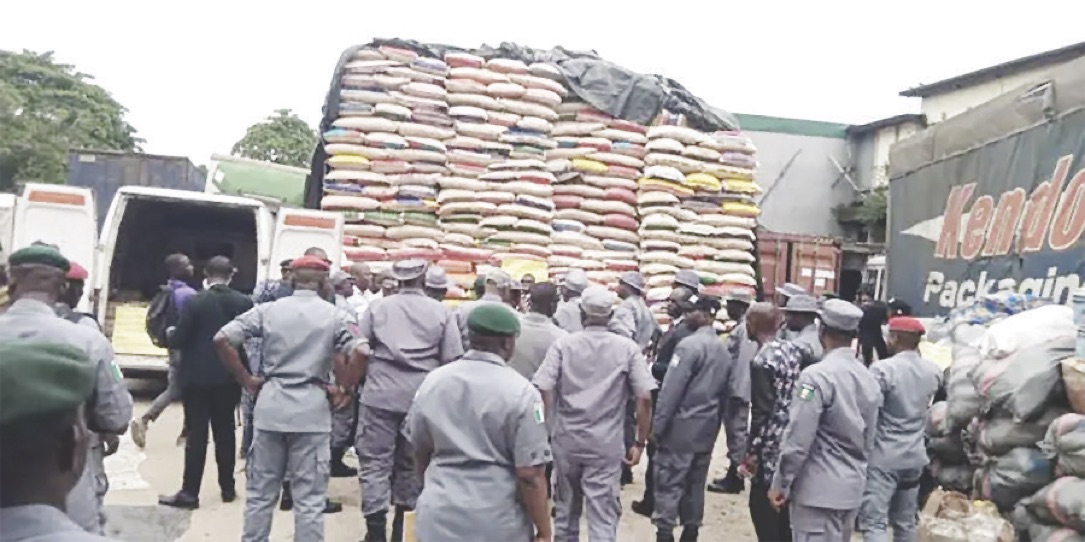
However, the Nigeria Customs Service has promised to smash all smuggling networks. The Comptroller General, Wale Adeniyi, at a recent media briefing to mark his one yzear in office, vowed to eliminate food hoarding across the country.
In March, President Bola Tinubu directed Customs to return food items that were confiscated at border communities to owners on the condition that they would be sold in the Nigerian markets to boost food sufficiency. However, the recalcitrant traders called the president’s bluff and are devising more ingenious ways to smuggle their wares.
But Adeniyi has vowed to square up to them and ultimately cripple their nefarious businesses. He noted that Customs has recorded 1,744 cases of rice and grain seizures valued at N4.4 billion as part of the efforts to run food hoarders out of business.
“These concerted efforts underscore the NCS’ commitment to protecting society and ensuring national security,” he added.
To address national security concerns, Adeniyi noted that the NCS has strengthened and reinforced the Federal Operating Units to pursue, intercept, arrest and dismantle smuggling networks.
There is also the issue of food hoarding by greedy middlemen and traders who off-take from farmers in rural areas and hoard them to create artificial scarcity such that urbanites pay through their noses to get the food items.
Cries have reached a crescendo for security operatives to arrest such saboteurs and visit them with the full weight of the law.
Climate change
Unpredictable weather patterns, changes in rainfall and extreme weather events such as floods and droughts are disrupting farming cycles in Nigeria.
Dr. Akinwumi Adesina, President African Development Bank (AfDB), recently called for pragmatic strategies to mitigate the scathing impact of climate change on Africa.
He expressed worries that despite contributing only 3% of global emissions, Africa faces significant financial losses ranging from $7 billion to $15 billion annually due to climate change. These losses, he highlighted, severely affect agriculture and economies across the continent.
In response to these challenges, he said the AfDB has launched several ambitious initiatives to build resilience and promote climate adaptation.
He said the regional lender has committed to doubling its climate finance to $25 billion by 2030, particularly through the African Adaptation Acceleration Programme, which aims to deploy the same amount for climate adaptation projects, marking it the largest global effort of its kind.
Additionally, the AfDB has established a climate action window with an initial investment of $9 million, expected to increase to $13 billion, to support vulnerable countries with services like crop insurance, land restoration and climate information.
Another challenge is desertification, particularly in the northern region. Desertification has reduced arable land, affecting agricultural productivity.
Terrorism
Turf wars, tribal conflicts and Boko Haram insurgency, epitomised by violence in north eastern Nigeria, have displaced farmers and disrupted food production. The Southern part of the country is not also insulated from conflicts.
As of March, over 130 farmers were killed in four Benue local government areas and 28 in Sokoto within this year. Benue farmers, in the first quarter, said they lost N1.1 billion to attacks, just as Sokoto growers paid N3 billion ransom and kidnapped Delta farmers pooled N5 million to regain freedom.
Other News
Plateau, Taraba and other states under sustained bandit attacks
Aside from the loss of lives and farmlands, a lot of commercial food growers are languishing in overcrowded internally displaced persons’ camps as bandits take over their ancestral lands, planting bombs where crops ought to be grown.
A recent report by SB Morgan Intelligence unveiled a stark reality; farmers in northern Nigeria are compelled to pay up to N100,000 just to access their farmlands during planting or harvesting seasons.
Without these payments, they face severe consequences, including the loss of their harvest, abduction, or even death. This unsettling revelation reflects the broader security crisis in northern Nigeria, where non-state actors exert significant control in the absence of effective state security.
Closely related is the longstanding farmer-herder conflicts. Clashes between farmers and nomadic herders over land use and resources have claimed thousands of lives in Nigeria. Aside from that, many have been displaced and forced to abandon farming, thus reducing agricultural output.
Poverty
Also listed is poverty. High levels of poverty limit farmers’ ability to invest in modern farming techniques and inputs such as fertilisers, seeds and irrigation.
The next stop is rising food prices which make it difficult for many Nigerians to afford basic food items, exacerbating food insecurity.
Decrepit infrastructure
Another challenge is infrastructure deficiencies. Poor transportation networks are worsened by inadequate roads and transport infrastructure. This hinders the efficient movement of food from rural areas to urban markets.
Lack of storage facilities
Insufficient storage facilities have led to significant post-harvest losses. The United States Consul General in Lagos, Will Stevens, in May, said that Nigeria loses about $9 billion yearly to post-harvest waste due to inadequate cold storage, agro-processing and transportation infrastructure.
He made the disclosure virtually during the commissioning of a solar-powered cold storage facility in Enugu, commending Manamuz Electric, a company run by a Mandela Washington Fellow, Uzo Mbamalu, for successful execution of the project.
More so, the United States Agency for International Development (USAID) has stated that about 50 per cent of fresh agricultural produce in Nigeria is lost at the post-harvest stage.
The Mission Director, USAID, Melissa Jones, stated this at the “1st Post-harvest Connect Conference and Exhibition,” held in April in Abuja. According to her, such losses are partly responsible for the rising food inflation in the country which reached 40.66% in May this year.
Also speaking at the event, Prof. Garba Sharubutu, Executive Secretary, Agricultural Research Council of Nigeria (ARCN), said the focus has been predominantly on food production while post-harvest activities have been overlooked.
He emphasised that the conference marks the start of an initiative to raise awareness and galvanise efforts among the public, government and farmers on the importance of post-harvest activities.
Policy summersault/corruption
Another major challenge is government’s policies and institutional issues. Analysts note that inconsistent and poorly implemented agricultural policies fail to address the root causes of food insecurity.
Corruption, the rampaging monster is also listed. Over the years, mismanagement and corruption in government agencies involved in agriculture reduce the effectiveness of programmes designed to support farmers.
Rapid population increase
While a recent census has not been carried out in Nigeria, records show the country boats of 185 million citizens as at 2022. Nonetheless, rapid population increase puts additional pressure on food supply as agricultural production struggles to keep pace with the growing demand.
Experts canvass for the junking of traditional farming methods because it means reliance on outdated farming techniques which results in lower yields compared to modern, technology-driven agricultural practices. Unclear land ownership and tenure systems also discourage investment in land improvements and sustainable farming practices.
Solutions
While diagnosing the problem of food shortage in Nigeria, the President, Small Scale Women Farmers Association in Nigeria (SWOFON), Fatima Bello, said the removal of fuel subsidy contributed to the hardship.
Bello explained that the inability of most farmers who are into irrigation farming, especially during the dry season, to afford fuel at the current official price of N617 per litre, caused some of them to either reduce the cost of production or abandon their farmlands.
She said: “We use a pumping machine and the pumping machines are not solar inclined. Most people that are into irrigation farming have reduced the sizes of their farmlands or stopped completely because they can no longer afford it. And that will affect the family of smallholder farmers.
“From the family, it has moved to the community because you are producing for your family. The little that they get they will keep it for the household.
“Another problem is the exchange rate of naira to the dollar and the value of the naira is going down. We, as citizens, are also contributing to the problem because fuel subsidies have long been removed and we are taking advantage of the situation to inflate hardship.”
As a way out, she suggested that “the fuel subsidy should be revised so the cost of transportation will automatically reduce.
“Farmers need fertilizers, seedlings and so on. They need cash to return to the farm. The smallholder farmers are responsible for 70 per cent of the workforce and over 80 per cent of these people are in the rural areas.”
Furthermore, FCT Coordinator of SWOFON, Comfort Sunday, complained about the unavailability of farmlands in the FCT as a major headache. She also listed the distribution of poisonous fertilizers and lack of proper and constant training on modern practices as another hurdle stacked on the path of food production.
Sunday advised the authorities to dig boreholes and construct reservoirs around farm locations, to enable farmers to cultivate all year round. Most importantly, she encouraged the government to implement the Maputo Declaration which recommended that African countries should commit 10 per cent of their national budget into agriculture.
“We want the government to train farmers on climate change. Climate change is affecting us seriously. This year, if we plant, the birds, because of lack of rain, remove our seeds and grains.
“Some farmers are forced to plant at least three times on the same portion of land. Most of the farmers do not even follow up again because they do not have money to source for grains and seedlings to replant.
“Also, we need the government to dig more boreholes or construct reservoirs around farm locations, to enable us to embark on dry season farming. We need pumping sprayers to fast-track spraying of water.
“In addition, we need land. The FCT administration should allocate farmlands to registered farmers. If you check, developers have occupied everywhere. The expansion of the airport has consumed our lands. We have children to feed.
“The government needs to know the right fertilizer to distribute to farmers, so that we will not be eating poison in the name of increasing yield. Not all fertilizers are good. The Maputo Declaration should be implemented,” she said.
In her intervention, the FCT Chairperson of the All Farmers Association of Nigeria (AFAN), Nkechi Okafor, corroborated Sunday’s concerns regarding the scathing price of input farmers need to produce food. She said it would be difficult for the government to control the prices of foodstuffs without subsidising farm input like fertilisers and pesticides.
She said: “We are not ignorant of the cost of inputs. You know that the cost of inputs translates to the cost of food items. When farmers buy input at a very high cost even you as government cannot control the prices of how much they will sell.
“So, if you cannot subsidise input for farmers, they have the right to buy at any cost and sell at any price that they want.
“Insecurity is also there. I did not want to go there first because it is a very challenging problem. Farmers do not really go to their farms. You know that majority of the food we consume in the cities are produced in the villages.
“Most of the rural areas are not habitable because of insecurity. So, if farmers take control of the food we eat, you cannot control the price.
“Everybody is seeing the scary news on a daily basis on insecurity and how farmers are being killed, women raped, farmlands destroyed and kidnapping for ransom.
“Which farmer has N1 million to pay for ransom? So, when you think about how much you are to pay if you are captured, you will decide to stay off the farm and the food cannot get to the city.
“We are being fed by farmers in rural areas and these places are danger zones because of insecurity. Aside from that, there are some diseases destroying tomatoes and peppers.
“And when you have this kind of problem, the cost of foodstuffs will automatically be high.
“Farmers are scared of insurance. Because if at the end of the year there is no flooding, or outbreak of diseases, the money for insurance is going to waste. Also, if there is no compensation they will be discouraged to produce more.”
More solutions being proffered include massive import of foods and other vital goods while the federal government deals with growing insecurity and other challenges discouraging local food production.
Enhancing transportation networks and building more storage facilities to reduce post-harvest losses is also advised. Others are: implementing strategies to resolve conflicts between farmers and herders and ensuring security in conflict-prone areas, developing and implementing policies to help farmers adapt to climate change, such as drought-resistant crops and efficient water use practices; addressing underlying economic issues such as poverty and inflation, to improve food affordability.