Follow Us on Google
By Ngozi Nwoke
In the bustling city of Lagos, a group of enterprising scavengers are turning waste into a source of living – picking one discarded item at a time, showcasing their resourcefulness and entrepreneurial spirit.


Beyond the dumpsites and trash-filled streets, they defy the stereotypes that scavengers are dirty and hopeless individuals, proving the reality of survival in a crude city like Lagos.
Musa is a scavenger who has been picking metal scrap, old wine bottles and plastics, and has been repurposing them for over seven years around Oshodi.
He and his team scour the city’s streets, markets, and dumpsites, searching for material that can be sold to merchants who in turn, transform them into something valuable.
“We collect plastic bottles, metal, cans, and sell them to recycling companies and individuals who pay us depending on the value of the scrap and how much we agree,” Musa explained. “We also repurpose items like old pallets, turning them into furniture and other useful products for sale.”
His innovative approach has not only provided him with a steady income but has also contributed to the city’s cleanliness.
“We’re not just scavengers; we are income earners,” said Sola, a member of Musa’s team. “We’re proud of what we do, and we’re making a difference in the society.”
Eka’s hands moved swiftly as she sorted through the pile of discarded plastic bottles in front of her.
At 43, life had dealt her a tough hand. Her husband’s passing had left her to care for their three children alone, and with no steady income, she turned to scavenging to make ends meet.
She attends parties, weddings, and gatherings of all kinds, not to socialise or enjoy herself, but to collect plastic bottles. The more bottles she collects, the more money she makes when she resells them.
She carefully counted and bundled the bottles, already calculating the profit she would make when she sold them.
“It’s not easy, but I’m doing what I must to survive with my children,” Eka said, her voice firm and resolute.
“I know exactly which parties will yield the most plastic bottles. The more bottles I collect, the more money I make.
“Reselling the bottles to companies is the next step. They pay me depending on the quantity I supply at 50 naira per bottle. People look down on scavengers like me, but I’m making money. That’s all that matters,” she affirmed.
Their stories reveal their hopes, dreams, and struggles beyond their work.
As Lagos continues to grapple with waste management challenges, the work of these scavengers remains valuable for a more sustainable future.
In a bid to tackle the growing problem of waste management in Lagos and to repurpose the waste for meaningful use, EcoCycle Systems, a recycling company in Lekki, Lagos, developed an innovative approach to transforming scraps into valuable products.
According to Ireti Adenuga, Human Resource Manager at the company who highlighted the company’s state-of-the-art plastic recycling plant, also noted that plastic scraps are processed into high-quality raw materials and supplied to manufacturing companies internationally and locally.
She said: “We utilise a combination of manual sorting, mechanical processing, and innovative recycling technologies to transform scraps into valuable items.
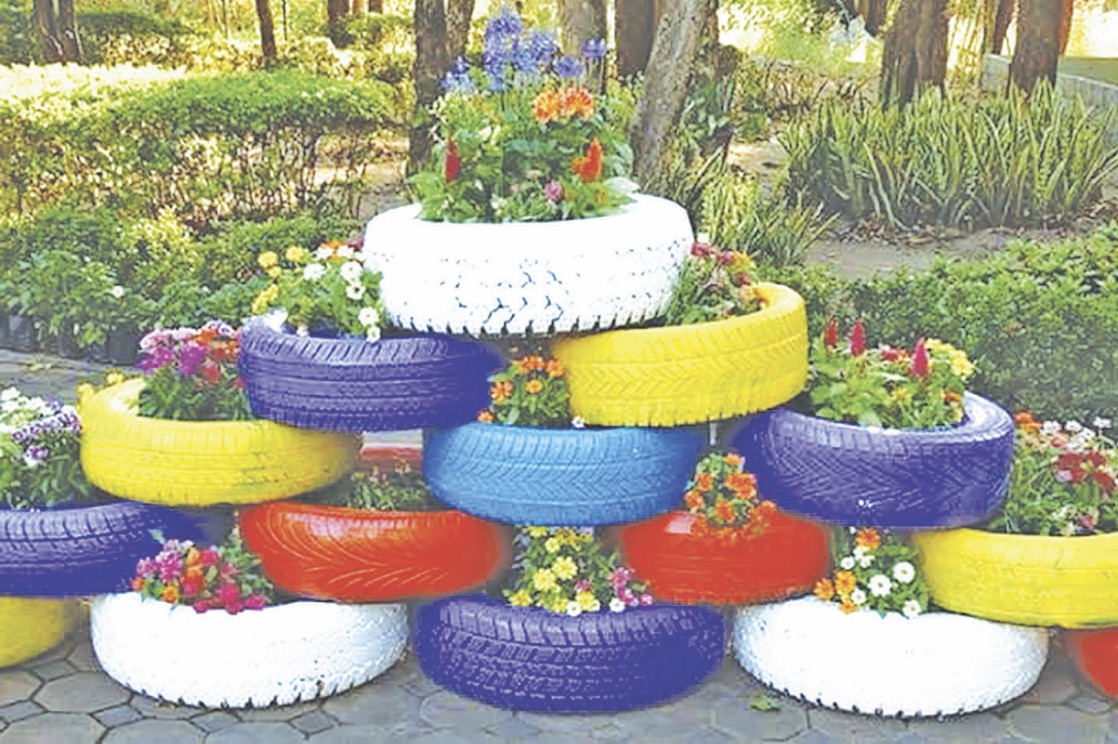
“We process plastic scraps and tyres into raw materials that can be used to manufacture new products such as plastic bags, containers, and even construction materials.”
The company’s metal recycling facility is another key aspect of its operations, where scrap metals are melted down to produce reusable ingots. Adenuga noted that the company also partners with local artisans who transform scrap materials into unique, handmade products.
“We partner with local artisans who transform scrap materials into unique, handmade products such as jewellery, furniture, and decorative items,” she said.
On how they source for scraps, Adenuga revealed that the company sources materials from local markets, industrial partners, and community collection drives.
“Our team of experts assesses the quality and potential value of the scraps, taking into account factors such as material type, quantity, and market demand,” she added.
One of the company’s most creative initiatives is transforming discarded plastic bottles into durable, waterproof roofing materials.
Adenuga said: “We have found that the potential value hidden in scraps is vast and often underestimated. Through these experiences, we’ve learned the importance of thinking outside the box and collaborating with experts from different fields to unlock new opportunities for scrap transformation.”
Explaining the company’s approach to scrap transformation, Adenuga emphasised the importance of creativity and innovation.
“By embracing creativity and innovation, we’ve been able to turn what was once considered waste into valuable products that benefit both our business and the environment,” she concluded.
The chief executive officer, Kaddosh Metal Ventures, N. E. Daniel, a leading player in the scrap recycling industry in Ogba, Lagos, revealed the lucrative nature of the business, transforming lives and generating significant profits,
He stated: “The scrap business is very lucrative. A lot of people are now aware of the recycling benefits in the scrap business, and they are making a lot of financial profit from it.”
Daniel disclosed that the company leverages online platforms, business clients, and referrals to source scraps, which are then dismantled and melted for recycling.
“We get our scraps through online platforms, business clients who work in companies, and referrals from old clients,” he said.
The company’s recycling process involves transforming scraps such as copper, aluminium, and iron into valuable materials.
“These materials are used for burglary proof protectors for buildings and are also exported to other countries after they have been made into useful materials,” Daniel explained.
He emphasised that all scraps have potential for useful purposes in different ways, and the company has learned valuable lessons on pricing its products to stay competitive in the industry.
“We make sure we are in line with the current price the market is selling so we don’t run at a loss,” he added.
Daniel’s assertion that “the treasure in scrap business has transformed lives” underscores the impact of the industry on individuals and communities.
In his reaction to mitigating the environmental hazards posed by improper disposal of hazardous waste, Ifeanyi Ochonogor, founder and chief executive officer of E-Terra Technologies, Yaba, shared innovative solutions for recycling compact fluorescent light bulbs, electronic cables, and batteries.
He stated: “We recycle compact fluorescent light bulbs and other fluorescent lamps, Neon/argon lamps, and high intensity discharge lamps which contain heavy metals that can seep into our soil or waterways, leading to mercury poisoning and other diseases in humans and animals alike when improperly disposed.”
Ochonogor highlighted the dangers of crude disposal processes, which can lead to breakages and exposure to mercury vapour, posing cancerous health hazards to waste handlers.
“Consequently, crude disposal processes lead to breakages, which expose waste handlers to mercury vapour with cancerous health hazards,” he warned.
To address this challenge, Ochonogor revealed that the company has invested in a bulb recycling machine that can safely treat most discarded fluorescent tubes and bulbs, adding that the machine can treat 1,500 spent fluorescent tubes per day.
He said: “The company has also developed a cable recycling equipment that can strip and shred 100 kg of cables per hour in an environmentally friendly manner. The burning of electronic and electrical cable releases pollutants that cause severe air and environmental pollution.”
In addition, the recycling expert disclosed that the company recycles lithium and lead batteries through its local and international recycling partners.
“The company ensures that all batteries are securely evacuated from clients’ sites to its Material Recovery and Recycling Facility (MRRF) in Lagos, where they are stored and processed for environmentally-friendly recycling.”
Ochonogor explained the company’s battery recycling process, saying: “At the facility, battery terminals are secured to prevent leakage and partial contact.
“Lead batteries are checked and placed on wooden pallets, after which they are transferred to metallic drums for secure storage. Lithium batteries are securely stored in thick plastic drums and sand filled.
“All batteries are eventually shipped to our recycling partners in Nigeria and Europe for reuse or environmentally-friendly recycling,” he stated.