Follow Us on Google
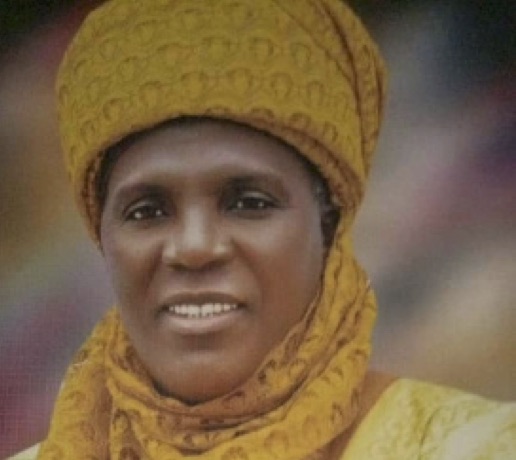
By Omoniyi Salaudeen
Dr Yunusa Halidu is the national secretary of All Farmers’ Association of Nigeria.
In this interview, he takes a look at the prospect and challenges of the state of emergency on food security declared by President Bola Ahmed Tinubu.
As one of the stakeholders in the agricultural sector, what is your perspective of the declaration of a state of emergency on food security in the country by President Bola Ahmed Tinubu?
It is welcome development. We had expected the state of emergency on food security in Nigeria earlier since Buhari came into power. But unfortunately, it did not get attention from the government. From the new president, we have been expecting it because access to food has become so difficult in the country that nobody can afford it any longer. So, it is a welcome development that the president has put a state of emergency in place to address the problem of food insecurity in the country. That will enhance production, security, food market and quite a lot of other things. There is food insecurity because a lot of people have abandoned farming for other businesses. This project has been over due. Every farmer in Nigeria has been expecting this earlier before now. So, we appreciate the president for this and I hope he is going to set up relevant committees that will include the farmers’ organizations in Nigeria, the small holder farmers, the service providers, the input providers and the stakeholders because there has been missing link between the farmers and the service providers. With that, there will be strong synergy between the farmers, the service providers and the security agencies. If there is understanding among the various stakeholders, everything will work. Farming has been politicized, that is why everything went wrong. But with this, if everybody is brought together under one roof and discuss with one mind, we are going to see the success of the project.
What do you expect the security agencies to do to enable farmers do what they know to do best?
We know, of course, that insecurity is the primary problem of food self-sufficiency. Security is everybody’s concern; it is not only for the government. That is why I said that all the relevant stakeholders, the security agencies, the farmers, politicians, the community leaders, should be brought together to find a solution. It’s a very simple problem.
What reform are you looking at in terms of marketability of farm produce?
The major predicament from the beginning is the production line. Processing, marketing and consumption have never been a problem in Nigeria. Everybody in this world needs food. But production of food is the primary concern, it is not the processing, it is not the marketing. Once we have good production, there is no problem because people are looking for food everywhere. In Nigeria, people want to invest in processing and marketing of food. Big companies processing rice, producing noodles have to source for raw materials from unknown sources. So, they need to collaborate with farmers to bridge this gap. They need to be included in the committee set up by the government for this project. We the farmers will tell them what they need to tackle. You have a rice processing plant that is processing 20 metric tons per day and you don’t have 10 hectres of farm somewhere that is your own. You always buy from different sources; there is no way you can ensure the same quality of rice. If there is collaboration between you and the farmers, you can give them in puts like ferlitizer. Once they produce, you pack them to your processing plant. That is the way it is done everywhere in the world. But in Nigeria, opposite is the case. Now, we can advise the government. Whosoever wants to invest in agriculture should be encouraged to invest in production. Everybody is running away from production, they want to go and process. That is why we are in this deep shit.
How do you think this initiative can be managed to make food affordable for Nigerians?
If you want to bring down the price of food, you have to bring down the price of fertilizer, you have to bring down the cost of labour, you have to bring down the cost of tractors, you have to bring down the cost of other inputs. Three to four years ago, a tractor was not up to N10 million. Today, it is up to N30 million. So, I will buy a tractor with N30 million and sell what I produce the same price I sold last three years? It is not possible.
Part of the declaration is that the government will provide you with fertilizer and seedling. How do you think the distribution can be done in such a way that it can reach every farmer, including the small holders, down the line?
If the proper channel of distribution already on ground is followed and they are ready to work with farmers, then we can advise them how to do the distribution. Government has always spent a lot of money on inputs and distribution but at the end of the day, most of these things go to the wrong channel. They don’t reach the real farmers. We need the government to create an enabling environment for us. If the kind of money the past government injected in agriculture was properly utilized, there would have been no food insecurity in Nigeria. How can you invest N80 billion in rice production and a bag of rice will remain N40,000 in a country like this? Do you know how many millions of bags of rice N80 billion can produce in a year? We are going to tell the government how to do it. There should be proper monitoring and evaluation of every project of government.
How would you advise the government to forestall the hijack of this process?
It is the responsibility of the government to handle all these things. Our responsibility is to utilize whatever is given to us. If the government wants to give it to the politicians or security people and others, fine. We are the farmers association of Nigeria; we know how to utilize things. We have told the government from the beginning that they don’t need to subsidize agricultural inputs. Rather, they should subsidize price. If you are not a farmer, you cannot enjoy the subsidy. If you are subsidizing input, you will bring 10 trailers of fertilizer from the Ministry of Agriculture or any agency. Before that fertilizer leaves that office, half of it has been shared in that office to people who have never been to farm to go and sell to the farmers at exorbitant price. They should stop distributing from the warehouse; instead, inputs should be distributed at the farm gate. We are All Farmers’ Association of Nigeria covering about 52 commodities’ associations. We also have small cooperatives that are registered under us. If the government reaches to us, we know how to reach every single farmer, monitor their production and give their evaluation reports to people like you who can tell the world.