Follow Us on Google
By Uche Usim
Defying inflationary pressures, exchange-rate volatility and a challenging global backdrop, Nigeria’s external reserves rose to $45.24 billion by December 23.
This reflects the Central Bank of Nigeria’s (CBN) steady monetary tightening, improved forex management and resilience-focused policy reforms amid sustained macroeconomic storms.
Nigeria’s external reserves expanded by $4.39 billion between December 23, 2024, and December 23, 2025, reflecting a year of volatility, adjustment, and eventual recovery, according to data from the Central Bank of Nigeria (CBN).
The increase represents a growth of about 10.75 per cent over the 12-month period. As of Tuesday, December 23, 2025, the country’s foreign exchange reserves stood at $45.24 billion, up from $40.85 billion recorded on the same date in 2024. Although the reserves maintained an overall upward trend in the latter part of the year, the trajectory was marked by notable fluctuations in the early months.
Nigeria closed 2024 with external reserves of $40.87 billion, but this position weakened at the start of 2025. The reserves declined to $39.72 billion in January and fell further to $38.41 billion in February. The downward trend continued in March, when reserves slipped slightly to $38.30 billion, before easing further to $37.93 billion in April. The pressure during this period was largely attributed to heightened debt-servicing obligations and foreign exchange market interventions.
Addressing the early-year declines at the time, the CBN said the situation reflected temporary factors rather than structural weakness. “Reserves have continued to strengthen in 2025. While the first-quarter figures reflected some seasonal and transitional adjustments, including significant interest payments on foreign-denominated debt, underlying fundamentals remain intact, and reserves are expected to continue improving over the second quarter of the year,” the apex bank said in a statement.
CBN data showed that Nigeria spent $540 million on foreign debt servicing in January 2025 and another $276 million in February, bringing total external debt service payments in the first two months of the year to $816 million. These outflows weighed heavily on reserve levels in the first quarter.
In May, the reserves recovered modestly to $38.45 billion, offering some relief. However, the gains proved short-lived, as the reserves slipped again in June to $37.21 billion. By the end of the first half of the year, Nigeria’s external reserves had shed a total of $3.67 billion, reflecting the combined impact of debt repayments and sustained interventions by the CBN to stabilise the foreign exchange market.
The second half of the year marked a turning point. In July, reserves rose steadily to $39.35 billion and crossed the $40 billion threshold in August, closing the month at $41.30 billion. The momentum continued in September, with reserves appreciating by about two per cent to $42.35 billion.
Further gains were recorded in October, when reserves climbed to $43.19 billion, and in November, when they closed at $44.66 billion. The accretion extended into December until mid-month, when the reserves recorded their first decline in more than two months.
From a peak of $45.47 billion, reserves slipped to $45.32 billion, before falling further to $45.27 billion. A day-on-day drop of $57.05 million brought the balance to $45.21 billion as of December 17, 2025. Some of the losses were later recovered, pushing the reserves back up to $45.24 billion as of December 23.
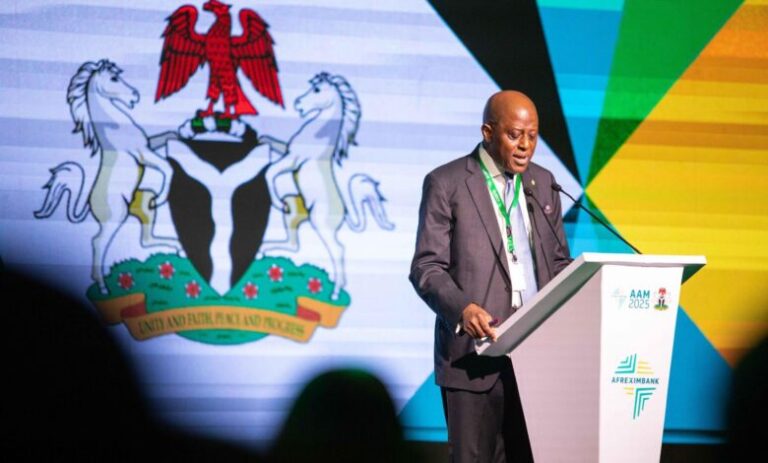
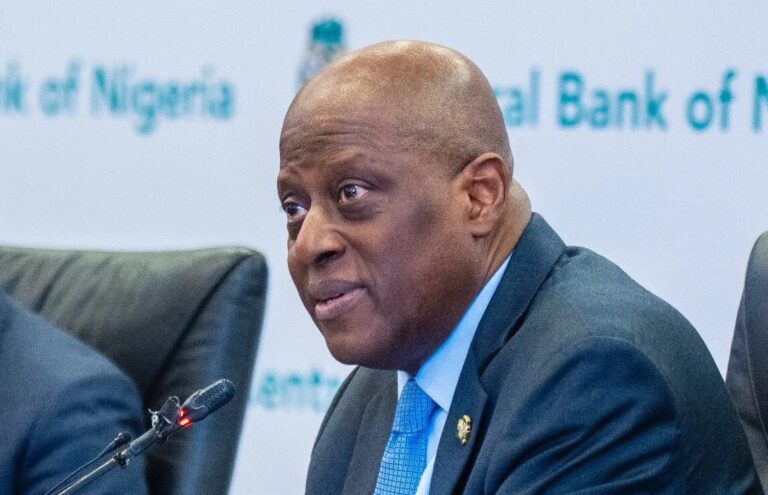
Explaining the drivers of the rebound, CBN Governor Olayemi Cardoso said reforms in the foreign exchange market played a critical role. Speaking at the inaugural CBN Governor Annual Lecture Series held at the Lagos Business School, themed ‘Next Generation Leadership in Monetary Policy and Nation Building,’ Cardoso said clearing the FX backlog and improving transparency were central to the reserve build-up.
He emphasised the importance of credibility in restoring confidence, noting that trust was a key requirement for attracting long-term capital. “If we are a going concern, and if we expect people to trust and invest in our economy, we must keep our promises. That action contributed in no small way to the rise in our reserves. People invest when they see credibility and transparency,” Cardoso said.
In November, the CBN disclosed that Nigeria’s foreign reserves had risen to their strongest level in seven years, reaching $46.7 billion as of November 14, 2025. Represented by the Deputy Governor for Economic Policy, Dr Muhammad Abdullahi, Cardoso said the reserves had climbed to a new high for the first time since 2018. He attributed the surge to renewed investor confidence, improved oil receipts, and stronger balance-of-payments inflows.
Not all analysts, however, were fully convinced about the quality of the reserve accretion. Managing Director of Financial Derivatives, Bismarck Rewane, said strong reserves would help support foreign exchange supply and ease pressure on the naira, but urged caution in interpreting the numbers.
Speaking at the Parthian Economic Discourse 2025 in late November, Rewane said, “External reserves must be viewed in the context of debt. The recent rise in reserves was due to the Eurobond issuance.” He added that while diaspora remittances had become an important source of FX inflows, they could come under threat from artificial intelligence-driven job losses among Nigerians in the diaspora.
In a separate macroeconomic review, analysts at Afrinvest Research praised the Cardoso-led CBN for introducing reforms that strengthened the FX market and supported reserve accumulation. “With a net addition of roughly $4.4 billion between January and November 2025, foreign reserves hit a multi-year high of $45.4 billion on December 9, 2025, implying nearly 11 months of import cover versus an eight-month comfort-level floor for low-income countries,” Afrinvest said. The firm, however, cautioned that the approach of an election year could prompt investors to adopt a more cautious stance toward the Nigerian market.