Follow Us on Google
By Gabriel Dike
The Universal Basic Education Commission (UBEC) has acknowledged the existence of gaps in the implementation of the scheme, thus seeking collaboration with the private sector to address the challenges.
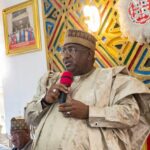
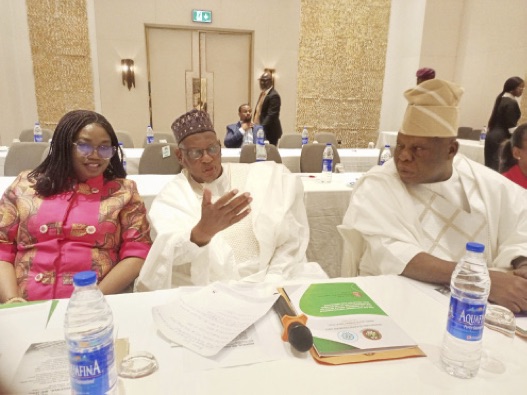
Executive secretary of UBEC, Dr. Hamid Bobboyi, disclosed this at a stakeholders’ meeting with the private sector in Lagos recently. He sought their support to ensure the gaps are reduced to the barest minimum through financial commitments.
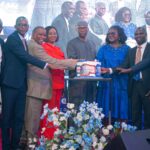
The one-day partnership with the Private Sector Advisory Group (PSAG), which centred on the implementation of UBEC, attracted participants from the Federal Ministry of Education, various private sector groups, school owners and the management of UBEC, led by Bobboyi.
He said: “UBEC has made significant efforts in responding to the gaps identified through its strategic programmes and projects, which seek to address issues of access, quality, equity and inclusiveness in UBE delivery.”
According to Bobboyi, despite these interventions basic education implementation challenges seem not to be abating.
“UBEC believes that what is required is determination by and collaboration between the commission and key stakeholders. This meeting is, therefore, very important as it offers opportunity to share our thoughts and insights towards developing new methods for addressing the challenges in the sub-sector,” he said.
Bobboyi noted that UBEC envisages that greater determination and collaboration between the commission and key stakeholders in the following areas will provide an effective response to the identified gaps.
He stressed that the private sector should invest more in basic education delivery towards complementing the efforts of the Federal Government
“Since government alone cannot meet the huge requirements for quality UBE delivery, private entities should commit to taking further responsibility in key aspects of UBE delivery, especially creating opportunities for addressing the out-of-school children phenomenon.
“PSAG and other players in the organized private sector are invited to note the aforementioned UBEC innovative programmes, all of which are open to collaboration.”
The areas he highlighted included infrastructural development to enhance UBE delivery, especially in underserved communities, sponsoring capacity strengthening and professional development for UBE personnel, especially classroom teachers, modelling the future of basic education by supporting the replication of UBEC’s smart school models in states and LGEAs, facilitating easy access and sustenance of smart learning using digital technology and ICT in the UBEC smart schools,
Others are: providing incentives and scholarships towards inviting more entrants into the teaching profession and making teaching attractive, supporting state and LGEA efforts in the recruitment of more qualified teachers and provision of incentives for increased output, partnering with UBEC in the implementation and replication of the Effective Schools Programme.
He also tasked the PSGA to support the scaling up of UBE inputs and processes in targeted schools nationwide, supporting the community-initiated self-help projects concept for enhancing local-actors interest in UBE delivery using the School Based Management Committee (SBMC) Intervention model, providing support: teaching/learning facilities for learners and Schools designated for Special Needs Education.
Other News
Bobboyi further urged the private sector to facilitate the provision of accelerated learning programmes for vulnerable groups; effective roll out, expansion and sustainability of the UBE open schooling initiative, support for the UBE IQTE intervention, vocational schools, second chance schools, and other learning platforms targeting the teeming out-of-school children population.
The UBEC boss described the meeting as important and the offers opportunity to share the thoughts of the commission and insights towards developing new methods for addressing the challenges in the sub-sector.
He concluded that UBEC is mindful of the concerns of the organized private sector especially relating to the need for government to create an enabling environment for the private sector to thrive and assume further responsibilities in basic education.
“The commission is willing to receive and act on suggestions in this regard towards promoting improved partnership with the private sector in UBE delivery,” he noted.
He gave a breakdown of the sharing formula of the UBE intervention fund, which includes a matching grant of 50%, instructional materials 15%, education inbalance 14%, teacher professional development 10%, good performance 5%, special needs education 2%, UBE implementation 2% and UBE monitoring 2%.
The ES disclosed that the number of basic schools increased by 16.9% between 2018 and 2022 at 171,027 gave the breakdown as follows, 79.755 public schools and 91,252 private schools.
Bobboyi added that public schools increased by only 3.84%, stressing, “there are more private schools at basic education level.
On gaps, Bobboyi confirmed an existence of shortage of qualified teachers in public primary schools, noting, “of the 694,078 teachers required at this level, 499,202 are available, leaving a gap of 194,876. The inadequate supply of qualified teachers at primary school level is contributing to learning poverty in basic education.
Other gaps are poor learning environment with a high deficit physical infrastructure in schools, pointing, 40% classrooms are in bad condition in basic education sub-sector.
The Director, Basic Education, Federal Ministry of Education, Dr. Folake Davis, said the meeting is a shared commitment to drive basic education in the country and that private sector partnership is crucial to eliminate the gaps.
Davis hoped the partnership would work to improve basic education and also enhance teacher capacity building through training.
In their goodwill message, acting Head of Secretariat of PSAG, Mories Atoki, said it is through education that children are equipped for the future.
Atoki described the UBE programme as a bold and necessary step towards ensuring that Nigerian children have access to basic education.
“The involvement of the private sector, as emphasized by UBEC, is necessary to increase the pool of resources for UBE programme implementation.