Follow Us on Google
By Steve Agbota [email protected] 08033302331
Failure of Nigeria, for the fifth consecutive time, to clinch a position in the Category C election of the International Maritime Organisation (IMO) has triggered concerns from stakeholders, who blamed the poor performance on Omicron, lack of professionals and negative reports emanating from the nation’s backyard.
The least expected happened to Nigeria at the weekend when the nation lost its bid for election into the 40-member Council of the International Maritime Organisation (IMO).
Nigeria won IMO Council seat last in 2009 under Temisan Omatseye who was the then Director General of the Nigerian Maritime Administration and Safety Agency (NIMASA). Ever since 2011, every attempt made by the country to return to the Council has failed.
The IMO Council election for the 2022-2023 biennium, which took place last Friday in London, Nigeria came a dismal 22nd among the 27 countries that contested under category C for the IMO Council. Only the top 20 countries are usually elected under the category while 10 other countries are elected into the council under category A and another 10 under category B.
The election results for category C are: Singapore (145), Egypt (135), Cyprus (133), Malta (133), Bahamas (129), Malaysia (128), Indonesia (127), Chile (118), Kenya (118), Saudi Arabia (117), Jamaica (116), Belgium (115), Morocco (115) and Turkey (115). Others are Mexico (112), the Philippines (112), Vanuatu (112), Qatar (111), Denmark (107), Thailand (107), South Africa (103), Nigeria (100), Peru (98), Bangladesh (88), Poland (79), Pakistan (71) and Columbia (64).
This made West Africa lose its only seat in the council, as other African countries, Kenya (Eastern Africa), Egypt and Morocco (both Northern Africa) retained their seats in the 20-member Category ‘C’ council of the IMO election. The development, would again deny Nigeria the pivotal role of contributing in taking key decisions in the global maritime space.
However, stakeholders were of the opinion that Nigeria and South Africa failed to clinch the seat after the United Kingdom put them on Omicron travel red list as delegates of both countries could not enter London for last-minute campaigns for the election.
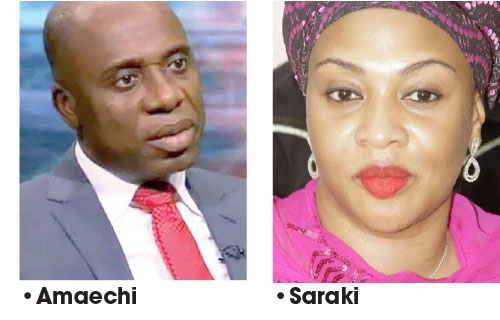
For instance, Nigeria’s Minister of State for Transport, Gbemisola Saraki, who was expected to meet with ministers from the 175 IMO member countries to canvass for support for Nigeria at the election could not travel due to the restriction.
Meanwhile, it was still surprising that Nigeria could not win the Category C IMO council election after it had done everything possible to make Nigerian waters, up to the Gulf of Guinea, safe for shipping business following the launch of the Integrated National Security and Waterways Protection Infrastructure, also called the Deep Blue Project by NIMASA.
The national security infrastructure has seen piracy reduced tremendously by 77 per cent in Nigerian waters, which is the lowest level of piracy since 1994. This was contained in the International Maritime Bureau reporting in its third-quarter and the report drew much commendation for NIMASA by IMO and the international community.
Reacting to the failure of Nigeria to win the IMO Council election, President, Shippers Association of Lagos, Rev. Jonathan Nicole, said that maritime sector issues made Nigeria to lose a bid to secure a seat in the IMO Council.
He said insecurity is tarnishing Nigeria’s image, adding that in spite of huge presence of the government with war ships in the Gulf of Guinea, pirates were still operating
He urged the Federal Government to urgently resolve the issues, which, he insisted, gave the sector a bad name.
“Trading platform is almost militarised, shipping porous and fishing industry is threatened by pirates. All these are issues that need to be resolved by the government.
We have to make sure that all the aforementioned issues, including intimidation of key service providers, should be eliminated in our maritime industry,” he said.
Nicole also urged Nigeria to carry out a thorough conflict resolution toward getting the support of Francophone countries, adding that the closure of Nigeria’s border might have made it to lose support of Francophone communities.
Meanwhile, a former Director of Operations at the NIMASA, Captain Warredi Enisuoh, said: “I’m going to suggest something uncommon. The Soviet Union became too big to manage. And the only solution was to break it up. Today all the individual states are doing well.
“Let maritime safety go take care of its constituency. In that way, we have a heavily laden professional agency/environment with few essential support staff. At the moment the ratio of professionals to non-professionals is too high for the IMO instruments to look meaningful. The situation on ground is not encouraging,” he said.
According to him, just like the UK MCA and the Australian maritime safety authority, they have a high ratio of professionals, which is the reason they have no issues in council membership election.
“When was the last time a professional was employed in our maritime administration? There’s so much animosity expressed towards these professionals. Let the professionals go and be on their own so they are in an environment where they speak one language. And that language is the language IMO understands. They can relate easily with their international counterparts. They also understand the importance of the IMO instrument.
“This mixing them with a heavy non-maritime inclined staff is a future recipe for further failures. Some people don’t understand why a ship should have a propeller and a rudder. And they are making decisions! How can we succeed like this? This is making life difficult in the sector! Take a survey of the industry. The current set up is designed for more and more future failures.
“In ideal maritime nations, IMO meetings are consistently attended by professional mariners, here, it is about cronies. Some even believe anyone can attend an IMO technical meeting. The feeling is, after all, it is a meeting anyway.
“If you haven’t worked onboard a ship extensively, how can you decide for shipping?
If we now say we should bring more ship captains and chief engineers, the non-professionals will feel threatened. This is a potential for future conflict and misunderstanding between staff. It is for the sake of avoidance of such situations, I’m recommending that maritime safety should be made autonomous,” he added.
Conversely, Managing Director/CEO Kamany Marine Services Ltd, Charles Okerefe, said the problem Nigeria has is technical issues. He said Nigeria is used to lobby, to the extent that those in charge have been busy going everywhere lobbying the member council.
“It is not about lobby, it is about what you are capable of doing. Your system must be right, otherwise, you want to wonder if the IMO has congratulated Nigeria on its achievement both quoted and unquoted in the Gulf of Guinea (security and safety).
Why is it difficult for Nigeria to win a seat in Category C for that matter on the IMO? It is the technical issue.
“Who are those that are representing us? What are they presenting? What are the credentials? Who are the technical people? What is it that country like Morocco and Kenya beating Nigeria in the IMO election”? He asked.
He said even looking at the countries that were elected in that category C, one would see a small nation like Bahamas and Vanuatu, which is a very small tiny island nation off Australia.
He wondered how those small countries were able to get their house in order and Nigeria with the population of 200 million is not able to, is critical.
“It calls for self reevaluation. If you observe, Ghana did not bother to lobby or canvass in the IMO election. What they are trying to do, they are putting their house together and don’t be surprised that in the next round of election, Ghana is going to compete with Nigeria. And if care is not taking, they will take it over and above Nigeria because we only believe in lobby and spending money.
“So Nigeria has a lot of retrospection to do. Our ship registry, how functional it is? What is the position of that registry today? What is their standing at IMO? Why is it that the Navy from Norway and France are coming to kill pirates in our backyard here? Where is the Nigerian Navy in their collaboration with NIMASA? These are the technical areas we need to look inward and resolve before putting ourself forward for global elections,” he saidThey are not there to look at the money you can spend; they are looking at your background. What are the things that make you a maritime nation that has international acceptance? These are the missing links. So there are lot of work to be done.
He advised that Nigeria should forget about going for another round of contest next time and they should stay back and do the homework first and let others see what they have put together before they can now project yourself forward.
Said he: “In that case, you don’t even need to lobby any person because Nigeria is suppose to be a maritime powerhouse in the West and Central Africa. So how come we are so diminutive in the international community where it matters most. These are the critical questions!”