Follow Us on Google
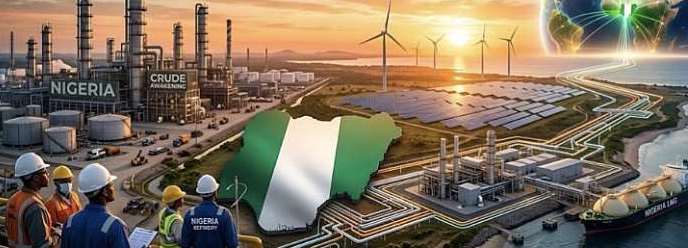
Nigeria’s oil and gas sector has found itself at the centre of an intense public debate in recent weeks, with a flurry of open letters and opinion articles questioning the direction of reforms under President Bola Tinubu’s administration and the management of the Nigerian National Petroleum Company Limited (NNPC Ltd). While robust public scrutiny remains essential in a democratic society, much of the criticism has focused on speculation rather than verifiable industry data, creating an impression that contrasts sharply with developments taking place across the sector.
Away from the headlines, Nigeria is implementing one of the most ambitious energy reform programmes in its history. The focus has shifted from an economy largely dependent on imported petroleum products to one driven by domestic refining, expanded gas production, regional energy integration and private sector partnerships.
Although challenges remain, industry observers say recent milestones suggest the country’s energy transition is steadily moving beyond policy announcements into measurable execution.
Central to this strategy is natural gas, which the Federal Government has identified as the fuel that will power industrialisation, improve electricity supply and support cleaner energy adoption. Under the Tinubu administration, existing gas development policies have been strengthened through executive orders, the Presidential Compressed Natural Gas (CNG) initiative and aggressive production targets aimed at increasing output to 10 billion standard cubic feet per day by 2027 and 12 billion standard cubic feet by 2030.
The government believes those policies will unlock more than $60 billion in fresh investments across the oil and gas value chain while positioning Nigeria as one of Africa’s leading gas-based industrial economies.
To accelerate implementation, NNPC Ltd, alongside its joint venture partners and industry stakeholders, launched the NNPC Gas Master Plan on January 31, 2026. The initiative serves as the strategic blueprint for coordinating gas infrastructure, increasing domestic supply and expanding export opportunities.
Recognising that policy objectives require disciplined execution, the company also established a dedicated Gas Master Plan Implementation Assurance Team responsible for monitoring progress, resolving operational bottlenecks and ensuring delivery across multiple projects.
Although still in its infancy, industry sources indicate that more than half of the gas development targets set for 2026 have already been achieved. A key objective of the master plan is to ensure that every commercially viable domestic gas utilisation project receives reliable feedstock, removing one of the biggest constraints to industrial expansion.
Recent production figures suggest that efforts to increase output are beginning to yield results. According to NNPC’s operational report for May 2026, Nigeria recorded crude oil and condensate production of 1.73 million barrels per day, while natural gas production reached 7.774 billion standard cubic feet daily.
Industry experts say these gains reflect coordinated interventions to improve security around oil assets, restore production capacity and encourage upstream investment.
Another defining feature of the current reforms has been increased collaboration between NNPC and private sector operators.
Perhaps the most visible example is the growing partnership with the Dangote Group.
Expanded gas supply agreements signed during the 2026 Gas Master Plan event will support operations at the Dangote Refinery, Dangote Fertiliser and Dangote Cement plants, ensuring stable gas supply for some of Nigeria’s largest industrial facilities.
The agreements underscore government’s broader strategy of using domestic gas to power manufacturing, reduce production costs and improve industrial competitiveness.
NNPC is equally supplying strategic gas volumes to other major industrial companies, including Indorama and Notore, as part of its long-term vision of establishing Nigeria among the world’s leading gas-based industrial hubs by 2031.
International oil companies have also continued to demonstrate confidence in Nigeria’s gas sector.
In August 2025, NNPC Ltd, Nigeria LNG (NLNG) and nine upstream gas producers signed landmark 20-year Gas Supply Agreements covering 1.29 billion standard cubic feet of gas per day.
The agreement involved major producers including Shell, TotalEnergies and Eni and was designed to eliminate persistent gas supply shortages affecting NLNG operations.
Speaking after the signing, NNPC Group Chief Executive Officer, Bashir Bayo Ojulari, credited the Tinubu administration with creating an investment-friendly environment through recent executive orders on gas development.
Those agreements have contributed to improved gas supply reliability and stronger operational performance at NLNG, with industry reports describing the company’s recent performance as its strongest since 2019.
The proposed African Atlantic Gas Pipeline (AAGP) has also attracted criticism from some commentators, particularly over questions surrounding its feasibility and commercial viability.
However, industry stakeholders argue that the project builds upon the proven success of the West African Gas Pipeline (WAGP), one of Africa’s most successful regional gas infrastructure projects.
Since commercial operations began, WAGP has transported more than 613 million MMBtu of natural gas across West Africa, with Nigeria contributing over 68 per cent of total supply delivered to neighbouring countries.
Operational data show gas deliveries through the pipeline increased by 22 per cent in 2025, while the West African Gas Pipeline Company (WAPCo) reportedly recorded its strongest financial performance since operations commenced in 2011.
Plans are already underway to increase utilisation of the existing pipeline by another 45 per cent.
Supporters therefore view the African Atlantic Gas Pipeline as an expansion of an already proven regional model rather than an entirely new venture.
Momentum behind the project gathered further pace during the ECOWAS Summit held in Freetown, Sierra Leone, where Heads of State signed the Intergovernmental Agreement establishing the legal framework for implementation.
Industry analysts stress that the agreement goes beyond a ceremonial declaration.
Instead, it provides the sovereign legal backing required to move the project from planning into execution.
Jointly promoted by NNPC Ltd and Morocco’s ONHYM, the pipeline will stretch almost 6,900 kilometres along Africa’s Atlantic coastline and transport up to 30 billion cubic metres of natural gas annually.
The infrastructure will supply gas to industries, power plants and export markets across West Africa, Morocco and Europe.
Contrary to suggestions that the project is designed solely for exports, promoters insist domestic industrial development remains a major priority.
Other News
Current plans include supplying approximately one billion standard cubic feet of gas daily to the Lekki Industrial Corridor and another 500 million standard cubic feet to Badagry, while extending supplies to at least 15 African countries.
Supporters also believe expanded exploration associated with the project could significantly increase Nigeria’s proven gas reserves over the coming decades.
Project promoters reject claims that the pipeline exists only on paper.
According to publicly available project information, feasibility studies have been completed alongside Front-End Engineering Design (FEED), while route reconnaissance surveys and significant environmental and social impact assessments have also been concluded.
Legal, regulatory and commercial frameworks have similarly been established.
The next phase will involve establishing a project company in Casablanca and a Pipeline Higher Authority headquartered in Abuja to coordinate financing and prepare for the Final Investment Decision.
Industry experts say these milestones are consistent with international standards for major cross-border infrastructure development.
Nigeria’s gas strategy equally places considerable emphasis on the domestic market.
Officials have repeatedly argued that the country does not have to choose between exports and domestic consumption, provided production continues to expand.
This approach is reflected in the operations of Nigeria LNG.
NLNG, in which NNPC owns a 49 per cent stake alongside Shell, TotalEnergies and Eni, has committed all its liquefied petroleum gas production to the domestic market.
The company currently supplies roughly 40 per cent of Nigeria’s LPG demand, reducing dependence on imports while improving access to cleaner cooking fuel.
The long-term gas supply agreements signed in 2025 are expected to guarantee feedstock availability ahead of the anticipated commissioning of Train 7 around mid-2027.
At the same time, NNPC continues to pursue programmes aimed at expanding domestic LPG production and promoting pipeline gas for household cooking.
Refinery rehabilitation has also witnessed a major policy shift.
Following years of unsuccessful Turnaround Maintenance programmes, NNPC has adopted a Technical Equity Partnership model that fundamentally changes how refinery rehabilitation will be managed.
Instead of employing contractors whose responsibilities end after equipment repairs, the company is seeking long-term technical partners with proven expertise in refinery operations, maintenance, reliability improvement and commercial management.
Under the arrangement, partners will remain involved beyond rehabilitation and will earn returns linked directly to refinery performance and profitability.
Industry experts believe this creates stronger incentives for sustained operational efficiency than previous maintenance contracts.
The Memorandum of Understanding signed with Sanjiang Chemical and Xinganchen in April 2026 represents the first major step under the new strategy.
Unlike earlier arrangements where contractors exited immediately after completing maintenance work, the proposed partners will retain a commercial interest in ensuring the facilities continue operating efficiently over the long term.
Taken together, these initiatives point to a sector undergoing gradual but significant structural transformation.
Gas production is rising, refinery reforms are evolving, domestic energy infrastructure is expanding, regional integration is gathering momentum and private sector participation continues to deepen.
Major strategic infrastructure projects, including the OB3 pipeline, ELPS Midline Compressor and the Ajaokuta-Kaduna-Kano (AKK) Gas Pipeline, are also advancing towards completion, further strengthening Nigeria’s gas transportation network.
None of these developments suggest that the country’s energy sector is free from challenges.
Oil theft, financing constraints, ageing infrastructure, regulatory hurdles and global market uncertainties continue to pose significant risks.
Nevertheless, many of the achievements highlighted by government agencies and industry operators are matters of public record rather than political rhetoric.
As debate over Nigeria’s energy future continues, industry observers argue that reforms should ultimately be judged by measurable outcomes instead of competing narratives.
Production figures, investment commitments, long-term gas supply agreements, expanding domestic LPG availability, refinery restructuring and regional infrastructure development all indicate that the country’s energy transition is progressing, even if the pace falls short of some expectations.
Whether these reforms eventually deliver their full economic promise remains to be seen. What is increasingly evident, however, is that Nigeria’s oil and gas sector is evolving through a combination of policy reforms, commercial partnerships and long-term infrastructure investments designed to strengthen energy security, stimulate industrial growth and position the country as a leading gas economy in Africa.
Adeyemi Adegbola is an energy analyst, with over two decades in the oil and gas industry. He writes from Abuja.