Follow Us on Google
•Says reserves, reforms rebuilding confidence
By Uche Usim
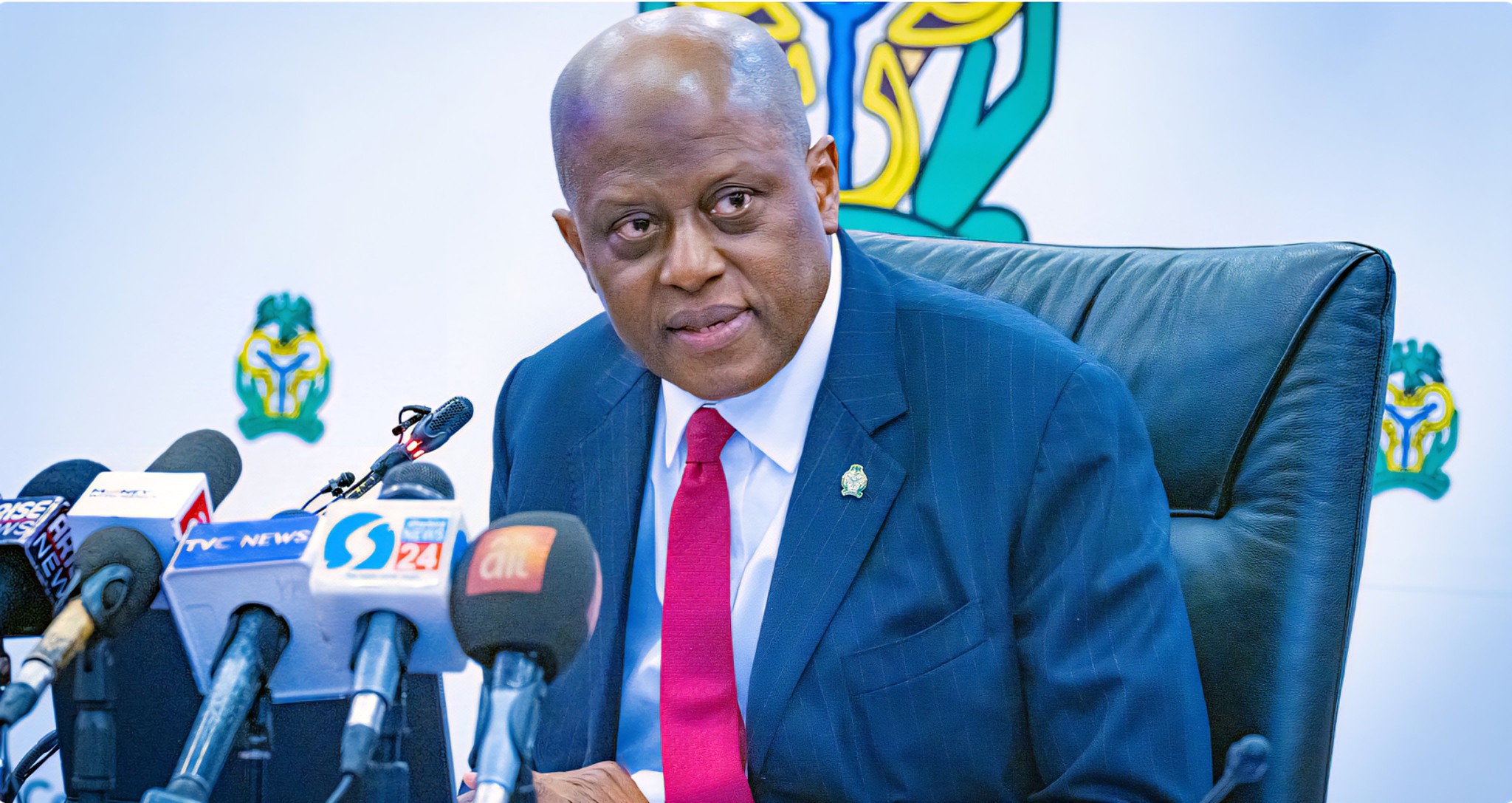
Central Bank of Nigeria (CBN) Governor, Olayemi Cardoso, has said that Nigeria’s long struggle with foreign exchange shortages is easing, as the nation has successfully transitioned from a period of acute foreign exchange stress to becoming a net buyer in the market.
He said the nation turned the corner by growing external reserves which have hit $49 billion and institutionalising reforms that are steadily restoring confidence in the economy.
Cardoso disclosed the figure on Monday in Abuja at the second National Economic Council (NEC) Conference, noting that the reserve level as of February 5, 2026 represents a 4.93 per cent rise from the previous $46.7 billion and a dramatic shift from the position inherited by the current management.
“This is obviously a very important statistic. When we took over, the net reserve figure was about $3 billion. As at the end of last year, the net reserve figure had gone up strongly into the 30s. And as I said, as of February 5, 2026, it is $49 billion. We are now net buyers.”
According to him, the turnaround has been driven largely by reforms in the foreign exchange market, with the CBN allowing prices to be determined by market forces while intervening only when necessary to smooth volatility. This, he said, has helped to restore confidence and eliminate long-standing distortions.
“The premium between the official and parallel market rates has collapsed to under two per cent,” Cardoso said, describing the narrowing gap as evidence of improved transparency and predictability.
He said diaspora remittances have also played a critical role in boosting reserves, following deliberate engagement with Nigerians abroad and steps taken to make remittance channels simpler and more reliable.
“Remittances have made a big difference to how we have grown our reserves,” he said. “The diaspora come from every single state represented here. We have engaged with them and made it easier for them to remit money back to Nigeria.”
Beyond reserve numbers, Cardoso said the reforms are being felt in everyday transactions, particularly for Nigerians travelling abroad, who now enjoy easier access to foreign exchange.
“When people travel now, you don’t have to look for foreign exchange to travel,” he said. “You use your naira card and pay for whatever you want. Now the naira is more competitive and people are not afraid to hold naira.”
He recalled a period when the naira was largely rejected across parts of West Africa, saying the situation has changed markedly. “In those days, if you went around West Africa and gave them naira, nobody wanted to touch it,” Cardoso said. “That has all gone now. There is predictability and you can plan.”
Warning against speculative behaviour, the CBN governor said Nigerians holding foreign currency without real economic need are increasingly exposed to losses. “Those holding unnecessary foreign exchange reserves are losing money every day,” he said.
On the banking sector, Cardoso said ongoing recapitalisation is strengthening financial institutions and improving their capacity to support Nigeria’s long-term development goals, including the ambition of building a $1 trillion economy.
Other News
“We all know how important the banking system is,” he said. “Banks are recapitalising, investors are earning positive real returns, and equity markets are recovering due to improved earnings and stability.”
He added that the CBN is also developing clearer succession rules within banks to ensure continuity and resilience during periods of uncertainty.
Cardoso pointed to recent macroeconomic data as further evidence of stabilisation, citing GDP growth of 3.98 per cent, a strong current account position and a $3.42 billion surplus in the third quarter of 2025.
“We haven’t had this kind of current account strength in a very long time,” he said.
Inflation, he noted, has moderated to about 15.15 per cent, reinforcing the view that recent policy measures are beginning to deliver results.
Looking ahead, Cardoso said the CBN has mapped out a 2026–2030 roadmap aimed at translating macroeconomic stability into sustained growth and productivity. “Without stability, there will be no growth,” he said. “If there is something positive that has come out of this, it is the fact that we now have stability.”
He explained that the strategy focuses on reducing inflation, normalising the foreign exchange market, strengthening external reserves and protecting the value of the naira. “We will continue doing the things we have done,” he said. “We will do whatever it takes to safeguard the value of the naira.”
Despite the progress, Cardoso cautioned that risks remain, particularly excess liquidity in the system and potential spending pressures during election cycles. “There is still a lot of liquidity in the system and we must manage it very carefully,” he said. “We are not out of the woods yet.”
He stressed that monetary policy alone cannot resolve all structural challenges, noting that issues such as food supply shocks, high energy costs and weak infrastructure continue to influence inflation. “Monetary policy is necessary, but it is not enough on its own,” he said. “Monetary stability requires fiscal discipline and credibility. Policy coherence is a strong anchor for stability.”
Cardoso called on fiscal authorities and subnational governments to align with national stability goals, noting that states control a significant share of public revenue and can shape inflation, growth and overall economic outcomes. “Subnational governance can significantly affect macroeconomic outcomes,” he said.
Projecting to 2030, he said success would mean single-digit inflation, rising foreign exchange reserves driven by non-oil exports, foreign investment and remittances, as well as a strong and inclusive financial system. “Our view is that the future is looking bright,” Cardoso said.
In his welcome address, the Minister of Budget and Economic Planning, Senator Abubakar Atiku Bagudu, commended President Bola Ahmed Tinubu for reforms he said have strengthened the fiscal position of states and local governments.
“Today, a more united federation is gathered here because of the choices you made,” Bagudu said. “Your reforms have improved the fiscal condition of states and local governments, while much of the burden is borne by the Federal Government.”
He added that governors across party lines have largely endorsed the reform direction, noting closer collaboration with the Federal Government on security, infrastructure, fiscal and monetary coordination, domestic production and efforts to curb oil theft.