Follow Us on Google
From Sola Ojo, Abuja
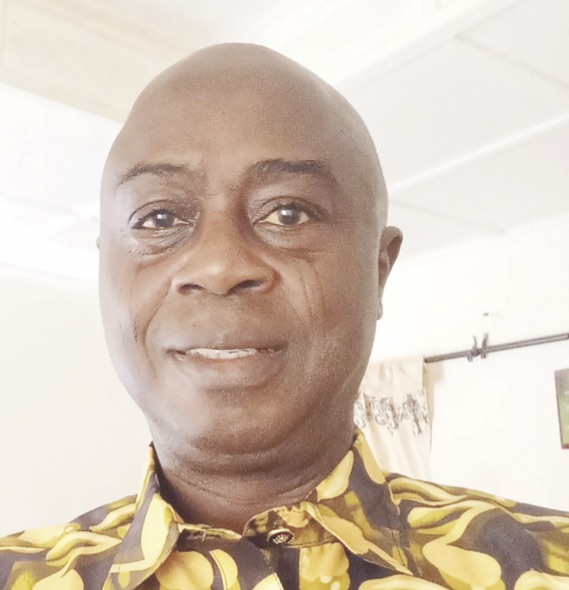
The Sun Newspapers Correspondent in Kaduna, Mr Noah Ebije has attributed the inspiration for his two newly published literature books; a poetry collection and a play, to his rural upbringing and lived experiences in communities grappling with hardship in present-day Kogi State.
Ebije made this known at the launch of the books during the peak of the 2025 Press Week of the Nigeria Union of Journalists (NUJ), Kaduna State Chapter.
Speaking at the event, Ebije recounted growing up in a remote rural settlement in the late 1960s and early 1970s, where basic amenities such as health centres, motorable roads, electricity and clean drinking water were nonexistent.
Raised on traditional herbs and cereal-based foods, he said farming, hunting, fishing and crafts-making defined daily life, while evenings were spent listening to folktales by moonlight.
According to the author, his poetry collection draws heavily from these formative years, particularly his childhood experiences working on palm and plantain plantations close to the village, in contrast to the more strenuous farming in distant hinterlands.
He explained that this experience mirrored his academic journey, where he excelled in Literature in English but struggled with conventional English language studies, hence the meeting point of poetry and plantain plantations.
“Poetry, like plantain plantations, came naturally to me. The book reflects the simplicity, rhythm and imagery of rural life that shaped my worldview,” he said.
His second book, a play titled Mosquitoes Sucked Their Blood for Five Years, was inspired by the ordeal of secondary school boarding students who studied in a mosquito-infested environment between the late 1970s and early 1980s.
Ebije recalled that the school was located near a forested area, exposing students to persistent mosquito bites and recurrent malaria infections, often forcing them to seek treatment at distant primary health centres at the expenses of their academic works.
Reviewing the play, Chairman of the Association of Nigerian Authors (ANA), Kaduna State Chapter, Stephen Adinoyi, said “Mosquitoes Sucked Their Blood for Five Years” goes beyond a school narrative to showcase a scenario akin to a political situation, where citizens endure prolonged socio-economic hardship.
Adinoyi described the book as a must-read for all Nigerians, noting its strong allegorical relevance and social commentary.
He added that characters in the book reminded one of the George Orwell’s novel, “Animal Farm”, where both animals and humans played the major characters.
Other News
“I never knew that growing up in a remote rural community would one day become my greatest blessing in the literary world. At the time, it felt like an ordinary life, simple, demanding, and far removed from the sophistication of cities. But as the years passed, I came to realise that those early experiences were quietly shaping my voice as a writer. That rural upbringing would later inspire me to write two books of literature: a collection of poems and a play.
“As a young student, I immersed myself in the works of great authors: William Shakespeare, Chinua Achebe, Ngũgĩ wa Thiong’o, Wole Soyinka, John Pepper Clark, Elechi Amadi, Peter Abraham, and many others. While reading them, I began to see reflections of my own socio-economic reality within their pages. Achebe’s Things Fall Apart in particular felt familiar. The customs, struggles, dignity, and tensions of rural life mirrored the world I had known as a child.
“I grew up under the guidance of my maternal grandfather, Pa Adejoh Agah (Adanaga), in what was then Kwara State, later Benue-Plateau, then Benue State, and today’s Kogi State. Living with him gave me firsthand experience of rural life. I was a domestic farmer, a hunter, and a fisherman.
“I understood the rhythm of the seasons, the discipline of farm work, and the quiet wisdom that comes from living close to nature. Those early experiences gave me a deep well of memories and themes to draw from. When I later became a student, I found it easy to reflect on those moments and transform them into stories and poems.
“I was born in the late 1960s and grew up in the early 1970s in a settlement where basic amenities were nonexistent. There were no health centres, no motorable roads, no electricity, and no clean drinking water. We relied on traditional herbs for healing and lived largely on cereal-based foods we cultivated ourselves. Farming, hunting, and local crafts defined our daily existence.
“In the evenings, we gathered under the moonlight to listen to folktales, stories that carried wisdom, history, and moral lessons. Those nights planted in me a lifelong love for storytelling.
“My poetry collection draws heavily from those formative years. I remember working on palm and plantain plantations near the village; tasks that, though demanding, felt lighter than the more strenuous farming in distant hinterlands. In many ways, those experiences mirrored my academic journey.
“I excelled in Literature in English, where imagination and interpretation flourished, but I struggled with the technicalities of conventional English language studies. Poetry came to me as naturally as tending plantain plantations. Both felt organic and instinctive.
“Like the plantain groves near my childhood home, poetry became a space where I could grow freely. The simplicity, rhythm, and vivid imagery of rural life shaped my worldview and found expression in my verses.
“My second book, a play titled Mosquitoes Sucked Their Blood for Five Years, was inspired by my experiences as a secondary school boarding student in the late 1970s and early 1980s. Our school was located near a forested area, and mosquitoes were relentless.
“We endured constant bites and frequent malaria attacks. Many times, we had to travel long distances to access primary health centres, often at the expense of our studies. It was a difficult period, one marked by discomfort and resilience.
“But beyond the literal story of students battling mosquitoes, the play speaks to a broader reality. It reflects a situation where people endure prolonged hardship, much like citizens navigating challenging socio-economic and political conditions. Through allegory, I sought to portray endurance, neglect, and survival.
“Looking back, I now understand that nothing in my early life was wasted. The farms, the forests, the moonlight stories, the mosquito-infested dormitories; all of it became material for my creative expression. What once seemed like hardship turned out to be a blessing. My rural upbringing did not limit me; it gave me a voice.”