Follow Us on Google

From Noah Ebije, Kaduna
For years, Kaduna State was often spoken of in the same breath as religious tension, communal suspicion and violent divisions between communities. Its rich diversity, which should ordinarily have been strength, frequently became a fault line along which politics, religion and ethnicity were sharply contested.
But three years into the administration of Governor Uba Sani, religious leaders in the state said a gradual but significant change has taken place.
Kaduna, they recently declared, is now enjoying relative peace and a more harmonious relationship between its Muslim and Christian communities. They attributd the development largely to the governor’s policy of inclusive governance, justice and deliberate efforts to bring the two major faith communities closer.
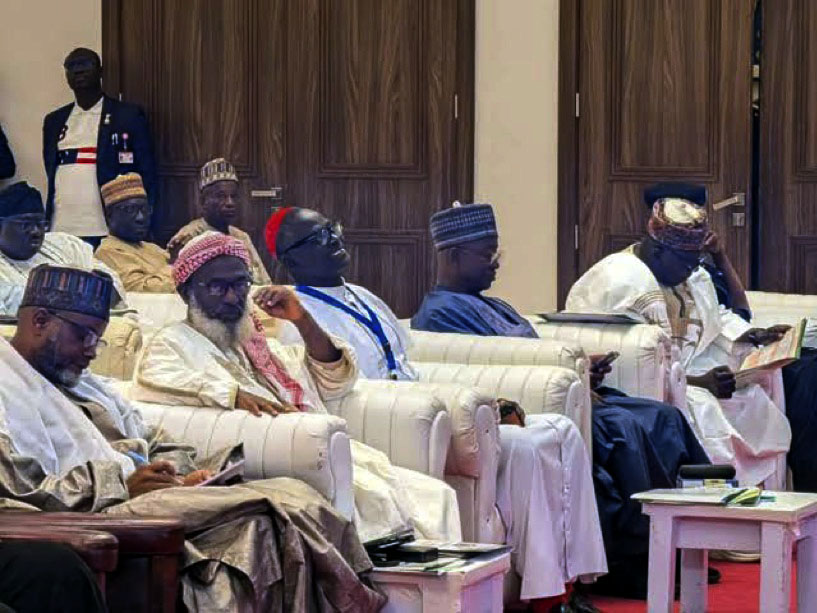
The declaration came at a Special Interfaith Dialogue organised by the Kaduna State Bureau of Interfaith at the Brigadier Abba Kyari Banquet Hall, Government House, Kaduna.
The dialogue, which brought together prominent Muslim and Christian leaders, provided an opportunity to reflect on the state’s troubled past, the changes witnessed under the present administration and the prospects of sustaining peace beyond the tenure of the current government.
For Gov. Sani, however, the story is not simply about religious dialogue.
It is about justice, it is about inclusion. And, perhaps most importantly, it is about rebuilding trust in a state where years of suspicion had made even ordinary acts of government appear through the prism of religion.
Sani did not mince words when he recalled the Kaduna he inherited after taking office in May, 2023. According to him, the state was not merely divided; it was deeply polarised.
“When we came into office, we inherited a state that was highly toxic and divided,” the governor said.
He explained that his administration deliberately chose a different path, built around fairness rather than religious or ethnic calculations.
“People have been asking me about our model. Our model is very simple. It does not need any study. It is about justice. It is about bringing everyone to the table,” he said.
For Sani, the test of inclusive governance is not in speeches but in the ordinary decisions of government. He cited the sensitive issue of land allocation as an example of the depth of religious mistrust he encountered upon assumption of office.
“As a governor, I allocated land to some people but they refused to build in those places because of their faiths. For me, it is unacceptable,” he said.
That experience, perhaps more than any political rhetoric, illustrated the extent to which religious identity had permeated everyday life in Kaduna.
A government allocation could be viewed through the lens of faith. A neighbourhood could be considered unsuitable because of the religious identity of its residents. Development itself could become hostage to suspicion.
Sani said that was not the Kaduna he wanted to govern.
He therefore anchored his administration on a principle he said was established from the day he took the oath of office.
“On May 29th, 2023, I swore by the Glorious Qur’an to be fair to everyone irrespective of ethno-religious affiliation,” he said.
The governor described Kaduna as Nigeria’s most diverse and cosmopolitan state and argued that its diversity should make it a model rather than a warning to the rest of the country.
That philosophy has also been reflected in his public engagement with both faith communities.
One of the most visible manifestations of that approach was Governor Sani’s decision to attend a Christmas Carol organised by the Christian community in the state.
As a Muslim governor, his attendance was significant in a state where religious identity has historically been a sensitive political issue.
Sani’s participation in the Christmas celebration was not treated merely as a ceremonial appearance. To Christian leaders, it was a powerful signal that the governor regarded the Christian community as an integral part of Kaduna and not as a constituency to be engaged only during political campaigns.
The gesture also fitted into a broader pattern of deliberate interfaith engagement through which the governor sought to demonstrate that public office should transcend religious identity.
At the Christmas Carol of December 22, 2024, the Christian community did not only celebrate the birth of Christ. The occasion also became a platform for discussing development needs with the governor.
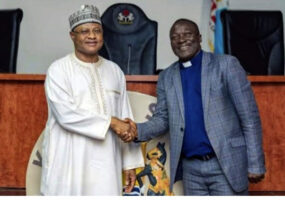
Rev. Caleb Ma’aji, Chairman of the Christian Association of Nigeria (CAN), Kaduna State Chapter, recalled how he used the occasion to present three road projects to the governor.
They were the Nasarawa-UNTL-First Bank road, the PAN Drive-Television Garage-Sabon Tasha road and the Romi-Karatudu road.
According to Ma’aji, two of the projects have since been completed, while the third is nearing completion.
For the CAN chairman, that was evidence that the governor’s policy of inclusivity went beyond religious symbolism.
“The Governor’s inclusiveness is visible in projects,” Ma’aji said.
He also commended Sani for re-introducing Christian pilgrimage to Jordan and Jerusalem.
The governor, he recalled, sponsored 50 Christians for pilgrimage last year.
Ma’aji also pointed to the appointment of Mr. Jerry Adams, a Christian, as Sani’s running mate for 2027 election, describing the decision as “a departure from the culture of old.”
The significance of the appointment, in Ma’aji’s assessment, lies not only in the individual involved but in the message it sends to a state where political appointments have often been subjected to intense religious scrutiny.
The significance of Monday’s interfaith dialogue was therefore not simply that Muslim and Christian leaders gathered under one roof.
It was that they did so to discuss what they described as an improvement in the atmosphere of peace.
The Secretary General of Jama’atu Nasril Islam (JNI), Prof. Khalid Aliyu, linked the gathering to the broader global conversation around peace.
The theme of the dialogue — “An Overview of the Impactful Three Years of Peaceful Coexistence and Inclusivity in Kaduna State: Unveiling the Secret” — he said, aligned with this year’s International Day of Peace theme: “Invest In Peace, For Everyone, In Everywhere, Everyday.”
Aliyu described Governor Sani as a peacemaker.
The description is significant because Kaduna’s recent history has demonstrated how fragile peace can be when religious and ethnic grievances are allowed to fester.
For the religious leaders at the event, the difference today is that communities are increasingly able to engage with one another without every disagreement immediately becoming a religious confrontation.
The transformation, they argued, did not happen overnight.
Rather, it was the product of deliberate political choices, security interventions and a conscious effort to give both faith communities a sense of belonging.
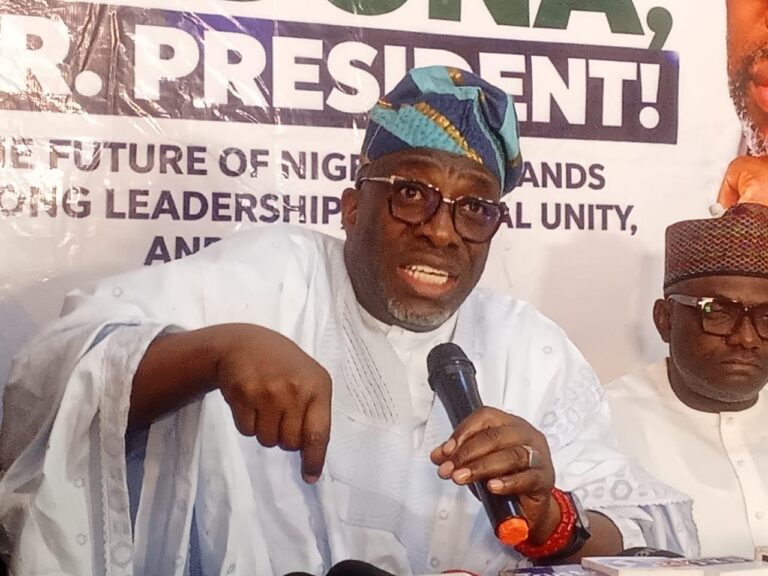
Sheikh Haliru Maraya also spoke at the event. Maraya is the Northern Coordinator for the Global Peace Foundation (GPF) Nigeria and a co-facilitator of the “One Family Under God” campaign, working alongside Christian leaders like Rev. John Joseph Hayab to foster interfaith harmony.
He provided statistics intended to illustrate the scale of the security challenge inherited by the present administration.
He said that before the current administration, 4,876 lives were lost to insecurity, 7,694 people were kidnapped and 1,660 insecurity incidents were recorded.
Other News
The impact, he said, extended beyond the immediate victims of violence.
According to him, 534 schools were shut, while approximately 500 hectares of farmland were abandoned because of insecurity.
The figures painted a picture of a society in which insecurity had disrupted not only lives and livelihoods but also education and agriculture.
But Maraya said the situation had changed.
“As at today, there is not a single school in Kaduna State that is not open. Owners of those farmlands have returned to their farms,” he said.
For a state whose rural communities bore a disproportionate burden of banditry and other forms of insecurity, the reopening of schools and return of farmers to their fields are more than administrative statistics.
They represent a restoration of normal life. A child returning to school. A farmer returning to his field. A family sleeping without fear. A community rebuilding relationships.
And a religious community once again interacting with its neighbours without the constant suspicion generated by insecurity.
Perhaps the most striking testimony at the dialogue came from Bishop David Bakare, National Secretary of the Pentecostal Fellowship of Nigeria (PFN).
Bakare openly acknowledged that he did not vote for Governor Sani in the 2023 election.
His reason was simple: he did not know him. But after observing the governor in office, he said his assessment had changed.
“I didn’t believe in anything that you were going to do. It is after you began your work in Kaduna State that I asked myself why I didn’t vote for you,” Bakare said.
Then came the line that captured the political significance of his testimony.
“Now, another opportunity is standing in front of me and I didn’t have to think twice,” he said.
It was an unusually direct endorsement from a senior Christian cleric who had publicly admitted that he had not supported Sani in the previous election.
More importantly, it demonstrated the argument being advanced by the religious leaders: that governance can change perceptions that politics alone cannot.
But, ultimately, communities judge governments by what they see, what they experience and whether they believe they are being treated fairly.
The religious leaders did not stop at praising the governor. They made a political demand of their own: continuity.
They unanimously called for the continuation of the administration’s inclusive governance beyond 2027, urging the governor to sustain the policies that they believe have helped reduce religious tension and strengthen peaceful coexistence.
Their argument was that peace should not be treated as a temporary political achievement tied to one administration. It should become institutionalised.
The challenge for Kaduna, therefore, is how to ensure that the progress being celebrated today survives changes in government.
That question is particularly important in a state where religious identity has historically had the power to reshape political alliances and public perceptions.
Despite the optimism expressed at the dialogue, Kaduna’s story cannot be reduced to a simple before-and-after narrative.
The state remains one of Nigeria’s most complex political and social environments.
Its diversity remains both its greatest strength and one of its most delicate responsibilities.
The challenge before political leaders, traditional rulers, religious institutions and civil society is to ensure that peace does not merely mean the absence of large-scale violence.
True peaceful coexistence must also mean equal opportunity, justice, freedom of worship, equitable distribution of development and the ability of citizens to live, work and conduct their businesses without fear of discrimination because of their religion or ethnicity.
For governor Uba Sani, inclusion is not necessarily complicated. It begins with ensuring that nobody feels excluded from the Kaduna project.
It means a Christian should be able to approach a Muslim governor without wondering whether his faith will determine how he is treated.
It means a Muslim should be able to live in a community without fearing discrimination because of his religion.
It means development projects should be driven by need rather than creed.
And it means government must consciously resist the temptation to govern through the divisions that have historically made Kaduna vulnerable.
In retrospect, Governor Sani’s appearance at the 2024 Christmas Carol may have carried a message beyond the celebration itself.
A Muslim governor standing among Christians during one of their most important religious celebrations was a picture of the Kaduna he appeared determined to build.
It was a symbolic rejection of the idea that religious difference must necessarily produce political distance.
For Christians who had watched Kaduna struggle through years of suspicion and conflict, the gesture was meaningful.
For Muslims, it was equally a reminder that respecting another person’s faith does not diminish one’s own.
And for the political class, it offered a different model of leadership; one in which religious identity remains personal, while public responsibility belongs to everyone.
That is perhaps why the testimony of the religious leaders at Monday’s dialogue went beyond praise for a sitting governor.
They were, in effect, describing what they believe is a new political culture taking root in Kaduna.
There was, however, an unmistakable lament in Governor Sani’s recollection of the Kaduna he inherited.
His reference to a “highly toxic and divided” state was not merely an indictment of the past.
It was also a warning about how easily the state could return to its old fault lines if justice and inclusion are abandoned.
The governor’s challenge, therefore, extends beyond his administration.
Can Kaduna sustain the culture of dialogue? Can communities continue to see one another as neighbours before seeing one another as Muslims or Christians?
Whether that model becomes permanently embedded in Kaduna’s political culture may ultimately be the most important legacy of the administration.
For now, the religious leaders gathered in the Kaduna Government House have delivered their verdict: the state is not yet where it should be, but it is no longer where it was.
END.
Pixs: From top to bottom….1. Sheikh Haliru Maraya. 2. JNI Secretary General, Khalid Aliyu. 3. Kaduna State CAN chairman, Rev. Maaji in handshake with governor Sani. 4. Cross-section of participants. 5. Another cross section of participants with governor Sani in middle seat at front roll