Follow Us on Google
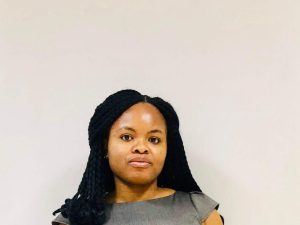
By Damilola Fatunmise
As Nigeria grapples with a youth unemployment rate that has soared beyond 35 percent and threatens the nation’s economic stability, one development expert is pioneering innovative solutions that are changing the trajectory for thousands of vulnerable Nigerians.
Onyinye Jacqueline Ezeilo, Program Officer for Economic Empowerment and Advocacy at the Women’s Aid Collective (WACOL) in Enugu, has emerged as a critical force in addressing Nigeria’s economic inclusion crisis, a challenge that the National Bureau of Statistics identifies as one of the most pressing development issues facing the country today.
With over 24 million young Nigerians either unemployed or underemployed, and women disproportionately excluded from formal economic opportunities, Ezeilo’s work represents a strategic intervention at a pivotal moment in Nigeria’s development journey.
Since joining WACOL, Ezeilo has spearheaded comprehensive economic empowerment programs that directly tackle the barriers preventing women and youth from participating meaningfully in Nigeria’s economy. Her approach combines skills acquisition trainings, entrepreneurship development, and livelihood sustainability education, thereby creating a holistic pathway from economic vulnerability to self-reliance.
“Financial exclusion is not just a banking problem; it’s an economic development crisis that perpetuates poverty and limits our nation’s growth potential,” Ezeilo explained during a recent sensitization workshop in Enugu. “When we empower women and youth economically, we’re not just transforming individual lives, we’re building the foundation for sustainable national development.”
Her programs have already reached over 2,000 women and youth across Southeast Nigeria, equipping them with practical skills in small business management, financial planning, and entrepreneurial thinking. Early indicators suggest these interventions are yielding tangible results, with participants reporting increased income generation and improved household economic stability.
Other News
Ezeilo’s expertise in economic development is built on substantial international experience. Prior to her current role, she served as Program Officer for Research and Policy at Oxfam in Nigeria, where she contributed to critical agricultural development initiatives, including the GROW campaign and Female Food Hero project programs designed to improve economic outcomes for smallholder farmers, particularly women.
Her work with Oxfam included strategic engagement with the Federal Ministry of Agriculture and Rural Development, where she provided evidence-based recommendations to address systemic barriers facing small-scale farmers. These policy interventions have informed ongoing discussions about agricultural finance reform and rural economic development strategies.
“Jacqueline brings a rare combination of technical expertise, policy acumen, and genuine commitment to social justice,” noted Dr. Amara Nwosu, Executive Director of WACOL. “Her ability to translate complex economic development theories into actionable programs that deliver real results for vulnerable populations is exceptional.”
Ezeilo’s work directly supports Nigeria’s Economic Recovery and Growth Plan (ERGP), particularly its focus on investing in Nigerian people through social inclusion and job creation. Her programs align closely with the Federal Government’s National Financial Inclusion Strategy, which aims to reduce financial exclusion from 46.3 percent in 2010 to 20 percent by 2020.
Beyond direct service delivery, Ezeilo is actively engaged in policy advocacy that addresses the structural dimensions of economic exclusion. She has facilitated multi-stakeholder dialogues that bring together government agencies, civil society organizations, and private sector actors to develop coordinated approaches to economic empowerment.
Her advocacy has contributed to local-level policy changes in three local government areas across Enugu State, demonstrating how grassroots interventions can catalyze broader systemic reform.
Ezeilo’s approach is grounded in rigorous academic training. She holds a Master’s degree in International Development from the University of East Anglia in the United Kingdom. She equipped in development economics and gender-responsive policy. She also earned a Bachelor of Science in Business from Indiana University-Purdue University Fort Wayne in the United States, with dual majors in Accounting and Economics Public Policy.
This academic foundation enables her to design programs that are both theoretically sound and practically implementable, which is a balance that many development practitioners struggle to achieve.
What distinguishes Ezeilo’s work is her integration of gender equality principles into economic development programming. She recognizes that women’s economic exclusion is not merely a matter of access to capital, but reflects deeper structural inequalities including limited land rights, discriminatory social norms, and gender-based violence.
Through WACOL, she combines economic empowerment with advocacy against sexual and gender-based violence (SGBV), understanding that women cannot fully participate in economic life when they face violence, insecurity, and discrimination. Her programs provide not only business skills training but also psychosocial support and legal assistance for survivors of violence.
“Economic empowerment and protection from violence are inseparable,” Ezeilo emphasized. “A woman cannot build a successful business if she’s facing domestic violence at home. True economic development requires addressing the full spectrum of barriers women face.”
As Nigeria continues to navigate economic challenges including recession recovery, oil price volatility, and persistent unemployment, the need for innovative approaches to economic inclusion has never been more urgent. Ezeilo’s work offers a proven model for how targeted interventions grounded in sound development theory and responsive to local realities can create meaningful change.
Her success in reaching thousands of vulnerable Nigerians with life-changing economic opportunities demonstrates that sustainable development is possible when expertise, commitment, and strategic thinking converge.
For a nation seeking to harness the economic potential of its youth and women, Jacqueline Ezeilo’s work represents best practice and hope for a more inclusive and prosperous Nigeria.