Follow Us on Google
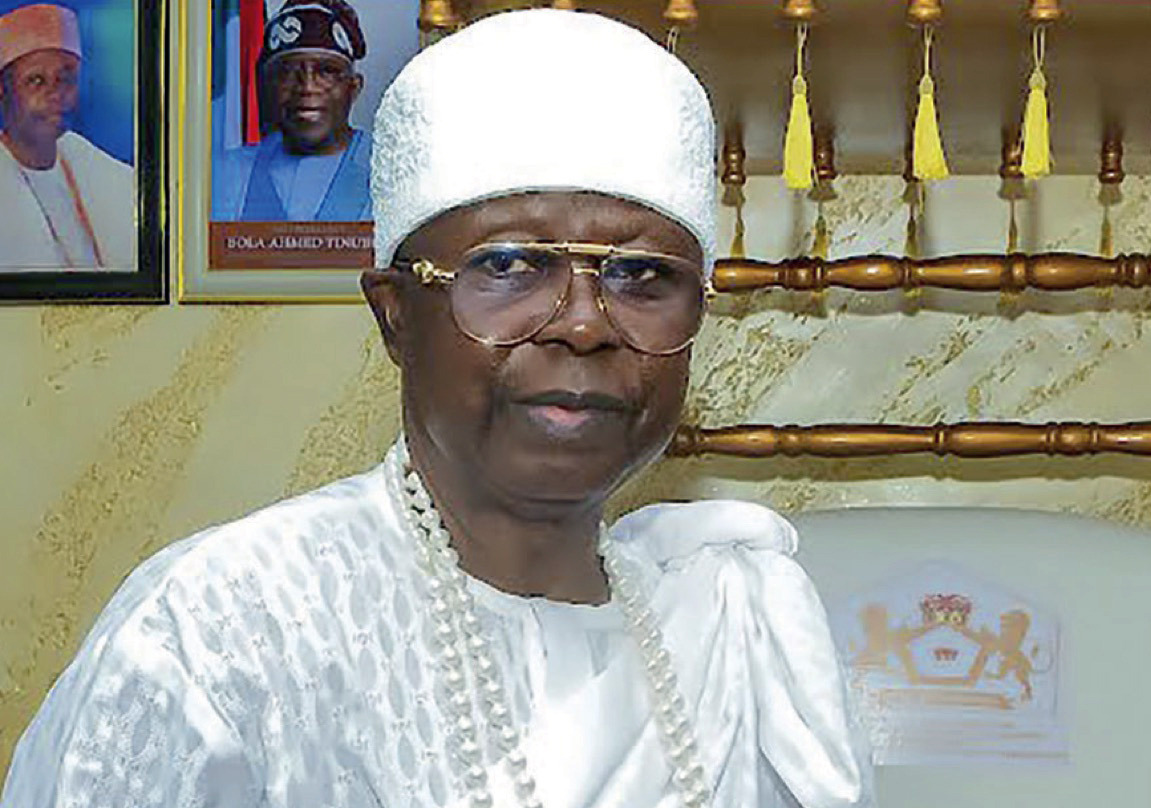
•As founder of Latris Fashion, having clients like MKO Abiola, IBB, Jonathan, Tinubu already made me a household name
Oba Lateef Adams, Onikate of Ikate, Surulere, Lagos, has a distinct identity among traditional rulers in Lagos State. Long before he became royalty, he was already a household name as founder and chairman of Latris Fashion, a popular the entity named Fashion House of the Year by the Daily Times in 1990. So established was his reputation for impeccable style that it earned him the trust of some of Nigeria’s most influential figures, from the late Chief MKO Abiola to former Head of State, Ibrahim Babangida and later, Presidents Olusegun Obasanjo and Goodluck Jonathan.
But behind the tailored suits and boardroom relationships was a man whose destiny had already been written elsewhere. A decade ago, that thread of prophecy shared with his mother while he was just in his 20s, caught up with him, and he ascended the throne as the Onikate of Ikate Surulere. Today, alongside his wife, Olori Risikat Adams , the woman he met by chance in a London shop, he has built a home, raised a family, and turned his palace into a source of tangible support for his community. As he marks ten years on the throne, Oba Adams is preparing his most ambitious empowerment initiative yet, aimed at giving his people the tools to build better lives.
In this interview with some journalists, he dwells on growing up in Lagos in those days, life as a fashion-focused businessman and his transition to the throne.
How was life before you became king? What were you into before ascending the throne?
I come from a normal background, definitely not from a wealthy family. I am from a middle-class family. My father worked at the Railways, and he was the kind of father who wanted all his children to be educated. I didn’t know I was from a royal family back then. That’s the truth. I was only aware that on the side of my mother, who is from Sagamu in Ogun State, they were of royal blood. You know a typical mother who loves her son would be protective of him and guide him as much as possible. So, when we went to her hometown, she went to make efforts for me to be protected spiritually and she was told by the people that they saw a crown on the head of her son. I was in my 20s at the time but I didn’t know where that was going to come from, because I didn’t know my father was from a royal family. So, my life just continued from there normally. I wasn’t looking for royalty or chasing a crown. I have just always cherished working hard to make a living and forge a good reputation. Before I became king, people knew me as the Founder and Chairman of Latris Fashion and I was known to many journalists back then.
You were a household name in Lagos as founder of Latris Fashion. Did it ever occur to you at that time that you could become king one day?
Just as I have said, I didn’t have it in mind. I only believed in myself and my job. And I was fully focused on that. I didn’t think about becoming king and definitely didn’t campaign for it. My kingship comes from God and despite the prophecy I spoke about regarding a crown on my head, I never held onto that thought.
Did you begin to trace your background or position yourself for the throne after you heard that prophecy?
No, I didn’t dwell on it. I didn’t have time for it. My job made me happy, gave me a name, and put me in the company of important people. It was my job in fashion that connected me to people like MKO Abiola, and later to notable Nigerians like President Bola Ahmed Tinubu. I made clothes for Babangida, President Obasanjo, President Goodluck Jonathan. The only one I didn’t make clothes for was Buhari.
Would you say your years in the fashion industry prepared you for the role you play now?
I really wouldn’t say anything about the fashion industry preparing me for kingship today. I just had to prepare myself, essentially making up my mind to do what is necessary for this community so they would not just have a king but one they would be proud of. My fashion background only taught me how to serve customers well; it didn’t teach me how to be a king.
But you met a lot of influential people through your fashion business. Has that network helped you in your role as a traditional ruler?
Yes, of course. I’ll always give credit to Asiwaju Bola Ahmed Tinubu for the role he played in my journey to becoming king. I believe God had already prepared the way, but there are people who help push you toward your destiny in good time.
At what point did the process toward the throne of Onikate of Ikate Surulere actually begin?
It started before my 50th birthday, now over twenty years ago. I’ll be 73 by December this year. I was called, although I didn’t seek it myself. The family that called me didn’t personally know me; only the Oloriebi (family head) knew my father, because I used to drive my father to the palace of Onitire. My father was a chief from the ruling house; not just an ordinary chief, but an important chief who was also from the ruling house of Ikate. He was the Mayegun of Itire at the time, handled land documentation for the town and served in effect as the Secretary to the palace. I used to drive him there whenever he had no one else to bring him.
Looking back over these ten years on the throne, what would you say are achievements recorded for the Ikate community?
I thank God for choosing me to be king here, because this place was in a difficult state before. Anyone in this community can testify to what I have done and what I continue to do. My belief is that when you are king over a community, you must ensure your people benefit from your presence, you must provide facilities for them so they can be happy. Look at the roads here now; they weren’t like this before. We made sure the roads in this area were fixed, because good roads make people happy and protect their vehicles. And look at how that has positively impacted the value of landed property unlike what obtained before I became king. A plot of land here sold for maybe N8million and the most expensive plots were about 20 million. Go and check what property goes for in this area today.
You spent about 13 years pursuing the stool before you were finally crowned. Those must have been difficult years. What kept you motivated?
Other News
When they first approached me about becoming king, I initially turned it down. By the time they called me, everything had already been arranged, my ruling house, the Omo Lamina Akinwunmi Ruling House, had signed documents in support of my candidacy, following directives from our Oloriebi, the Wahabi Irawo. But when I asked whether there was even a palace structure in place, there wasn’t one, and I decided to hold off and continue with the Baale title to avoid unnecessary stress. What changed my mind was a conversation at a party between the son of Alhaji Wahabi Irawo, Fatai Irawo, who is the Oba of Odi Olowo Mushin and popular musician, King Sunny Ade. We were talking with King Sunny Ade before the party began and after he was told, he told me Baale wouldn’t give me much but that I would be superior if I became a king. That conversation was what pushed me to pursue it seriously and despite the fact that there was no opposition to my candidacy, it still took time. It was even published in The Punch at the time without objection after appearing at the tribunal and nobody raised any objection and the process began under our current president, Asiwaju Bola Tinubu. The process moved forward under Governor Raji Fashola with whom I was always in close contact, even at Bourdillon and he encourage me to keep going while assuring me of his support.
Has becoming a king meant stepping back from the day-to-day running of Latris Fashion?
No, I am still very much involved. I moved the business from Ikeja to a new location, so people can see that I’m still active in it. We have an office and I still go there from time to time. I won’t leave the business that made me who I am and I still follow the trends of what is happening in the industry in Nigeria and beyond.
How many years passed between when your name was submitted and when you were finally crowned, and what challenges have you faced so far?
The process took about 10 years from when it began till the time I ascended the throne but I have learnt that being king is very different from running a company. This community used to have serious problems with area boys, to the extent that people couldn’t even move around freely. When I became king, I put my foot down, wrote petitions to the government over the situation, and security operatives were brought in to deal with them. That’s why we now have relative peace here. I also engaged members of the OPC to help maintain order. Now people enjoy living in this community today.
Everyone here knows Onikate of Ikate Surulere does not tolerate nonsense. If you misbehave, you’ll face the law. I’m proud that my community enjoys peace today under my kingship. You can go anywhere in this domain and ask people what they think of their king; they won’t hesitate to tell you. All of this has been achieved with little or no government funding. I fund community projects from my own pocket.
How then do you generate funds for empowerment programmes, including this one for your 10th anniversary?
We are marking the 10th Coronation Anniversary on July 23rd and my wife and I sourced the funds for it ourselves; there’s no government involvement. Beyond this specific event, I’ve always supported this community with food and provisions. We usually do that about two to four times a year. For this particular one, marking ten years on the throne, we set out to do something that gives people the means to work and provide for themselves, other than food and clothes.
As such, we are giving out work tools like industrial sewing machines, grinding machines, the modern hairdryers used in hair salons and deep freezers to help others start or expand their own small businesses. We are also supporting people who what to go into pure water business with a capital about 100,000 naira each.
The funding comes from my wife and I mainly, along with support from about seven people I approached personally. I made a decision a long time ago not to hand out chieftaincy titles carelessly, to people who would become chiefs and never return. By God’s grace, I don’t need excessive wealth for myself, what I have always focused on is to live well. This is only the second of such chieftaincy affairs since I became king; the first was for my 70th birthday in 2023 and this one for the 10th Coronation Anniversary. I deliberately chose people I consider serious and presentable, not just anyone looking for a title.
Let’s go back to your childhood. What was growing up like for you, before the fashion business and before the throne?
My father was very strict. I was born at Massey Hospital and raised in Isale Gangan in front of Onala in Lagos, so I am a full Lagosian. Because of my father’s discipline, I made sure never to bring shame to my family’s name. I’m a Muslim, and I attended a Christian primary school, St. John’s School, Aroloya, before moving to Ansar-ud-Deen College, Isolo for my secondary education. My father made sure I stayed disciplined and didn’t fall into bad company in my formative years.
People feel there are no roles for traditional rulers in terms of constitutional provisions. What’s your take on that?
The problem lies with those in power. Traditional rulers do everything possible to keep peace in their communities. As a traditional ruler, you control your domain — when disputes arise, people come to you first, and you settle them; where you can’t resolve something amicably, you refer it elsewhere. If government would restore more of that responsibility to traditional rulers, it would actually make the work of the police easier too. Why should the police be burdened with minor community disputes that a royal father could resolve with wisdom and moral authority? People listen to their traditional rulers in a way they may not listen to the police.
You built a hugely successful fashion business and met many influential and presidential figures along the way. What would you say is the secret to that success?
In business, you cannot afford to feel too big for your customers; you have to humble yourself before them. That’s what I did. I remember meeting Chief MKO Abiola at an event years ago. I recognised him immediately as an important figure that I needed to connect with, so I approached him respectfully, introduced myself as a fashion entrepreneur, and gave him my card. That’s how our relationship began, and it grew because he saw me as a humble person, despite my success even back then. Humility, even after God has blessed you, is what opens doors.
Why did you choose the business of fashion, specifically, among other paths you could have followed?
It came from passion. I have always been a person who likes to dress well. And that was even before I embraced native attire fully after marriage. I was known as a power dresser even in English attire, and a refined one at that. Back then, there were people bringing quality goods into the country at high prices, and I always asked myself why we should keep giving our money to others for things we could source and provide ourselves. That question is really what pushed me into importing and designing clothing for people. I have worked with designers in Italy over the years. I received a fashion award from the Daily Times in the early years of my business, around 1989/1990.
You and your wife, Olori Risikat Adams, are very close. How did you meet?
I have always told myself I would have only one wife, because of the background I came from. I didn’t want issues within the family, and I wanted my children to grow up together, without any kind of division. Before I married my wife, I was in another relationship and I made it clear then that I wanted to be responsible for any children from that affair. I give my wife credit for how she has looked after me over the years, and I would do anything for her and for my children also. I met my wife in London, she was there for her own trading business, and I had gone there as well. We crossed paths in a shop, and from there, things developed. I approached her as according to the nature of women, she didn’t agree to my proposition. When we both eventually returned to Lagos, I started making my findings and I discovered she lived on Glover Road in Ikoyi at the time. I went there to visit her and that’s where things properly started between us.