Follow Us on Google

By Steve Agbota, [email protected]
For decades, the Nigerian seaports have been weighed down by the persistent burdens of inadequate infrastructure and security challenges, undermining their role as economic lifelines.
Despite handling over 85 percent of Nigeria’s import trade, valued at more than $15 billion annually, the ports remain hindered by inadequate infrastructure, security issues, including cargo theft, and poor illumination, all of which limit their full potential.
With a coastline of 852 kilometers bordering the Atlantic Ocean in the Gulf of Guinea and a maritime area of over 46,000 km², Nigeria is undoubtedly a significant maritime destination.
However, the country is plagued with weak infrastructure incapable of meeting the demands of a growing economy and population.
Just last week, at an annual seminar for maritime journalists, rise in cargo thefts, general lawlessness and security challenges were among the chief concerns raised by the Nigerian Shippers’ Council (NSC).
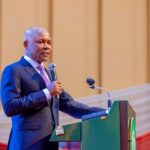
Speaking at the event, the Executive Secretary/Chief Executive Officer of NSC, Pius Akutah, represented by the agency’s Director of Special Duties, Mustapha Zubairu, stated that these security risks negatively affect port operations and increase the cost of shipping.
“In the area of infrastructure deficiencies, Nigerian ports are plagued by poor infrastructure, including outdated cargo handling equipment, inadequate road networks, and insufficient storage facilities,” he said.
He added that while the NSC can regulate economic activities, it has limited control over the physical infrastructure, which is largely under the purview of other government regulatory agencies.
According to him, the NSC’s ability to drive reforms and improve port operations is therefore constrained by the broader infrastructural deficiencies within the port system.
In the area of collaboration, he stated that effective port regulation requires close coordination between the NSC, the NPA, Customs, terminal operators, shipping companies, and other stakeholders.
“However, there is often a lack of synchronization among these entities, leading to inefficiencies, conflicting policies, and a fragmented regulatory environment. There is a need to foster better collaboration and communication between all stakeholders to ensure smoother port operations.
“High tariffs, port charges, and inefficiencies at the ports increase the cost of doing business in Nigeria. While the NSC is responsible for overseeing tariff structures and pricing, it faces the challenge of balancing the interests of port operators, shippers, and the government while trying to make the ports competitive.
“Reducing costs for importers and exporters while ensuring sustainable revenue generation for port authorities remains a delicate balancing act,” he pointed out.
He said Nigerian ports continue to struggle with congestion and inefficiency, despite efforts to streamline operations. He noted that although the NSC is not directly responsible for managing traffic, it is charged with improving port competitiveness, which includes addressing delays, demurrage charges, and other inefficiencies arising from congestion.
He stated that the Council is working closely with terminal operators and other agencies to mitigate these issues.
The NSC boss also revealed that the adoption of modern technology in port operations remains very low.
“The adoption of modern technology in port operations is still relatively low, hindering operational efficiency and transparency. The NSC is tasked with promoting the digitalization of port processes, but challenges such as inadequate internet infrastructure, resistance to change among stakeholders, and a lack of skilled personnel in the tech field hamper progress in this area.
“Additionally, corruption among port officials and stakeholders remains a problem, with illegal fees, bribery, and rent-seeking behavior complicating the NSC’s regulatory functions and undermining reforms,” Akutah explained.
Speaking with Daily Sun on the same issues, the former acting President of the Association of National Licensed Customs Agents (ANLCA), Dr. Kayode Farinto, added: “I have said it several times; we need to delineate the port and define where the port areas start from. Based on my understanding, Ijora is a port area, Mile 2 is a port area, and these are the areas that people have access to. Even when a container is loaded at the port, there will be small incidents, and they will attack that container.
“So, we must define where our port area is, which is number one. On the issue of port illumination, the federal government must be seen to be serious. Even though there is no light anywhere, port areas must have light. The roads leading to the port must be illuminated,” he pointed out.
He said the issue of security by the Nigerian Police must not be downplayed, noting that most officers lack patrol vans to move around the port areas.
“How many patrol vans do they have? The entire Port Police have fewer than five. So how can they monitor the whole area effectively or within the terminal of the port? The government must address the issue of security and logistics for the Police,” he queried.
According to him, addressing these challenges will reduce port theft and vandalism within the port areas.
“Above all, we are in the millennium. When we talk about port areas, how many areas have CCTV within the port? The access roads have no CCTV. If a crime is committed, you cannot know when and how it happened. Even some terminals are only managing their own CCTV.
“There should be a centralized security system under the purview of the Nigerian Ports Authority. When an issue arises, they should be able to playback the footage and identify any suspicious activities. These are what I call port developmental plans, which we currently lack.
“We need to wake up from our slumber. I learned that the ES of Shippers’ Council has found that security challenges are increasing in our ports. The government and the Ministry of Marine and Blue Economy must wake up from their slumber,” he lamented.