Follow Us on Google
FIFA’s proposed Forward Enterprise (FFE) has become one of the most controversial initiatives in modern football governance.
With the world football governing body presenting it as a groundbreaking plan to increase development funding, critics warn it could fundamentally reshape the commercial future of the game.
How the Forward Enterprise would operate
Under the proposal, FIFA would retain sole or majority ownership of FIFA Forward Enterprise and maintain exclusive authority over football governance, competitions, the international match calendar and all sporting and regulatory decisions.
Only minority, non-controlling stakes would be sold to carefully selected long-term investors, while FIFA insists every net financial benefit generated by the enterprise would be reinvested into football development worldwide.
The $4.2bn fundraising strategy
One of the proposal’s biggest selling points is its ambitious fundraising target.
FIFA hopes to raise up to $4.2 billion before the end of 2026 through the sale of minority equity in FIFA Forward Enterprise, which has been assigned an estimated valuation of about $20 billion.
Bigger financial support for member associations
The governing body says the additional capital would dramatically increase development funding for every member association.
Under the proposal, FIFA’s overall football development budget would exceed $10 billion, while each of the 211 member associations would become eligible for an optional immediate $20 million through a newly proposed Fast-Forward Programme designed to finance special football projects.
Beyond the special programme, FIFA also plans to substantially increase its regular FIFA Forward grants.
Funding would rise from approximately $8 million under the current cycle to $20 million during the 2027–2030 funding cycle, $22 million between 2031 and 2034, and $24 million during the 2035–2038 cycle.
Infantino’s vision for global football
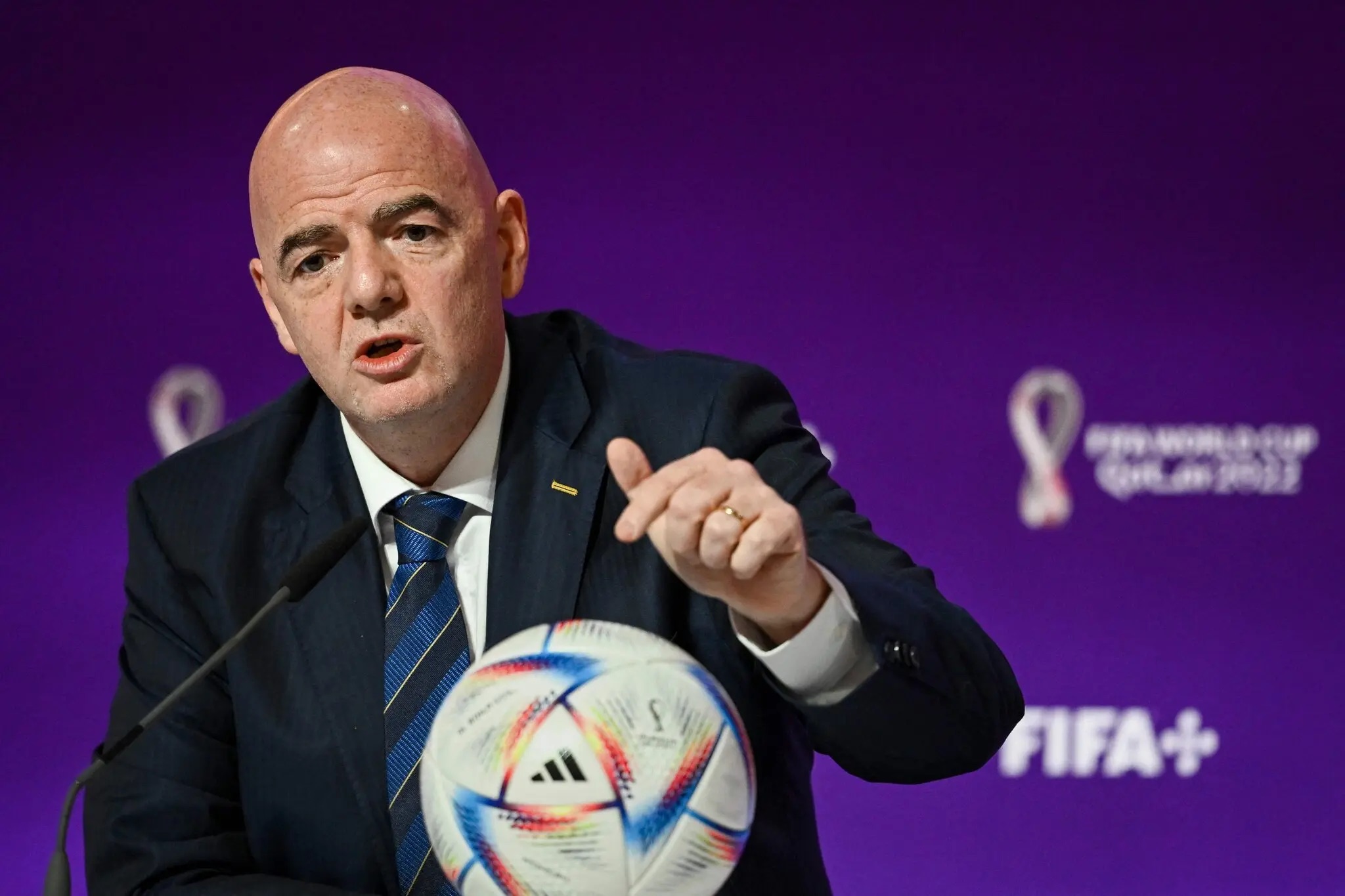
FIFA President Gianni Infantino has described the initiative as “a golden opportunity to turbocharge the development of the game globally”.
He argues that the proposal would provide unprecedented financial resources for football infrastructure, coaching education, grassroots programmes, women’s football and national team development without changing the sport itself or compromising the experience of supporters.
Why UEFA and other football bodies are opposed
Despite those assurances, the proposal has attracted strong resistance from several confederations and football associations.
UEFA has been among the most vocal critics, arguing that football’s governance, ownership and flagship competitions, including the FIFA World Cup, should not become commercial assets capable of partial privatisation, even through the sale of minority stakes in a subsidiary.
Questions over consultation and governance
Concerns have also been raised over the consultation process itself.
Several confederations, including UEFA, CONCACAF, the Asian Football Confederation and national associations such as the English Football Association, have argued that they learned important details of the proposal through media reports rather than through FIFA’s established governance structures.
Critics say the process has lacked sufficient transparency and meaningful consultation.
Deadline sparks fresh controversy
Another major source of controversy is the proposed September 19 deadline attached to the initiative.
Opponents argue that linking access to the optional Fast-Forward funding package to a fixed deadline creates undue pressure on member associations, describing it as a “take it or leave it” approach that undermines genuine democratic consultation within world football.
Fears over private investors and commercial influence
Several football authorities have also expressed concern that private investors, despite holding only minority stakes, could eventually push FIFA towards greater commercialisation by advocating expanded tournaments, more frequent competitions or changes to the international calendar aimed primarily at increasing revenue.
They fear such pressure could negatively affect clubs, domestic leagues, players and supporters by creating additional fixture congestion and increasing player workload.
Transparency concerns remain
Transparency has become another contentious issue. Critics have questioned who would ultimately benefit from the enterprise financially, warning that the structure could gradually erode the independence of member associations and weaken football’s traditional non-profit philosophy.
Some European football officials have even discussed the possibility of organised resistance or boycotts should the proposal proceed without broader consensus.
Infantino’s reported future role
Media reports, particularly by The Times, have claimed that Infantino could eventually lead FIFA Forward Enterprise as a commissioner or similar executive once his expected final presidential term concludes in 2031.
FIFA has firmly rejected those claims, insisting that no such discussions have taken place.
Who could invest in FIFA Forward Enterprise?
Questions have equally been raised about the identity of potential investors.
Joshua Kushner, through Thrive Eternal and Thrive Capital, has been widely reported as the expected leader of the proposed investment consortium.
Reports suggest private investors would collectively acquire a minority stake of approximately 20 to 21 per cent, although earlier reports mentioned a possible range of between 20 and 30 per cent.
There has been no confirmed proposal for any single investor or organisation to acquire a 30 per cent holding.
Concerns over fixture congestion
Critics also warn that stronger commercial incentives could revive previous discussions around staging more frequent major tournaments, including the previously rejected proposal for a biennial FIFA World Cup.
While FIFA’s current Forward Enterprise proposal does not include such plans, opponents argue that increased investor expectations could eventually reignite pressure for more competitions, resulting in fixture congestion, player fatigue and the marginalisation of existing tournaments organised by confederations, leagues and clubs.
What’s next?
As consultations continue, football’s governing bodies remain sharply divided over the initiative.
FIFA maintains that Forward Enterprise represents a unique opportunity to generate unprecedented financial resources for football development while preserving full control over the game’s governance.
However, many confederations and member associations insist that any reform of this magnitude must be subjected to broader consultation, greater transparency and stronger safeguards to ensure that football’s long-term interests are not overshadowed by commercial ambitions.