Follow Us on Google
By Christy Anyanwu
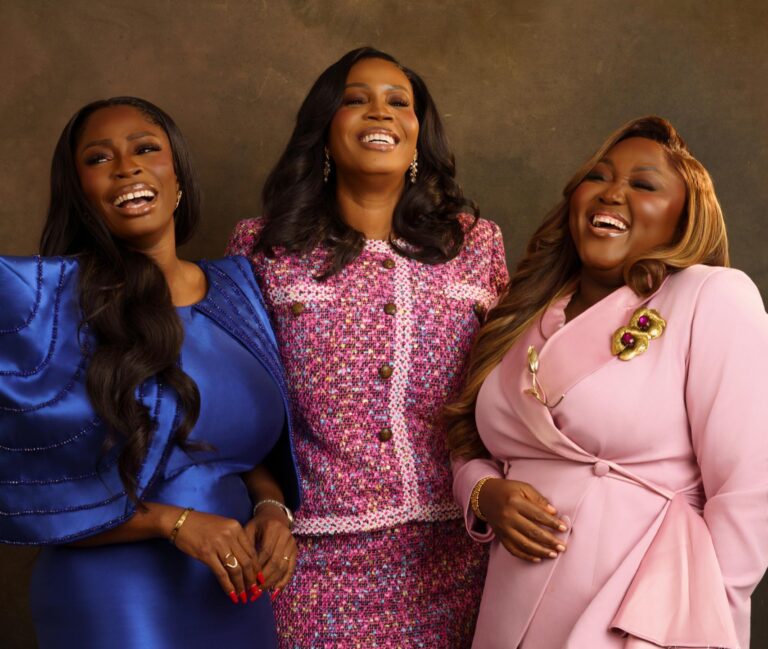
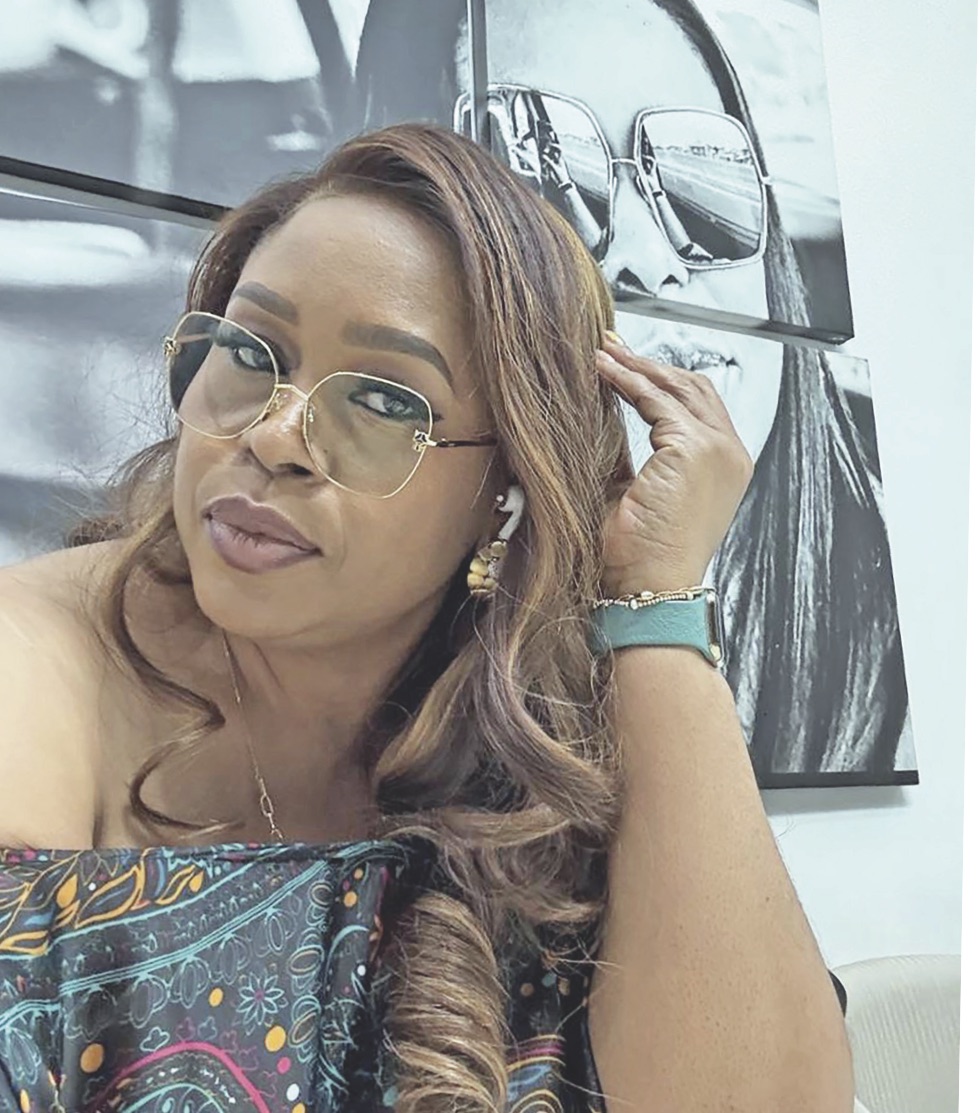
Anthonia Nwamanna is an entrepreneur with over 18 years of experience in various industries, including oil and gas, agriculture and technology. Anthonia says her vision is to re-imagine African culture through fashion, blending traditional craftsmanship with modern design.
In this interview with Saturday Sun, she went down memory lane, talking about her sojourn into the world of business, her foray into Nlecha Uwa fabric and lots more.
Fashion is an elaborate sector in the Nigerian economy. What aspects are you particularly focusing on?
I think, for us, we want to preserve African craftsmanship. Akwocha is not a fabric you can get anywhere. You can only get it from these people. So, if you’re getting it, even if you get it in Kaduna, it is woven by the Anioma people. So, it’s about preserving African craftsmanship and then promoting culture through modern design.
There are lots of fashion brands, but we want ours to have meaning. That’s the niche we’re trying to carve: a brand that has heritage as part of its foundation.
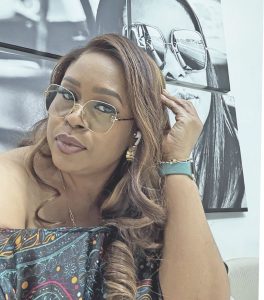
So, it’s luxurious but simple. It has edge but it also has meaning. So, I feel like the Nlecha man and the Nlecha woman are people who are rooted in Africa. They’re stylish but they’re also simple people.
From oil and gas to fintech, now fashion, there doesn’t seem to be much correlation between your past endeavours. Why fashion now?
First of all, fashion is something I’ve always had passion for. I’ve always been a very fashionable and stylish person. And it’s something that I always had at the back of my mind that, someday, I’ll wake up and create something out of my heart’s desires, and I can live out my everyday lifestyle. I replicate it and get people to get in touch with my own creative parts.
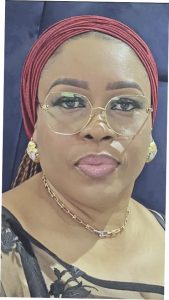
So, you said from oil and gas to fintech? Okay, you jumped one path. There’s also agri-commodities.
My journey started from oil and gas. I’m a very curious mind. I’m what you call a serial entrepreneur. I believe that there’s so much to touch, starting from Nigeria, and then to the world at large. I like to create opportunities. I have a passion to create leaders for the nation, not just for myself. I want to be able to touch lives. And for me to be able to touch lives on a global stage, I have to create enough opportunities for people to come together and do well for themselves. So, the oil and gas started from a day of curiosity in the life of Antonia Nwamanna.
And then I was curious to understand what the industry was about. And when I got into it, I understood how to trade in the oil and gas industry. And I started enjoying it. I got into a particular product called crude palm oil on my oil and gas platform. I am a very savvy businesswoman, and I like the good things of life. I like luxury. I like to spend money and live life to the fullest. So, I heard there were a lot of opportunities in the crude palm oil industry. So, in my quest to find out how to get it into the country from Malaysia and all of that, I ran into some bankers and they started talking to me about getting into grains and the huge opportunity for grains in Nigeria. They said all the manufacturing and production companies buy grains, like the Flour Mills and the NBL. I asked, okay, where do you get the products from? They said, from the North. You have maize, you have soya beans and others.
So, I took the trip to Plateau State to understand what it entails to do this business. I started by aggregating maize and soya beans for these companies.
I walked into one of the companies and marketed myself without even knowing what I was marketing. The man I was talking to didn’t realise he was actually teaching me what I was about to sell to him, because I was saying back to him what he was saying to me.
You know, I’m a marketer by blood, by birth. So, I was able to blow his mind, and I got my first contract, very simply, right there on the table in the space of a couple of minutes he gave me a contract to deliver to him 2,000 metric tonnes of maize. I didn’t even know where to get maize from. It was as I left his office that I started making the calls. And that’s how I got into the business.
From there, I got into farming. We have farms in Gombe, in Plateau and in Delta. You know, we started from the North, like I said. But then there was that same hunger and quest to be in touch with home. And I’m like, why can’t we do farming in Delta State? So, we got to talk to the Delta State government. I planted sesame seeds. We also planted wheat in Plateau State. We did the first wheat seed modification with CBN.
We’ve got a massive rice farm in the Owena Basin in Delta States. We did some programmes for rice farming in Gombe, and, right now, we have about 100 farmers in our cooperative. We want to increase it to about 10,000 farmers.
So, we said, okay, the world is going fintech, right? Why don’t we find a way to get our
fintech business to infuse our agric commodities business and our oil and gas business? So, basically, we’re like an agri-tech business where we make it easy to get in touch with the unbanked in the agric value chain. How do you connect with farmers, from the farmers to the traders all the way to the end users? Our app will also enable farmers’ accessibility to funds.
Could you throw more light about this apparel, Nlecha Uwa, which you talked about?
‘Nlecha Uwa’ is like a world of show-off. Everyone can be identified with every little thing, from hairdo to your makeup and more. Now we’re bringing it down to clothes.
We thought of a name that would resonate with people or that would be linked with something that has to do with showing off. And, we’re Igbo people. So, of course, what else to use for that rebranding? We were formerly known as Scissors and then we thought that we should come home and let people know that this is where we are from.
Nlecha Uwa was born out of a desire to re-imagine culture through fashion, to take the fabrics that have deep meaning, particularly Akwaocha.
Akwaocha is a fabric that originates in Delta State. We’re Anioma people. And we’ve seen how Africans have used our fabrics to tell stories.
From the times of Kente, which is Ghanaian, to Aso oke, which has been on the fashion scene for a long time, so, why not Akwaocha? Akwaocha signifies purity.
It’s our cultural heritage, and we decided to rebrand. That’s why we changed from Scissors, which was more bespoke, to Nlecha, which is more of a foundation, a place where people can feel culturally connected, because of the use of that fabric. So, that’s really what Nlecha is all about. It’s a tribute to our proud Igbo heritage and artisans who have kept traditional weaving alive, people who desire authenticity without compromising elegance, and the new generation demanding fashion with purpose because we can wear anything but when what you’re wearing tells a story, your carriage is different.
What were the challenges you faced in farming before navigating into fintech?
The farming business was quite challenging in the beginning because, for a business you have never done before, we were banking on the supposed experts that we were assigned to work with from the Lake Chad institute, but the typical Nigerian factor came into play. They don’t understand that if you fail or you don’t go through the normal agronomical practices it would affect production in the long run. We were new to the whole concept. We didn’t understand that we had a certain window and we were supposedly going with the hired experts. Unfortunately, we didn’t plant on time, so we missed the window. The planting method he asked us to use was wrong. The land preparation was rushed and all the ploughing and harrowing were not done properly. Most times, when you do that, you lose a lot of seeds because some don’t go inside; for some, birds come and they take it, so the yield was very poor. We lost money in our first planting experience.
Other News
How do you marry all these businesses with fashion?
For fashion, I really love to dress right. I’m one of the people that never get to an occasion on time because I believe that I should represent. It’s either you don’t show up or you show up well. I also love my fellow women to look good. I like men to look good too. I notice when there’s something wrong with your dress. I like dressing people up. I said to my sister, let’s start a fashion house. Another thing that pisses me off about fashion in Nigeria is people want to cheat you. They go for the cheapest quality material and they charge high for it, which is not what Nlecha stands for. We want to portray quality and for our clients to have value for their money.
How would you describe your creative process?
Exceptional. I don’t think there’s anybody that is infusing Akwa Ocha with other kinds of materials the way we are. Who would think of putting a line in place for Akwa Ocha? Delta infused in English outfits, you have a night event, you have a shimmer of the Akwa Ocha blinking around you. Akwa Ocha is easy to work around because it’s not as tough as Aso Oke. And we are Anioma people, we go to the heart of the people that are doing the Akwa Ocha to tell them to do it to our own specifications. We can play with all kinds of colours and all kinds of patterns. We can also decide to stone it, bead it, shred it into pieces and put it back together into something that would wow you.
What are the secrets of your flawless looks?
The secrets of looking good? I use only organic oils on my body. I mix my own oils.
That’s also another business that they forced my hand into. I believe that the skin is one of the most important organs of the body. As long as I can remember, I don’t use any kind of chemicals on my body. So I use the mixture of coconut oil and a few other oils. I don’t want to give out my trade secrets! Normally, I just use 100 per cent organic oils.
But you don’t want to smell like food because they are actually 100 per cent organic oils. There’s a lady in Ibadan and another one in Ghana that I buy different kinds of oils from. And I sit in my room to blend it all together. That will make my skin constantly look young and fresh.
But sometimes people say good skin is about nature. How true is it?
Let me tell you the truth. Yes, nature has a part to play but, the older you get, if you don’t preserve it, nature will fail you. So, if you want to continue to look youthful, that’s why God Almighty gave us all those plants, all those things that come out from our ground, that we can use to sustain this body that he gave us.
No matter how much you say it’s natural, if you leave your body and you don’t treat it or handle it right or you don’t feed it the right food, it will fail you. It’s just the same way they say if you don’t work out, you don’t get that banging body you want. What you get is the result of what you put in.
Who influenced you more growing up, your mum or your dad?
That’s a very interesting question. My dad is my role model. I will speak in Igbo. I’m one of the kind of children you call Nwazuruonweya. I come from an amazing family. Using the word influence is tricky. I would say, people say I’m a lot like my dad. I’m a female version of my dad. I admire my mum and her strength, because my mum is a very calm person. She’s very calm; she’s an extremely calm person. But she has her strength in calmness, because she’s a woman that is able to endure, manage and suppress whatever she’s going through with a lot of maturity in solving issues without raising her voice. But I was never able to really catch that part. I still admire it up till tomorrow.
I don’t know how she manages to do it. But she’s always able to control being a lady regardless of the pressure that’s around. You can never hear my mother scream.
She will talk to you firmly and she will get her point home without screaming. I still am trying to learn that because, when I’m upset, I scream. And I’m trying to stop doing that because it’s not ladylike in any way.
My dad? My dad inspired me with the love he has for people, always wanting to give himself for people. My father was the real definition of a philanthropist. The real definition of a very accommodative person, someone that constantly cares about the other human, even if it’s to his own detriment. So I think that’s it. I would say that I didn’t have to learn it.
I think it comes to me naturally. So for me, that’s in my genes. It’s something that I don’t even know when I do it. It’s just second nature. I like to give. That’s why I laughed and I said, I would refer to myself as ‘Nwaazuruonweya’. I’m very different from the rest of my siblings. We come from a family where they’re first of all not really street wise.
Any memories about life growing up?
I come from a home where everybody is used to nine-to-five. And when you finish school, you get a job, you just settle down and finish that job and build a career in the job: that kind of family.
But I’ve always had a different thread in my genes. I don’t know where it came from. But I think it comes to me naturally.
I’ve always had a curious mind. I’ve always had a vision to be an extremely independent, wealthy and powerful woman. So I’ve never felt that anything was too high or too much for me to reach. I’ve always believed Antonia can touch anything. Antonia can reach anywhere. Antonia has the capacity to achieve anything. If there’s a door that is said only three people can get into that place, I’ll make sure I’m going to be one of them. I don’t think anybody is too big for me to see, nobody can intimidate me.
I don’t think there’s any money in this world that I can’t make. I have the capacity to meet anybody, to get anything, to achieve anything. So, for me, impossible is nothing.
The sky has always been my starting point. I think that’s what has driven me this far. I just keep going, even when people say it’s not possible.
That one you tell me is not possible is the one I want to conquer. I have always believed in challenging myself right from when I was a kid. It’s led me through rough and good.
Because I’ve had the rough times too, and I’ve learned from them. And it always makes me better. So when I make my mistakes, I’m quick to pick myself up.
Like my friend, Nengi would say, Antonia, there’s one thing about you that marvels me every time. You are quick on your feet and fast to jump on plan B if plan A is not working.
I’ve never seen anybody pick themselves up as quickly as you do’.
What’s your kind of fashion?
Comfortable but extraordinary. I always want to be different. I don’t want to wear what everybody else is wearing. I don’t believe in trending what everybody is wearing. I would like to tweak the fashion a little bit to a style that is mine. It’s not what you see everywhere. I want to be different, extraordinary and classy.